


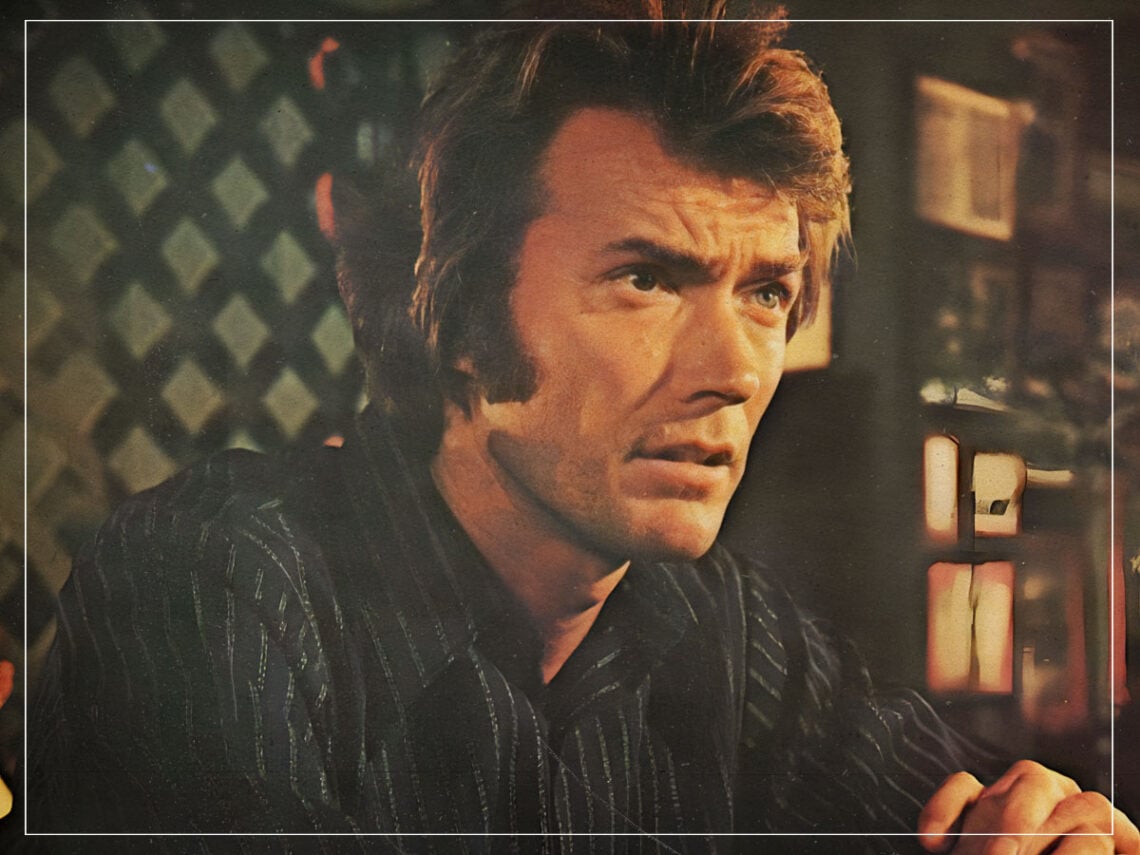
Dave Garver: The everyman in the middle of Clint Eastwood’s career crossroads

The best actors can play all kinds of roles with minimum fuss, but the problem for Clint Eastwood was finding those roles in the first place. His star had been shining so brightly and so specifically that he was in danger of being typecast forever, shackles the studios were more than happy to bind him in.
It’s always a danger when a performer becomes famous for doing one or two things, and staying in a particular wheelhouse for too long can be massively detrimental in the long run. Eastwood knew it, but his biggest problem was finding willing partners who were open to helping him break out of it.
He was the face of the spaghetti western, the heir apparent to John Wayne as Hollywood’s favourite gunslinger, and the grizzled embodiment of the revenge-fuelled action thriller. It brought him the greatest successes of his career, but Eastwood knew if he didn’t make a swing for the fences, he was running an increasing risk of growing stale and stagnant.
Ironically, his mythology had become so intrinsically linked to bulletproof heroes and rule-breaking antiheroes that nobody wanted to see him playing anything approaching a regular guy. By his own admission, he’d have been terrible as a cowboy, police officer, lawman, or soldier in real life, so why was it so difficult for the top brass to see him as an everyman?
It may not have been entirely his own fault, but neither was he free from blame. Eastwood’s seminal contributions to Sergio Leone’s Dollars trilogy and Don Siegel’s Dirty Harry, along with Hang ‘Em High, Coogan’s Bluff, Where Eagles Dare, and Kelly’s Heroes, had established him as the filmgoing public’s favourite action star and a certifiable box office draw.
For those very reasons, all of the biggest outfits in town were reluctant to cast him as somebody who worked a 9-to-5. “I could have convinced a studio to back a western in a minute,” he told Roger Ebert, but for whatever reason, a story grounded in reality where he didn’t gun down the bad guys and drop a pithy one-liner somehow stretched the limits of credulity to breaking point.
“I mean, think a moment,” he reflected. “Why was this character such a departure? I was playing a character my own age in a contemporary story set in the town where I live.” The character was Dave Garver, the occupation was a disc jockey, and the movie was his directorial debut Play Misty for Me.
Commodities didn’t come much more proven than Eastwood, but even at that, he had to fight hard to step behind the camera and cast himself against the archetype foisted upon him in a feature that occupied a completely different genre to the ones that had created that archetype in the first place.
“Now, I know I couldn’t make a living as a cowboy or a cop; I’d be no good at either job,” he mused. “But I could probably earn a living as a disc jockey. So what was so strange?” As oxymoronic as it sounds, the issue was Eastwood. That wasn’t how the public – or Tinseltown’s power players – perceived him, forcing him to make his own luck by debuting as a filmmaker with a role that went completely against the grain.
Fittingly, it was released just months after Dirty Harry, and Play Misty for Me might just be the most important movie of his career. It announced him as a director with confidence and talent to spare and reiterated to the watching world that there were many more strings to his bow than simply playing cowboy or cop in perpetuity.

Never Miss A Tale
The Far Out Clint Eastwood Newsletter
All the latest stories about Clint Eastwood from the independent voice of culture.
Straight to your inbox.