


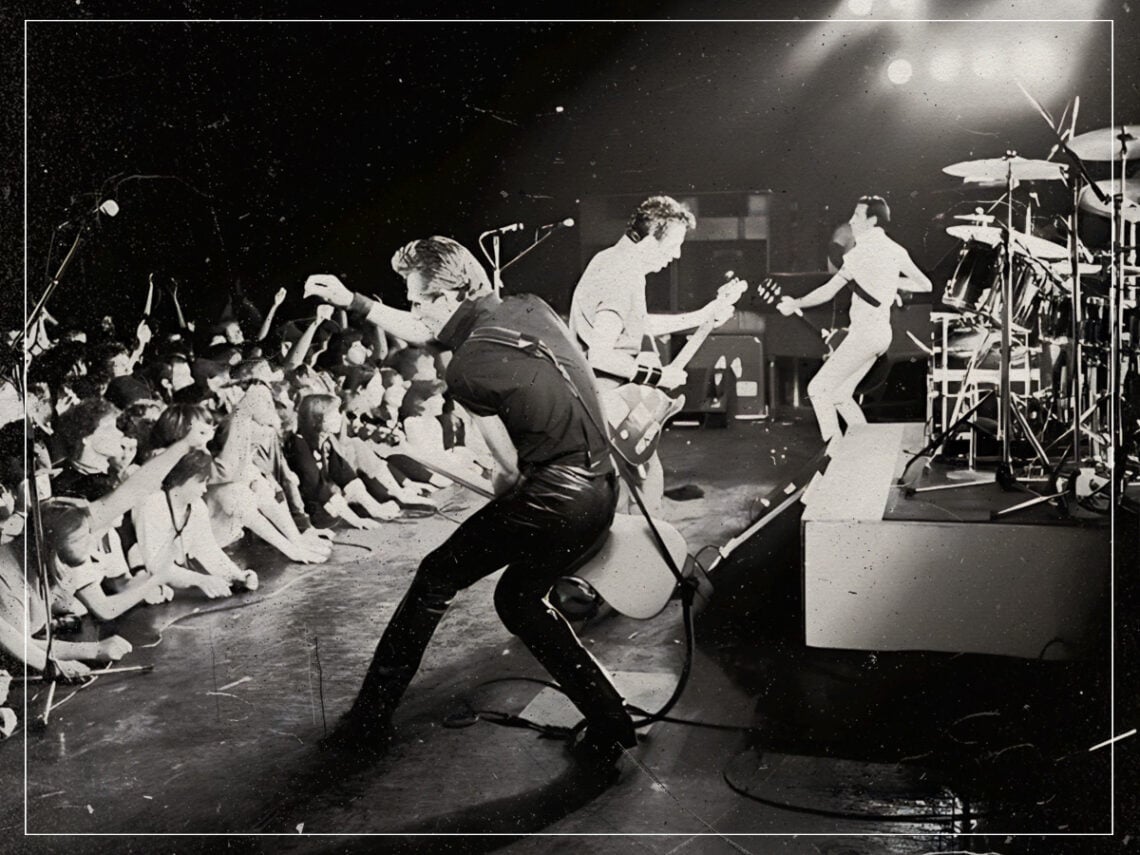
Every The Clash album ranked

“[The Clash are] the only band that matters.”
Superlatives and hyperbole are part of a music journalist’s arsenal of weaponry. Of course, for most writers, the music is very much life or death, meaning the negative connotations of each term are a little less truthful. But if you don’t enjoy labelling a particular note on a guitar solo, the sonic equivalent of being massaged by several deities at once, then you’re just not enjoying yourself enough. However, I can say, without any single regret or reservation, that the rock world as we know it today simply would not have existed without The Clash.
Joe Strummer, Mick Jones, Paul Simonon and Topper Headon may not have produced a vast quantity of music, but what they did deliver came with a double dose of attitude and a reminder that punk, at its heart, was always about the little guy. A deeply political group, their message felt authentic and original, far removed from the contrived marketing of the punk bands that emerged in the furious fervour of the late 1970s.
Often referred to as the thinking man’s punks, The Clash made a name for themselves as the politically minded side of the scene. While the Sex Pistols were all about shock tactics and gobbing in the face of your enemies, Strummer’s Clash were more intent on feeding the minds of the disenfranchised youth they represented than designing their clothes or changing the way they spoke.
From their explosive debut to their whimpering end, The Clash kept their integrity at the forefront of everything they did and, with a hefty dose of unfettered attitude, ensured their names were written into the history books long before they gave up the ghost. It was a short, sharp and almost sweet explosion of musicality that continues to ring into the airwaves.
While many may take the headlines in the scene, the Ramones were one of the first, the Sex Pistols the loudest, the Buzzcocks the most radio-ready, the Damned the silliest—The Clash were and will always be, the only band that mattered.
The Clash albums ranked from worst to best:
‘Cut The Crap’ (1985)

By the time 1985 rolled around The Clash had permanently etched their name into the annals of music history. It means that releasing Cut The Crap was a simply superficial statement shared only to enrich the personal longevity of those involved, namely Joe Strummer who had begun to buy his own merchandise at this point.
One of the gigantic reasons this album falls way, way down the pecking order of Clash material (we’d have put it at number seven if we could) is that it is missing Mick Jones. The commercial Yin to Strummer’s politically aggressive Yang, Jones’ songwriting contribution is a giant hole in the middle of the record. Instead, Strummer co-wrote the entire album with the record’s producer, Bernie Rhodes, it reeks of a record executive, and feels particularly rank because of it. Rhodes is talented, but behind the desk.
Headon was also out of the band, leaving this album to be a Clash record in name only. It’s an album the members of one of punk’s purest pioneers will likely want to forget, and we’d imagine Mick Jones enjoys never being a part of. There are, however, a few wins on the album, ‘This Is England’ is a cracking single, while ‘Dirty Punk’ is a heady antidote to some of the over-worn guitar parts, but all in all, the name of this album says it all.
‘Give ‘Em Enough Rope’

One thing that may have annoyed many of those who bought the sophomore album of The Clash is that despite not ranking in the top three of the band’s efforts, it easily has one of the best album covers. The artwork, however, would prove to be the best bit of the album.
That’s not to say that Give ‘Em Enough Rope is a bad album—far from it. But moving on from the fire-breathing garage band intensity of their self-titled debut was always going to be a complicated manoeuvre to master. In truth, the record sees Mick Jones and Joe Strummer caught between two opposingly moving ships, producing cartoonish splits as they do.
The band keep one foot firmly on the politically-conscious punk rock, which had seen them become the talk of the town in their aforementioned first record, while also a few hints at the behemoth that was to follow a year later. It sees the group try to remain true to the genre that gave them life while sampling the variety of musical wealth that had immersed them in London.
The album’s best moments come on track two and three with ‘English Civil War’ and ‘Tommy Gun’ just about nudging their way into the top tier lists of Clash rockers. Wiht this in mind, it picks itself up off the bottom of the pile. Following the debut was always going to be tough, but this record feels a little more like a grind than hoped.
‘Combat Rock’ (1982)

In 1982, with the failed cultural revolution of the previous two decades still hanging around the neck of The Clash and the rest of the music industry, the band moved away from the genre-hopping beauty of Sandinista and instead set to complete an album of radio-ready rockers. The results can usually divide a room of Clash fans, but it’s hard to ignore the impact of the record’s lead singles.
The band had kept wide-release singles to a minimum with their previous albums but on Combat Rock the group decided to extend themselves a little and it made sure that ‘Should I Stay Or Should I Go’ and ‘Rock the Casbah’ were given a release alongside ‘Straight To Hell’ and ‘Know Your Rights’, proving to be two of the outfit’s most beloved singles.
In these four singles is where most of the value in Combat Rock rests. All four of them are expertly executed, hitting at the new polished sound of the punk purists, and all four are perfect for the radio. It showed that in 1982, The Clash may have still been the champions of the oppressed they always had been, but now they needed the funding to make sure they could continue their fight.
It is this sentiment which rings around the entire record and confirms the aforementioned revolutionary defeat. Money makes the world go around and The Clash had been slowing down for some time. This record was the cash injection they were after. It would signal their general march towards the end.
‘Sandinista’ (1980)

Often maligned as incoherent or needlessly long, Sandinista! is one of the most underrated albums from the period. The album saw the group develop the sounds they had been cultivating on London Calling and move the group firmly out of the punk sphere once and for all. On this album, there is a little bit of everything — from funk to punk, pop to dub, dancehall to hip-hop and everything in between. This is The Clash’s chef’s special.
A six-sided release, Sandinista! may well be the band’s most unbalanced record (featuring all those styles it was bound to be), but there is something incredibly charming about the album looking back. It is a sprawling mass of meandering genres and dissipating directions, but somehow it works well together.
VCRacked open by one of the band’s best openers, the wonderful ‘The Magnificent Seven’, which cracks the whip and sets the album on a forward march, the record hums with possibility. The LP then takes as many turns and twists as the Thames itself.
There isn’t too much in the way of hugely commercial singles on the album, though ‘The Call Up’ did break the Top 40 in the UK, but one song stands out among the rest. The brilliant single ‘The Magnificent Seven’ is undoubtedly one of the group’s best songs and is deserving of a spot in your favourites list.
‘The Clash’ (1977)

Arguably the title holder of “greatest self-titled debut of all time”, The Clash’s first burst on to the music scene was a powerful, deliberate and ultimately legendary one. Recorded over three weekends in the depths of winter in London back in 1977, there isn’t an album that more accurately captures that moment in time—imbued with the hopeful energy of a new movement yet batted down by the world around it—than this record.
14 tracks of fearsome and potent moments of wasted youth and untethered revolution make The Clash quite possibly the best record the genre ever produced—certainly the purest. The album is split between a desperate need to highlight the plight of working-class youth and an unwillingness to accept the role as their lot.
Of course, the album is full to the brim with Clash classics. From their first single, ‘White Riot’ and on to album opener ‘Janie Jones’, the songs on this album did more to cement the band’s iconography than any of the previous four albums could have hoped to. It was a powerhouse record that supercharged the city. Though a constant area of debate for purist punks, the LP was positively brimming with electricity and ready to shock the nation.
An album made by a bunch of young hopefuls with nothing to lose is the usual tale for a debut punk record but there was something altogether more authentic about this LP which let you know that The Clash were, without doubt, the only band that mattered.
‘London Calling’ (1977)

Naturally, we couldn’t leave arguably one of the greatest albums of the 20th century off the top spot, could we? Let alone the fact that it is the ultimate punk record, London Calling represents everything that is good and great about The Clash. Whether it is the underlying message of hope for the oppressed and cruel death for the oppressors or its delivery through a variety of reggae, dub, punk and rock—London Calling is a triumph.
The ultimate punk record, a godsend of an album that spat through a potpourri of genres more tellingly and tastefully since The White Album. And yet it proved an even stronger album than The Fabs’ epic, more noteworthy in design, more polemical in attitude.
Fittingly, it had a title track that tore into The Beatles sacred standing, though the sparkly guitar, thunderous skiffle beat and choir boy harmonies called attention to the ramshackle nature a certain Liverpudlian band held in Hamburg.
Uncompromisingly ambitious in scope, The Clash’s third effort proved their most fondly remembered, their most assured and, indeed, their finest work. This album remains our desert island record, an extraordinarily diverse catalogue only a band at this creative level could produce.
