


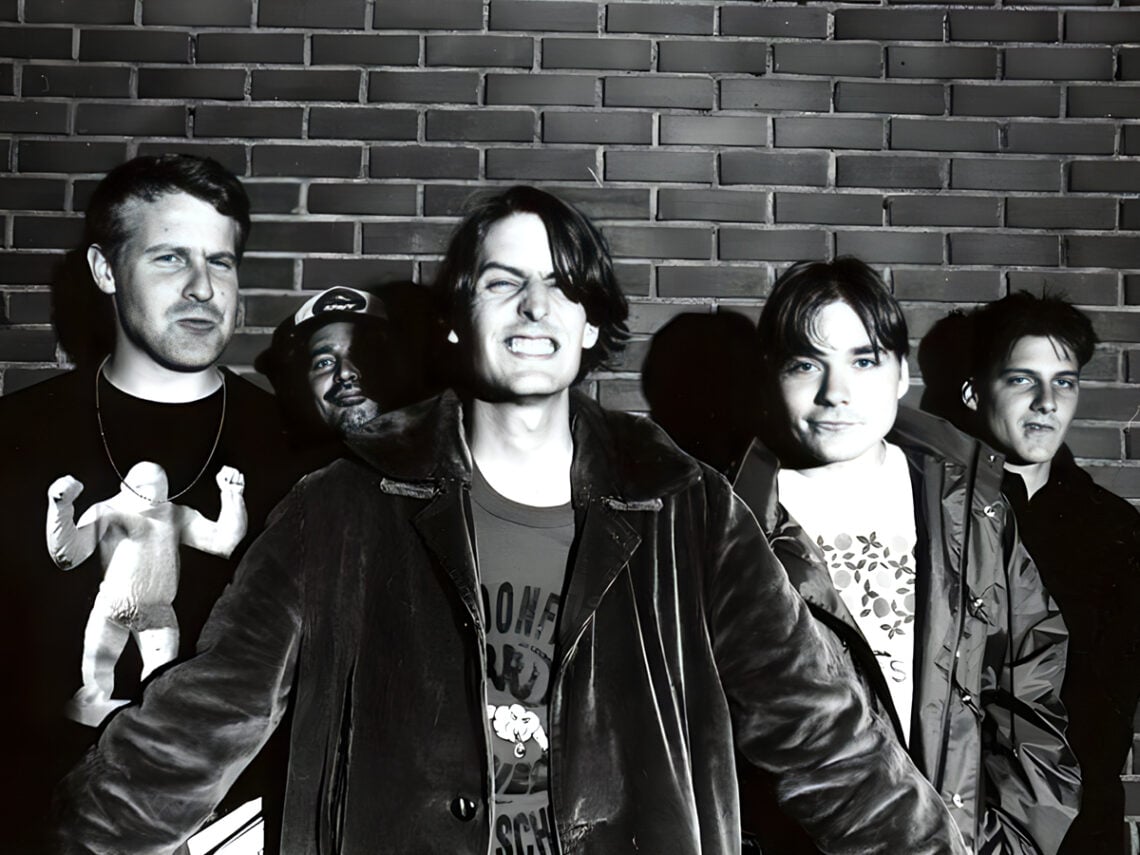
Every Pavement album ranked from worst to best

As much as they might have tried to hide it behind a facade of being slacker nobodies and simply being ordinary dudes who just liked to rock out, Pavement were stars and icons to many. Coming off the back of a wave of acts like Sonic Youth, REM and Nirvana, who were reshaping the rock landscape in the US in the late 1980s and early ‘90s, Pavement’s blasé attitude was a huge part of what made them so special.
On the surface of things, they didn’t seem to care too much about the particulars and just wanted to have a laugh, but if you dig a little deeper into their songs, there’s so much detail and maturity in so many of their songs that it’s impossible to regard them as insignificant to the rich history of rock music.
Formed by founding members Stephen Malkmus and Scott ‘Spiral Stairs’ Kannberg in 1989, over the course of five albums in the space of a decade, they would become one of the quintessential indie rock bands and gathered legions of fans around the world in a relatively short space of time. Despite having broken up before the turn of the millennium, their legacy remains strong today, and recent reunion tours and a sort of documentary film have seen the band back in the spotlight again, garnering a new generation of support from listeners who may not have been there to witness their brilliance the first time around.
While every album has something excellent to offer, it’s an often debated topic as to which Pavement album is the best, and with that, here’s a rundown of all of their studio albums from worst to best. It’s by no means definitive, but it’s a testament to how good they are that it’s so difficult to reasonably order five options.
Every Pavement album ranked in order:
5. Terror Twilight (1999)
It might be more apt to use the phrase ‘fifth best Pavement album’ as opposed to ‘worst Pavement album’ because there’s nothing particularly egregious about their final outing as a group. The trouble with it is that with such a stacked discography before it and various members seemingly beginning to see their focus drift towards the next chapters in their respective careers, it feels like a conscious effort to squeeze one more album out before the energy is fully depleted.
As efforts go, it’s still a valiant one, and leans in the direction that Stephen Malkmus would lean towards with his subsequent project, The Jicks. His canny ability to write brilliant melodies transcends genre, and while Terror Twilight sees the band soften their tendency to erupt into distortion in favour of adding folk and Americana elements, his songwriting is still unmistakably his. It might feel like more of a Stephen Malkmus vanity project than a Pavement record, but it doesn’t exactly mean they bowed out on a bummer. ‘Carrot Rope’ should be enough to tell you they closed the curtain in decent fashion.
4. Brighten the Corners (1997)
It can’t be easy to continually improve for four consecutive albums in a row, so you can’t fault Pavement for having their sophomore slump two albums too late. Brighten the Corners sits somewhere between Crooked Rain’s desire to focus on being brilliant at the basics and Wowee Zowee’s pure unbridled insanity, but doesn’t quite hit the same heights as either do at their best.
It begins with possibly their strongest opening run of three songs: ‘Stereo’, ‘Shady Lane’, and ‘Transport is Arranged’, but after frontloading some of the album’s best offerings, it spends the rest of the album chasing the high that those three were able to produce. It’s home to some of their most quotable lyrics, and it’s also home to some hard-to-parse word salad. A true mixed bag of an album, but with enough moments of genius to make it a worthwhile listen.
3. Slanted and Enchanted (1992)
The record where it all began and a legacy was started, Slanted and Enchanted might be something of a relic of its time these days, with its influences a lot more on its sleeve and the incredibly shoddy-sounding mixing, but it’s still packed with the signature Pavement charm and ability to write undeniable hooks. From the word go, their sense of humour, affinity for grungy noise mixed with art rock sensibility and melodic prowess were all on show.
As they were only operating as a trio of Malkmus, Spiral Stairs and original drummer Gary Young, it lacks the same completeness of all the albums they would go on to record as a five-piece, but some of their most beloved songs, and some of their most raw cuts feature on Slanted. ‘Summer Babe – Winter Version’, ‘Conduit For Sale!’ and ‘Here’ are among the most worthy ones and helped the band well on their way to indie rock demigod status.
2. Crooked Rain, Crooked Rain (1994)
Pavement’s second album, coming a mere two years after they had stormed out of the gates with Slanted, is probably best described as the ‘hits’ album. ‘Gold Soundz’? It’s a hit. ‘Cut Your Hair’? An undisputable classic. ‘Range Life’? I could go on…
Crooked Rain, Crooked Rain takes the rough edges of the debut, smooths them out, and applies a few coats of fine polish to give it that extra sheen. Whether it is genuinely needed is a different matter, as half of the appeal of Slanted is down to the scuzzy naivete of the record’s sound, but Crooked Rain is an album where the songwriting and melody are given more of a chance to shine rather than being carried by the general ‘vibe’ of the songs. The addition of new members in the interim between records, such as drummer Steve West, bassist Mark Ibold and utility man Bob Nastanovich.
It doesn’t quite land in top spot, as with hindsight it’s easy to see that the band were only beginning to flesh out their sound to become even more adventurous on subsequent albums, but it’s also immediately evident why it made such a grand impression on listeners when it initially landed. There isn’t really a weak moment on it, but it also has nothing that’s quite as mind-melting as what would follow a year after.
1. Wowee Zowee (1995)
The most riotously fun album the band ever committed to tape, not to mention their most sonically varied and experimental, Wowee Zowee is peak Pavement. With song structures jumping about all over the place, time signatures often feeling like they were being wilfully ignored, and dramatic tonal shifts every other song, their third album explored everything the first two albums seemingly held back from doing and showed off what Malkmus and the band were truly capable of.
It doesn’t have the hits that its predecessor did, with ‘Rattled By The Rush’ and ‘Father To A Sister Of Thought’ falling flat in terms of public reception by comparison to earlier efforts, but the ambition was clearly there to create a record that is meant to feel sprawling and designed to be taken as a whole. Opener ‘We Dance’ suggests the band are going to mellow out as acts often do by their third album, but things quickly go the other way, with shorter songs acting as vignettes that piece together the more classic rock-influenced cuts. The shortest song on the record, ‘Serpentine Pad’ is one of their best, and captures the same zany energy that Pixies did on some of their noisy miniatures like ‘Tame’ and ‘Broken Face’.
The argument could be made, as people often do with albums that are approaching an hour in length, that the record lacks focus, but you can hardly have expected them to seem together when they made the album while incredibly stoned. It’s that occasionally lackadaisical and sloppy feel mixed with bursts of mania that really transport you to the weed-cloud-filled rooms the songs were recorded in, much like the classics of some of their heroes. This is Pavement’s Exile on Main Street, which is to say, it’s them at their best and most uninhibited.
