


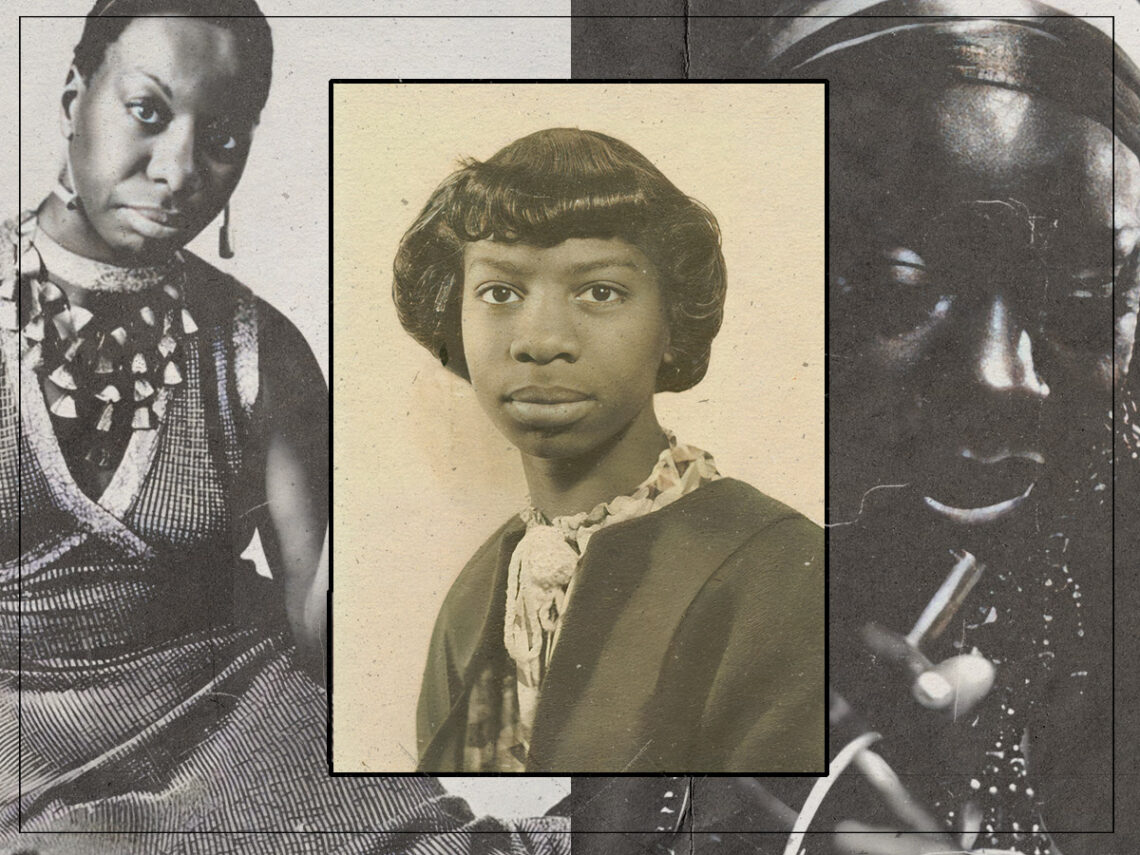
Eunice Waymon: The first chapter of Nina Simone

Renowned as one of the greatest singers in history, Nina Simone showcased unwavering resolve as a performer and an artist of remarkable grandeur. While her brilliance is unquestionable, her life and career trajectory could have taken a drastically different path if not for the pervasive prejudice she confronted.
Thankfully, Simone not only endured these injustices but also used her exceptional artistry to illuminate and address these issues with a seamless blend of grace and courage, effecting positive change through her impactful contributions. From an early age, Simone defied the established norms and fearlessly endeavoured to transform any environment she found inherently unjust.
Of course, that was when Simone was known as Eunice Waymon. Growing up as one of eight children in Tryon, North Carolina, Simone showcased a talent for piano playing from the age of four, learning songs like ‘God Be With You, Till We Meet Again’. At a young age, she also learned the song ‘Sinnerman’, an African-American traditional spiritual song she would play at revivals and prayer meetings.
“Some of my most fantastic experiences – experiences that really shake me, now that I think of them – happened in the church when we’d have these revival meetings,” she explained to Ebony in 1969. “I’d be playing, boy! I’d really be playing. I loved it! Folks would be shoutin’ all over the place. Now that’s my background!”. Displaying her piano prowess, she consistently showcased her skills at the local church, making her debut concert appearance at the age of 12 with a classical recital.
At this particular recital, Simone’s parents assumed the position any proud mother and father would: the front row. However, this was the 1940s, an era still deeply entrenched in segregation, where many black individuals encountered hostility at every juncture. It would be nearly a decade before Rosa Parks famously refused to yield her bus seat to a white passenger, almost a decade until the initial sparks of the civil rights movement.
However, even before such pivotal moments in history, Simone found herself confronting the grim realities of racial inequality when her parents were compelled to relocate to the back to accommodate white people. Refusing to play the piano until her parents were permitted to reclaim their rightful place, Simone kindled a trail that would illuminate the course of her personal and professional journeys.
Unfortunately, this would be one of many racist encounters Simone would be forced to face during her life. After graduating, for instance, Simone dedicated the summer of 1950 to studying under Carl Friedberg at the Juilliard School, preparing for an audition at the Curtis Institute of Music in Philadelphia.
Despite her efforts, her application was rejected, which she suspected was due to racial prejudice. As her daughter, Lisa Celeste ‘Simone’ Stroud, later remarked: “Can you imagine putting in five hours of practising every day for five to seven years and you get to your audition, and they reject you, and it’s not because you weren’t good enough but because of how you look?”
Remarkably, Simone channelled all these challenges into her fiery soul, fearlessly confronting societal injustices in the years that followed. Notably, when James Baldwin sensed a waning momentum in the Civil Rights movement, he discovered a steadfast ally in Simone, acknowledging her unwavering dedication to the cause. “When everything is so desperate, when every day is a matter of survival, I don’t think you can help but be involved,” she once said, explaining an artist’s duty in reflecting the times.
