


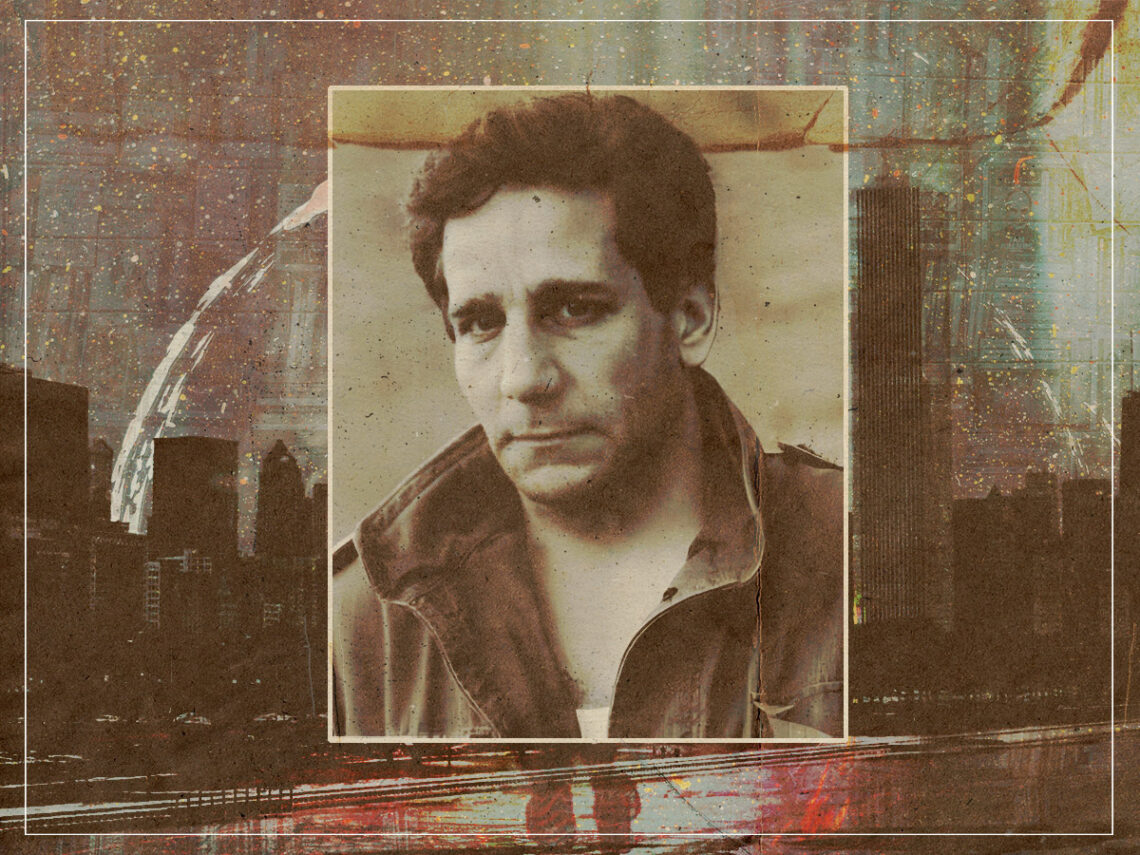
Eugene Izzi: the noir novelist who wrote his own murder into reality

Through the labyrinthine books of James Joyce and later waves of postmodernism, the 20th century redefined preconceived parameters for the humble novel. Famously, Vladimir Nabokov reimagined the classic whodunit in his 1962 masterpiece Pale Fire, which pieces together a mysterious death in the form of a 999-line poem by a fictional author, accompanied by a foreword and protracted commentary written by the deceptive character, Charles Kimbote.
Pale Fire is considered one of the finest examples of metafiction in literature, one that many authors have since tried to replicate and rival. It is unclear what Eugene Izzi’s intentions were in the cold, grey months of winter 1996, but if the crime writer planned to beat Nabokov at the game of meta-fiction, he might just have succeeded where dedication and scope are concerned.
On December 7th, 1996, passersby discovered Izzi’s body hanging lifeless from the 15th-floor window of his office in downtown Chicago. Initially believed to be a suicide, the obscure circumstances surrounding his death soon raised more questions than answers, many of which still loom large in the bustling Illinois city.
Izzi’s body was encased in a bulletproof vest, ostensibly linked to the loaded yet unused gun that lay on the floor in his office. His pockets also contained several intriguing items, including $481 in cash, brass knuckle dusters, a can of pepper spray and notes in reference to a series of alarming telephone conversations.
Although Izzi had achieved acclaim for some of his previous work, his perplexing demise remains his overriding claim to global fame. Reputable accounts are scarce, but it is understood that the writer endured a problematic childhood that tarnished his adult life. As he channelled the dense crime scene of Chicago, weaving the merciless concrete jungle with a portable typewriter, Izzi became increasingly consumed by alcohol. Divorce soon led to isolation, intensified addiction struggles and, inevitably, depression.
Those who knew the author had few doubts when they caught wind of death by hanging, but the exact design of the alleged suicide seemed abnormal, to say the least. A month after the fact, the Chicago Police Department finally disclosed that they had also recovered an 800-page manuscript from the scene. The novel draft details a Chicago-based author who, believe it or not, is found hanging from a 14th-floor window with the above-mentioned items on his person.
With this remarkable development, it is apparent that Izzi spelt out his own demise. However, in the manuscript, the hanging man is the victim of murder by terrorists from Indiana, leading many to conclude that Izzi was tracked down and killed. Rumours suggest that racist terrorists that Izzi had infiltrated as part of his research may have had a motive. This derivation leaves just one plothole: How did he manage to predict the details of his murder in advance?
Thus, the natural and widely accepted conclusion is that Izzi had premeditated his suicide with a plan to coincide his gritty demise with one final artistic flourish, a publicity stunt from which he would never profit. Or perhaps it was a publicity stunt gone horribly wrong…
