


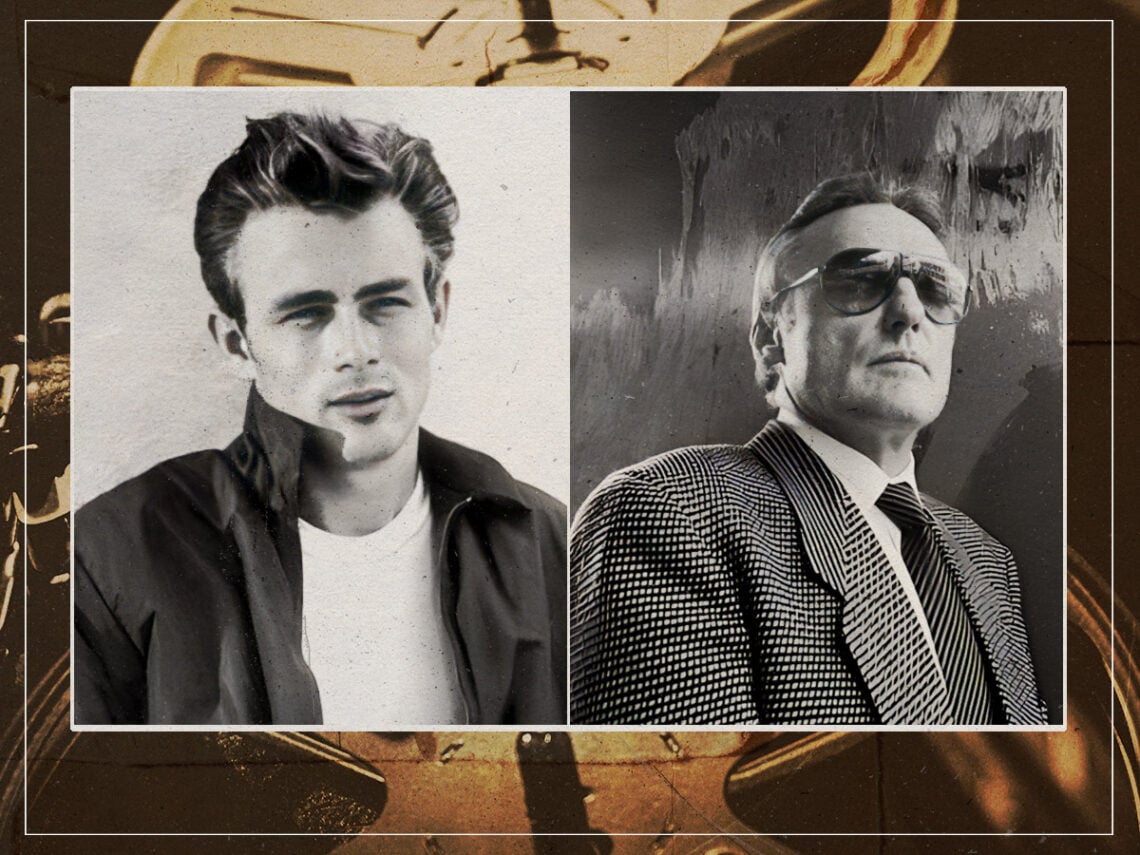
The essential advice James Dean gave to Dennis Hopper: “Don’t act”

Despite dying tragically young at the age of only 24, James Dean left behind a looming legacy. Not just with his own films, but his impact reached other actors too and still does today. While multiple generations look to his performances for notes, Dennis Hopper got them from the man himself.
Hopper and Dean had the slimmest of crossovers. While Dean rose to prominence in the 1950s as one of the earliest faces that could be connected to countercultural cinema thanks to his bad-boy good looks and rebellious spirit, Hopper would come to dominate the 1960s. It would be five years after Dean’s death that Hopper would truly break through with pictures like Cool Hand Luke and Easy Rider, which brought the booming subcultures of the era into the world of cinema. But there was always a piece of Dean with him in that success.
While Rebel Without A Cause was Dennis Hopper’s first-ever film, as he played a minor role in the iconic 1955 film, no one would have guessed that it would be one of Dean’s last. It is without a doubt his most defining role as the image of the actor with a cigarette hanging out of his mouth with his motorcycle feels so ingrained in cinematic history that it endures not just as the ultimate image of the actor but as one of the ultimate images of that era in film. If there was any doubt before that Dean was a star, the film put it all to bed, establishing him as the actor of the moment who was believed to have an incredible future ahead of him.
However, later that same year, he died suddenly in a car crash, ripping his talent from the world and leaving cinema to never find out what might have become of him. But, perhaps, they could look towards Hopper and see some vision of what might have been. During their time on set together, Hopper learnt a lot from Dean, getting to witness his craft up close and also being given his best tips directly from the man himself. What he learnt there would inform the rest of his career.
“He said, ‘Don’t worry about emotion. Learn how to do things: Smoke a cigarette, don’t act smoking a cigarette. Knock on the door, then you see they have a gun in their hand, then you react.’”
Hopper recalled, always carrying Dean’s tips with him. “Basically, don’t indicate. Do something, don’t show it. Don’t anticipate,” he explained, as the 1950s star essentially taught him how to be a subtle and natural actor, making his performances more understated and endlessly more impactful.
While Dean did have some formal training in acting, it was nothing in comparison to some of his peers at the time. Coming just after the Golden Age of Hollywood when actors would be under contract with a studio and be intensely and rigorously trained up in academies to make them exactly the kind of stars the studio wanted them to be, Dean’s modest education was nothing in comparison to that. But, he was a big advocate for training yourself, throwing away any strict rules and simply feeling your way through a part.
“He told me to get rid of my technique, stop the line readings and just let it come out,” Hopper recalled, learning from the best to simply react, not act.
Hopper went on to have a long career, living and working until the age of 74, so he got to live the life that Dean likely would have. He carried that advice close to him throughout it, forever being informed by those tips passed down from the fleeting star, and it’s like Dean’s potential shone through him.
