


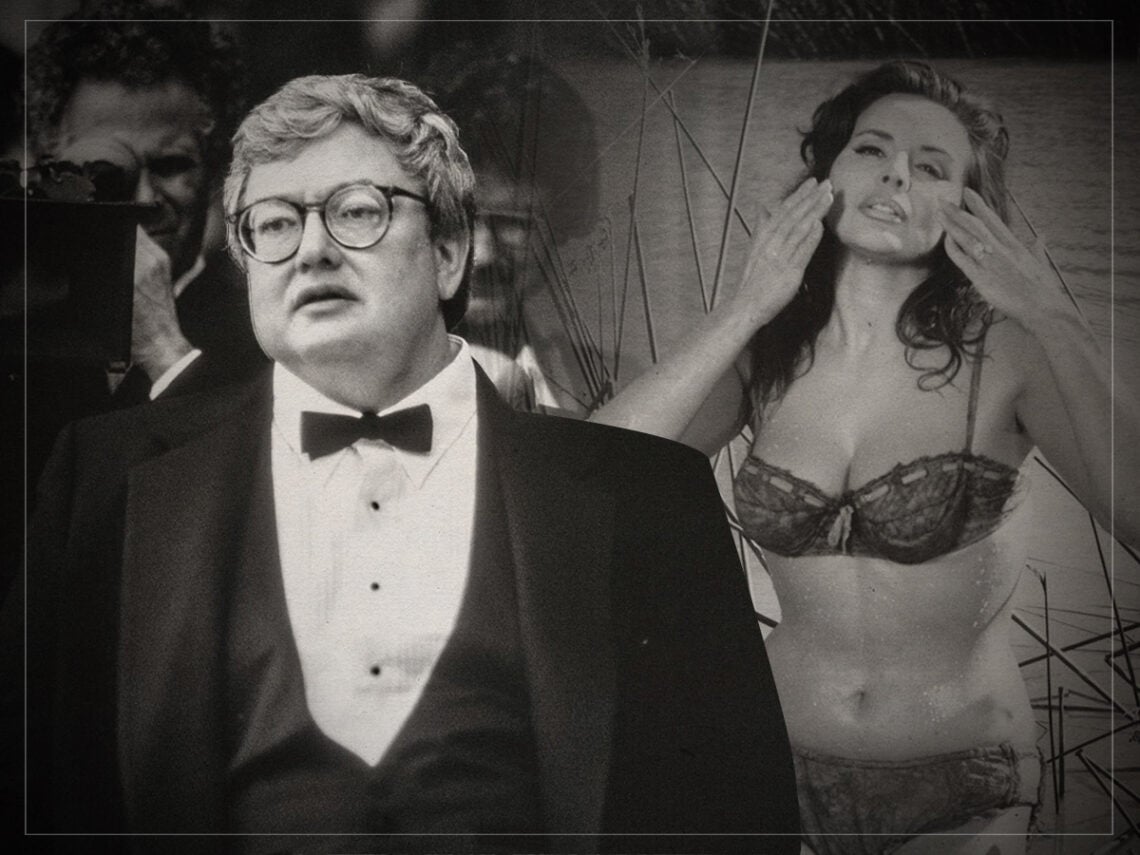
The erotic drama that made Roger Ebert yearn for cinema’s “sexiest woman alive”

As obvious as it sounds, the job of a movie critic is to review the movies that are placed in front of them. While Roger Ebert did that to a certain extent, he barely paid attention to what he’d just seen in favour of a spiralling tangent about a sexploitation icon instead.
It wasn’t completely random, since the picture he was supposed to be offering insightful analysis into was cut from a similar cloth as the ones that jogged his memory of an actor who became an international sex symbol in the 1960s and 1970s by starring in a succession of erotically-tinged local flicks.
That said, director Ricardo de Montreuil would have likely preferred if the most recognisable critic of their era kept his focus trained on judging his 2005 effort, My Brother’s Wife, instead of taking an unprompted trip down memory lane to wistfully recall the heyday of an Argentinian pin-up.
As the title helpfully explains, the story follows a woman who finds herself unsatisfied on multiple fronts with her husband of ten years, so she opts to embark on a passionate affair with his brother. Ebert only gave it one star, for context, but the majority of his time was spent talking up someone else entirely.
“I do not, alas, remember every detail of those steamy Isabel Sarli melodramas from Argentina that used to play in Times Square and provide such a diversion from the New York Film Festival,” he opined. “Having now seen the new Argentinian/Mexican/Peruvian/American film La Mujer de mi Hermano (My Brother’s Wife), I suspect I know the reason: there were no details.”
There’s nothing wrong with comparing one film to another for context, but that wasn’t what happened. For whatever reason, Ebert dedicated most of his thoughts toward Sarli and her collaborations with Armando Bó, which included giving her the first full-frontal nude scene in Argentine cinema history in 1957’s Thunder Among the Leaves.
“In these films, the plot was entirely disposable, except as a device to propel Miss Sarli on an insatiable quest not so much for sex as for admiration,” he elaborated. “She clearly thought she was the sexiest woman alive, and that in itself made her erotic, even in a scene where she attempted suicide by jumping off some rocks and into a pride of sea lions.”
In reviewing My Brother’s Wife, Ebert then referred to his own review of Theo Angelopoulos’ 1995 feature, Ulysses’ Gaze, so that he could reference Sarli again, making note of her “anguished 1960s Argentinian softcore sex films.” What does this have to do with anything? Not much, to be honest, since de Montreuil’s work didn’t get much mention at all as he continued fantasising over Sarli.
The only real criticism came when he called the film “astonishingly simple-minded, depicting characters who obediently perform their assigned roles.” How did he end his review? You’ve probably guessed by now: “At least with Isabel Sarli, you had the impression she was not only having a good time while she made her movies, but enjoyed hours and hours just looking at them.”
