


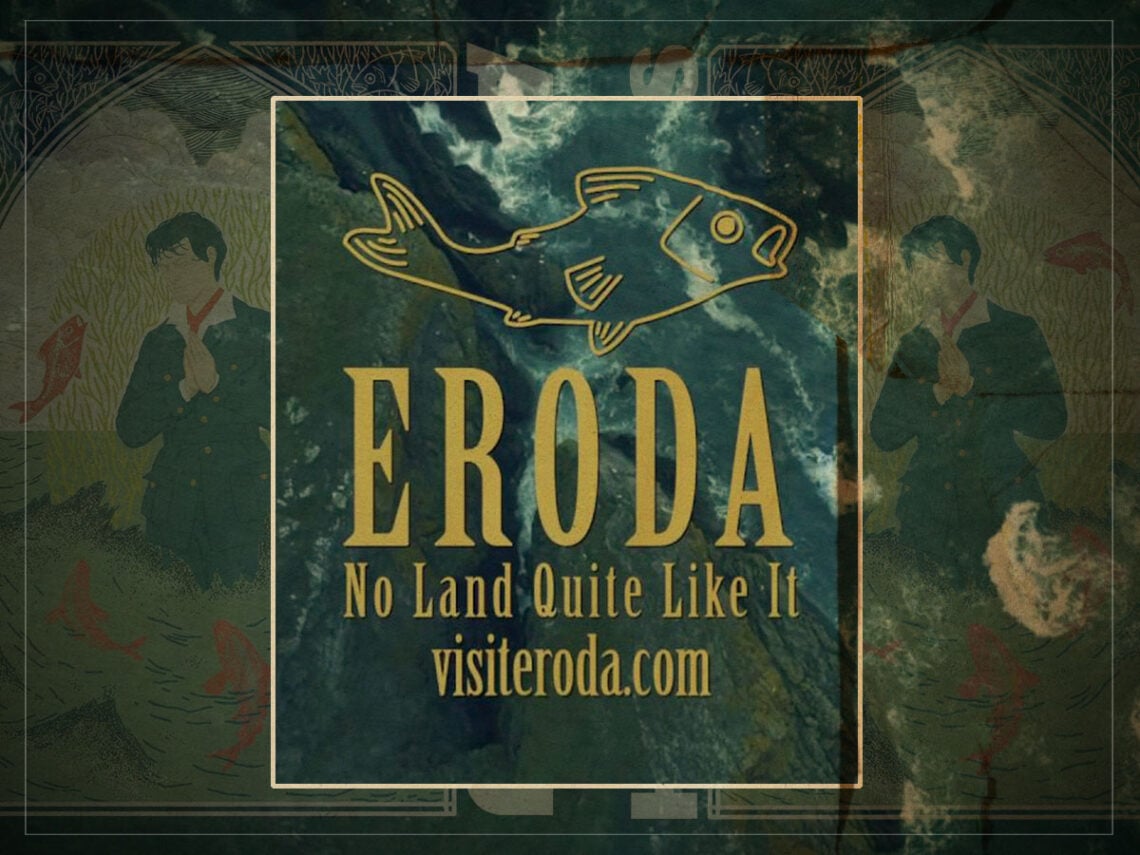
Eroda: the island that changed music

In today’s world, where audiences crave to be a part of a moment and a place, it’s hard not to look at the virality of a campaign like Charli XCX‘s ‘Brat Summer’ and not see its ingenuity. Artists have always blurred fiction and reality, but these are taken to new heights, where the distinction is almost inextricable. One of the turning points in this abundant turn towards aesthetic-leaning or ARG-inspired campaigns was in 2019, when the internet suddenly faced ads for a mysterious island called Eroda.
The need for artists like Charli XCX to become world-builders stems from the pressure to maintain relevance in a modern, social media–first age and the ongoing fight for reinvention in spaces where staleness often reigns supreme. It also provides a heightened, more essential form of escapism that’s, to put it simply, hard to resist. For instance, despite the controversy surrounding Wet Leg’s debut, the promotions for their second album arrived unmistakably concept-first, offering a destination of solace where the weird and the wonderful exist without judgment.
It’s undeniably one of the most charming marketing avenues to explore, especially as many immediately felt drawn to Wet Leg’s hints of a better, more fulfilling form of escape without having teased much of the music yet. It almost didn’t matter, though, because the atmosphere and aura itself promised fun and delight—two irresistible characteristics most are looking for when it comes to new music. “You’ve wandered far,” their website read in an old, early-2000s typeface, “But you are home now. Enrol now. Learn how to live forever.”
It’s an all-too familiar trope in the modern age; utilising old aesthetics for modern pleasure, pushing the idle to become converts with authentic hooks and playful wordplay in a world where “the skin never cracks” and “the body never withers”. In this scenario, time and ageing cease to exist, while Wet Leg maintain their positions at the helm of the movement, following in the footsteps of the many that have meticulously constructed realms around music releases to blur the lines between music and alternate reality. It’s a path many have followed in recent years, no doubt influenced by one of the unmistakable pillars of this shift: Eroda.
These types of visions now saturate the entire music industry, but Eroda felt like a significant turning point, bridging the gap between mystery, surrealism, and music in ways that were immersive in a more unsuspecting, albeit all-consuming, manner. What made this particularly successful was that it all unfolded in response to the modern audience’s unrelenting desire for a slow burn of creative satisfaction, with subtle breadcrumbs planting the seeds for something much larger.

Like many promotions for holiday destinations, the ads for Eroda initially popped up scattered all over the internet, each linking to a website about an isle with several peculiarities, featuring bespoke guest accommodations and other details you’d expect from a completely real location. However, some people noticed immediately that something was slightly off, most notably that the place seemed entirely fictional. It was later revealed to be a marketing ploy for Harry Styles’ second solo album, Fine Line, specifically its second single, ‘Adore You’.
Before that was unveiled, however, many saw the strangeness of Eroda, and how, on the website, aside from offering tranquillity, it also seemed like somewhere oddly off-kilter, with a Tourism Board that warned visitors against mentioning “a pig” at the local Fisherman’s Pub. Anyone on the internet at the time might remember the different conspiracies some were dreaming up about the money-grabbing schemers who were trying to sell a fictional island for a bit of dirty cash, but others, the one that noticed the island was ‘Adore’ spelt backwards, quickly caught on.
To pull this vision off, Styles’ team hired a host of talent, from writers to creative and visual directors, including veteran Dave Meyers, to execute a vision that not only promoted the single and album as a large-scale, immersive moment but also something everybody should want to be a part of. The ads for Eroda worked exponentially because, in the beginning, it was so confusing that it was hard not to be pulled in, with Twitter threads, Reddit posts, and even an extensive Discord ‘Eroda ARG’ server that tried to pick it apart and work out what was going on.
However, the island itself wasn’t entirely enticing—it promised weather that was “perpetually cloudy”, which suggested a different point of intrigue for such efforts: the art of endless possibility. Even those who weren’t fans of Styles were pulled into the mystery that was Eroda, proving that artistic campaigns that reach far out of the artist’s own loyal siloes not only have the power to expand their appeal but create moments that live independently of music, driven by the thrill of cracking the code.
Many ARG-style campaigns, especially those between Nine Inch Nails’ 2007 Year Zero game and Styles’ Fine Line, fell a little flat, with lacklustre components rarely gripping audiences in the same unwavering manner as they intended. It wasn’t just that intertextuality, virtual reality, and immersiveness were falling by the wayside in favour of a more traditionalist approach; rather, no one had really done it right with the right effectiveness to influence the entire industry.
At the same time, many hadn’t even considered the potential hook of mystery in and of itself, at least, not when it came to the “game” of happenstance. Now, there are countless acts embellishing the possibility of conspiracy and mystery across all genres, from the lighter notes of ‘Brat Summer’ and its definitive ambiguity to Swedish rock band Ghost’s entire foundation of lore and even the more recent anonymous band President, who recently began posting cryptic photos and videos on their social media pages and still haven’t revealed their identity. The point is: when things seem a little off with a potential to cross over into the sinister, that’s the sweet spot.
While Styles’ stint for ‘Adore You’ was anything but his usual harmless antics, the idea that someone could have forged a fake island for whatever personal gain was the first step in pulling many people in. The adrenaline of the misdirection is often enough, which is what many now replicate as a means of sparking intrigue beyond their immediate fan base. Countless musicians and bands, from The 1975 to Miley Cyrus, often use ambiguous teasers to attract the unsuspecting and capture them in their traps.

While some aren’t executed on the same scale as Eroda, world-building in a modern ARG sense has become almost a necessity in today’s music industry, especially with so much technology at play. The creativity of the music itself often isn’t enough, as artists now compete for a historic cultural moment that captures a point in time without immediately feeling dated. This has always been true to an extent, but many have raised the bar in recent years, each chasing their own version of Eroda—where audiences wear frowns until their grinning idol arrives, restoring the value of narrative substance, if only for a music video.
Perhaps this is where Eroda set the standard—existing beyond the need for stylistic appeal, offering modern allegories about the vapidity of the familiar. Although mysterious to begin with, it provided a gateway to a story that centred around the value of embracing otherness, even when its distinctiveness incites fear, uncertainty, and confusion. These layers were bolstered by the central character’s fight to save the fish, a quest which sees him discover his own purpose, while gaining acceptance and respect from the other villagers along the way.
From the beginning, therefore, Eroda was the outsider’s fascination, until the story revealed more substantial drippings about what it means to connect in the modern age. And, if the fable of the underdog counts for anything, it’s that beyond the initial mysterious intrigue lies a more hard-hitting scramble for sentimentality in a convoluted world—not just where stories are told for the sake of it, but where they’re used to connect us with the possibilities of music as a contemporary art form, reaching beyond the walls of the record, especially when our heads are turned the other way, unsuspecting in the face of something profoundly unexpected.
