


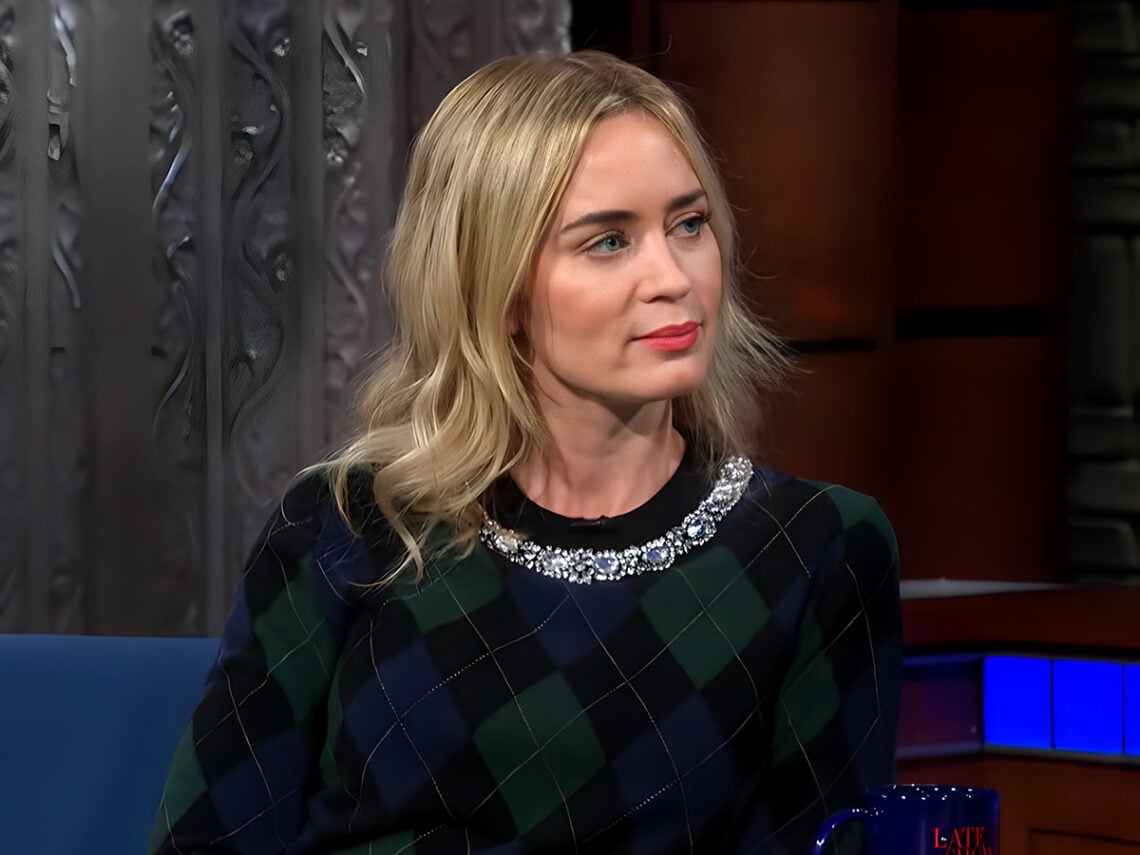
Emily Blunt names her favourite westerns

Acting was the last thing on the mind of British-born star Emily Blunt. The actor who most recently starred in Christopher Nolan’s Academy Award-winning World War II epic Oppenheimer and David Leitch’s action-comedy The Fall Guy struggled with stuttering in some of her formative years as a child. Yet, through sustained efforts and a strong sense of determination – largely fuelled by encouragement from one of her schoolteachers – Blunt eventually went on to perform in a school play that made it to the Edinburgh Festival.
In a narrative arc that seems straight out of a fairytale, Blunt was soon signed up by an agent, and in November 2001, at the mere age of 18, she made her West End debut in Peter Hall’s The Royal Family. Written by George S Kaufman and Edna Ferber, the production saw Blunt essay the role of Judi Dench’s granddaughter. Her performance was welcomed with widespread critical acclaim.
If this proscenium success was anything to go by, silver-screen glory was not far along. In 2004, she starred in Pawel Pawlikoski’s critically acclaimed coming-of-age drama My Summer of Love. She secured her first acting statuette at the Golden Globes for her performance as the grief-stricken Natasha in the BBC-produced socio-political drama Gideon’s Daughter. International critical success followed the same year, with her supporting act in The Devil Wears Prada, where she played first assistant to Meryl Streep’s iconic Miranda Priestly, Editor-in-Chief of the fashion magazine Runway.
However, of all the films that define her diversity, none prove quite as pivotal as starring in and executively producing the revisionist Western television miniseries The English. Written and directed by Hugo Blick and jointly produced by the BBC and Amazon Prime, the film follows the story of an Englishwoman, Lady Cornelia Locke (played by Blunt), who travels to the deserted, sandy West in 1890, seeking revenge on the man she deems responsible for the death of her son.
In a conversation with Deadline, Blunt described her character as “spontaneous and free and really unpredictable.” She is phenomenal as a grief-stricken mother determined to get the justice she believes she has been denied. In an odd way, this determination echoes her own journey to this point in her career. Like a lot of westerns, it is a tale of overcoming great odds, which has always endeared her to the genre.
Despite this being her very first venture into the often trope-bound, format-locked world of the wild west, Blunt claims to have grown up with the fondest memories of watching westerns. “I’ve always loved the genre. I have very early memories of watching Shane, which was one of my mum’s favourites. It was beautiful. And even the modern westerns like Giant, and then The Unforgiven,” she reveals.
George Stevens’ Shane is a 1953 classic set in Wyoming. It follows the story of the eponymous gunslinger played to charismatic perfection by Alan Ladd. Stevens followed up his own work with the cult-classic Giant, which also went on to win him an Academy Award for ‘Best Director’. Starring Rock Hudson, James Dean, and Elizabeth Taylor, the epic feature follows the story of a Texas ranching family and their struggle with the arrival of big oil while addressing issues of racial segregation imposed on Mexican Americans in the era.
Clint Eastwood who rose to fame by starring in iconic westerns like Sergio Leone’s 1963 classic The Good, The Bad, The Ugly, starred in and directed the 1992 The Unforgiven. The film follows the story of Eastwood’s character, a former outlaw, who returns after years as a farmer to execute one last job. A critical and commercial success, the film went on to win an Academy Award for Best Picture, and Eastwood his first statuette for directing.
The towering impact of these works is nothing short of visible in Blunt’s own work. The English, while operating within the narrative framework of the western genre and meditating on themes of restorative justice, is also a stark commentary on race and loss. “It’s steeped in pain and the fact that their identities have been stolen from them, and it’s about race and love and power,” says Blunt, typifying what’s best about the wild west.

Never Miss A Tale
The Far Out Clint Eastwood Newsletter
All the latest stories about Clint Eastwood from the independent voice of culture.
Straight to your inbox.