


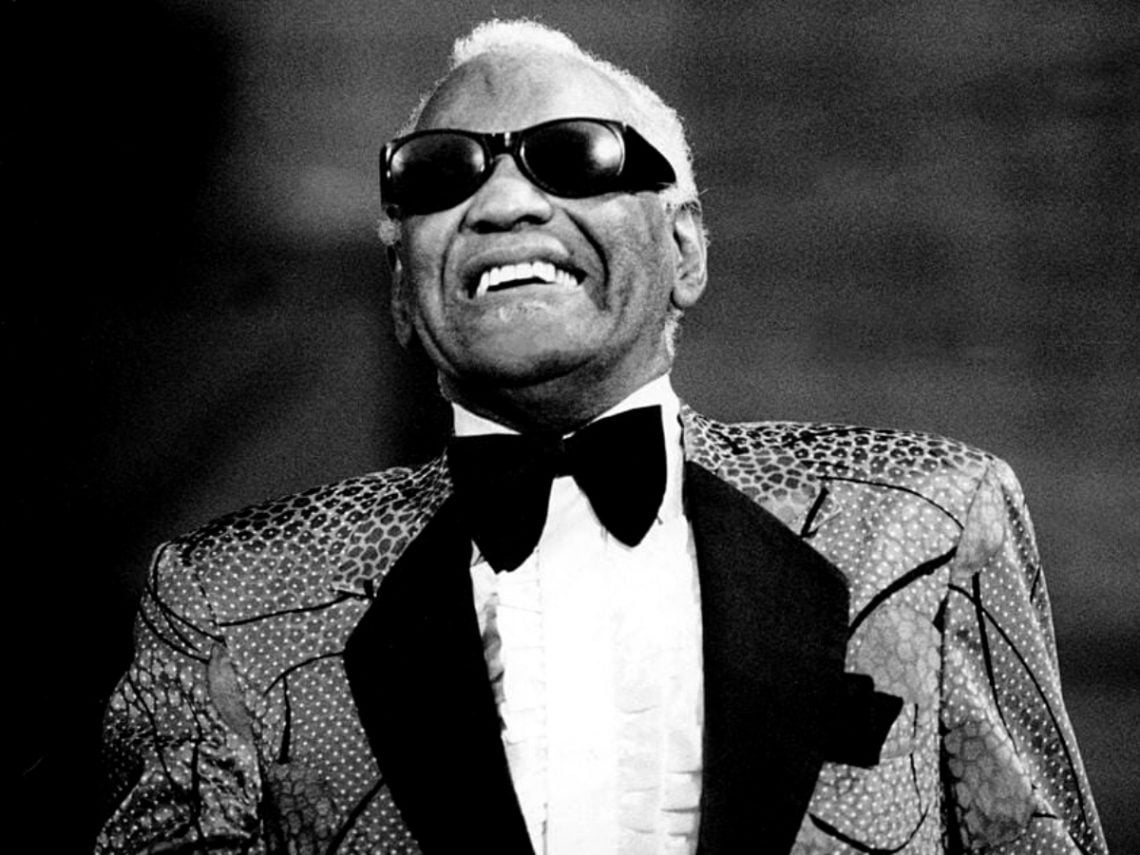
Why Elvis Presley wasn’t ‘The King’, according to Ray Charles

Blowing open the doors for the rock and roll domination of the 1950s, Elvis Presley was more of a cultural revolution than a musician. Lending his instantly recognisable voice, hip-shaking dance moves, and handsome features to the rock landscape, Presley provided countless people with their first introduction to rock and roll. According to figures like Ray Charles, however, Presley’s title as ‘The King of Rock and Roll’ is vastly undeserved.
One of the most important artists to ever grace the airwaves, Charles was a defining figure of American music during the 1950s. Combining elements of gospel, blues, and jazz, the pianist and songwriter almost single-handedly paved the way for the emergence of R&B and soul music, which went on to dominate the US charts throughout the 1960s. Recording swathes of legendary tracks for Atlantic Records throughout the 1950s, Charles was well-positioned to witness the rise of rock and roll as the decade progressed.
Although Elvis Presley was undoubtedly the most influential figure within the first commercial age of rock and roll, he certainly wasn’t the first artist to adopt a rock and roll sensibility. It took artists like Bill Haley to establish rock in the American mainstream, with hits like ‘Rock Around The Clock’ providing an accessible, sanitised way for listeners around the world to immerse themselves in this new genre. Before Haley, however, it was Black American communities who pioneered the style.
In addition to artists like Fats Domino, Chuck Berry, and Little Richard, who emerged during the mid-1950s, rock and roll took multiple cues from the age-old styles of blues and gospel, which had been thriving in Black communities across America for decades by the time Elvis Presley rolled around. As such, many Black artists – Ray Charles being one of them – saw the emergence of rock and roll as an appropriation of their music and culture, and Presley was among the main offenders.
Throughout his career, Charles routinely denounced Presley’s musical quality and his title of ‘The King’, often questioning ‘The king of what?’. During a 1994 interview with NBC, Charles told Bob Costas, “What Elvis did was he caused a lot of the populists – usually when people say ‘populist’ they usually mean white people – to start listening to a lot of music that normally they wouldn’t have been listening to.”
“Elvis was a person who came along at the right time,” Charles continued. “Here was a white kid that could do rock and roll, or rhythm and blues, or whatever you want to call it, and the girls could swoon over him.” Highlighting the differences in how Presley was treated versus Black musicians, he added, “Nat Cole got in trouble in Alabama when women swooned over him, got put out of town.”
Charles’ prevailing issue with Elvis Presley appeared to be his hijacking of Black music for commercial attention and profits. “Black people have been going out, shaking their behinds for centuries,” he declared. “That’s all Elvis was doing, was copying that. He was doing our kind of music, he was doing the Willie Mae Thornton, ‘Jailhouse Rock’, that’s Black music.”
Asking, “So what the hell am I supposed to get so excited about?”
Although Charles might have confused ‘Jailhouse Rock’ with Thornton’s ‘Hound Dog’, his criticism of Presley is hard to dispute. The rock and roll star did owe a lot of his career to the musical efforts of Black artists, many of whom went overlooked or deliberately ignored in favour of Presley. What’s more, the United States was still segregated during the 1950s, with Black people subject to no end of abhorrent discrimination and abuse, so it is no surprise that Charles could not get on board with Presley’s commercial appropriation of Black music and culture.
