


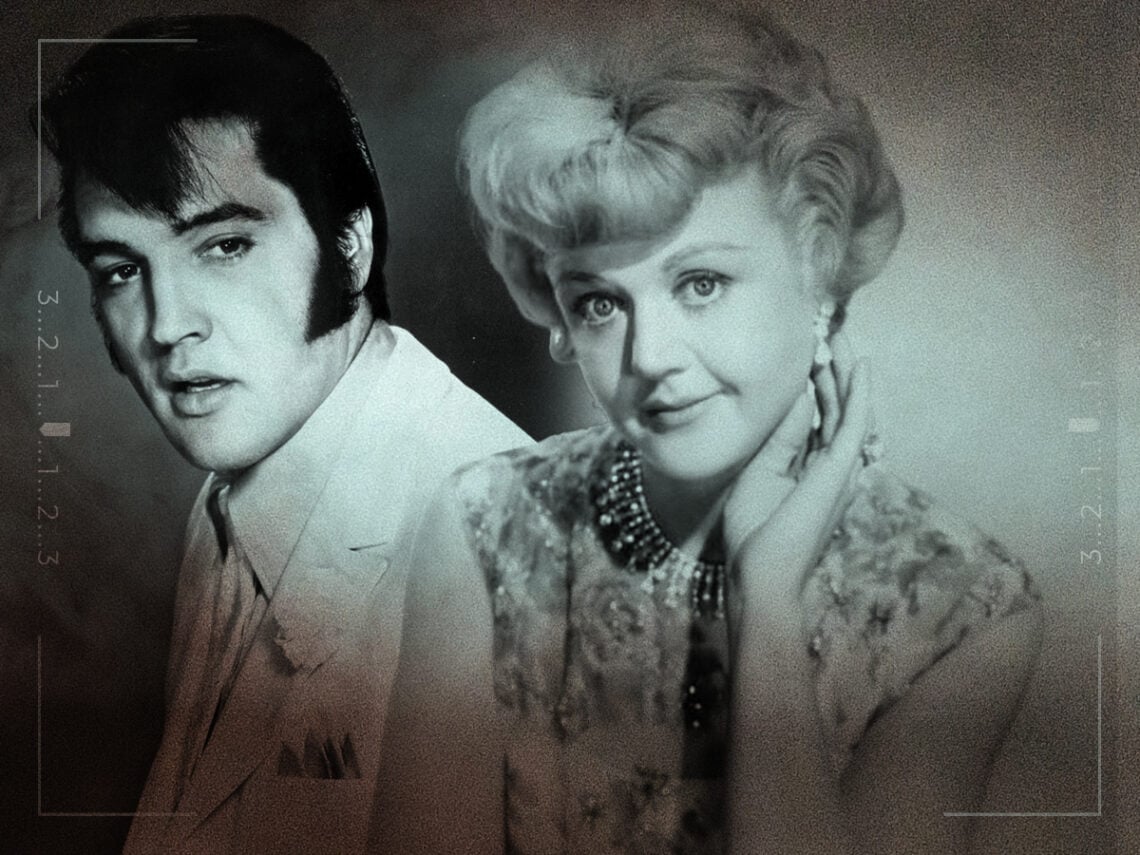
Why working with Elvis Presley in 1961 was “the lowest” point of Angela Lansbury’s career

While Elvis Presley may have initially made a name for himself as the ‘King of Rock and Roll’ in the 1950s, and showcased an undeniable talent when it came to entertaining audiences, very few could have expected him to walk away from the stage so early on in his career in pursuit of the silver screen.
Of course, his effortless charisma was always going to work in his favour for this transition, and while his acting chops may not have been as natural as his understanding of singing for an audience, the amount of prestige that came with Presley’s name caused directors to start seeing dollar signs, wanting to cast him in as many films as possible.
Appearing in 31 films between 1956 and 1969, acting was hardly just a side hustle for Presley, and the passion with which he approached his roles was palpable, even if imperfect in its delivery. In fact, he would go on to become the highest-paid actor in Hollywood as a result of the immense amount of revenue that his films generated, and his general magnetism, regardless of medium, was a key factor in the success of his career.
At the same time, British-American actress Angela Lansbury was one of the most in-demand performers, although it wasn’t necessarily all on screen where she was gaining attention, and her stock as a performer had sunk significantly since earning two Academy Award nominations in 1944 and 1945. Looking to make a transition towards roles that highlighted her ability as a character actor, she accepted a role starring alongside Presley in the 1961 musical, Blue Hawaii, which would end up being one of the most successful box office hits of his career despite its largely middling reviews.
For Lansbury, who was eager to make a grand return to the screen, being alongside Presley was undoubtedly going to be a considerable payday and an opportunity to show a wide audience what she was capable of, but the film’s mediocrity would ultimately get in the way of any heads turning in Lansbury’s direction.
However, the nonplussed reaction of audiences was not the most humiliating aspect of the film that Lansbury had to endure, and in an interview printed in her biography, Angela Lansbury: A Life on Stage and Screen, she declared Blue Hawaii to have been the absolute nadir of her career for a far more unexpected reason.
“That was the lowest, darling,” she said. “Elvis was 26. It’s a jolt, I can tell you, for a woman of 35 to be asked to play his mother. But I did it! I was desperate!”
The age-inappropriate mismatch may have been embarrassing for Lansbury, and the poor quality of the film would certainly not have helped her in her pursuit of returning to former glories, but at least her experience of working with Presley was nothing short of delightful. “Elvis was unfailingly polite,” she continued. “I remember he was into karate at the time. Between breaks, he would break bricks with his hand.”
Presley may have been more interested in perfecting karate chops than his acting ones at this time, while Lansbury was driven to perform in a role she felt hugely uncomfortable in, but she did eventually rediscover her previous levels of acclaim, earning her third Academy Award nomination in 1962 for The Manchurian Candidate.
