


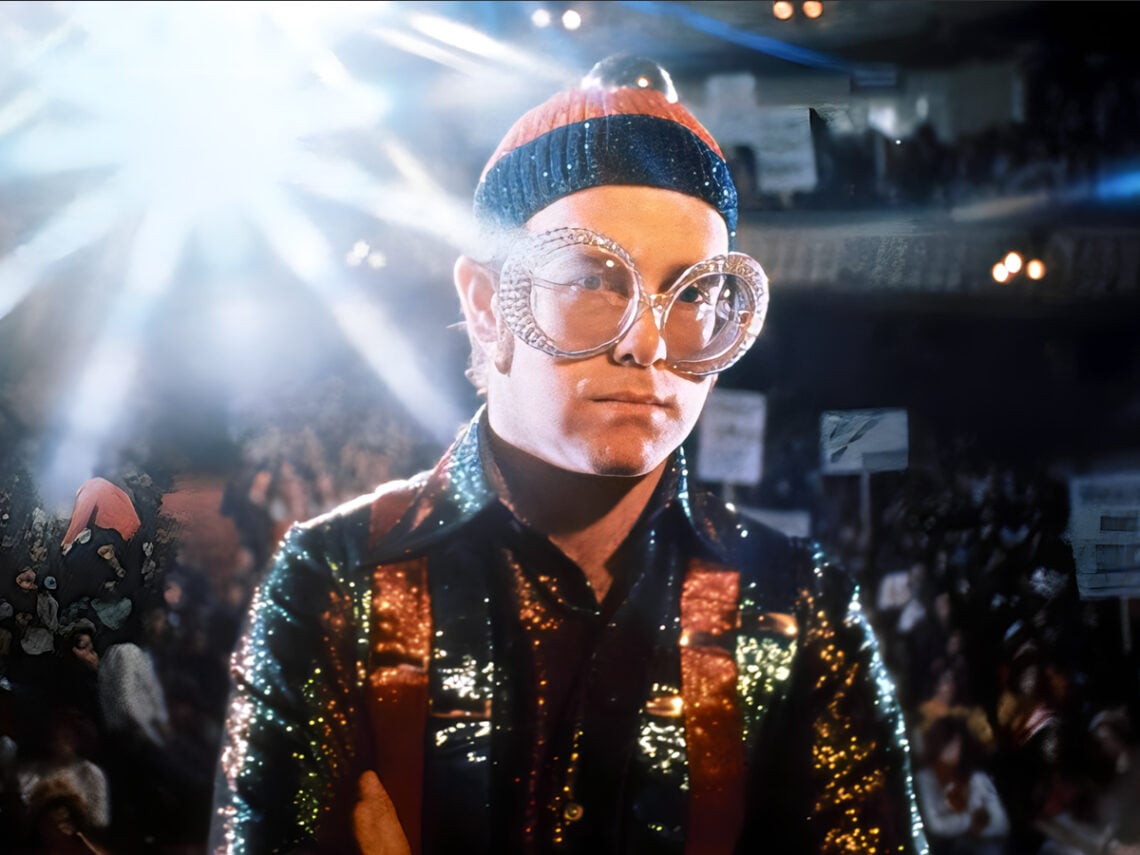
Elton John’s regrettable first band was “beyond dreadful”

The early 1960s rock scene didn’t have time for an artist like Elton John. Although he may have strutted his stuff up and down the pop charts in the early ‘70s through his collaborations with Bernie Taupin, John was always a humble piano player looking to collaborate with whoever he could play with at the time. Since no one was looking to hire a rock and roll piano player before The Beatles came in, John cut his teeth in Bluesology.
While John may have studied classical piano at university, some of his first gigs as ‘Reggie Dwight’ were playing in blues bands, entertaining patrons in pubs across England. Although John described the experience as “beyond dreadful”, he did mention learning how to work with a crowd in those early days, recalling to Rolling Stone, “[I played] every Friday, Saturday and Sunday for a whole year. And during that whole period, I don’t think I ever missed a gig. I used to sing Jim Reeves songs, Cliff Richard songs, anything that was popular”.
Since John had expected to only play a handful of gigs due to the band’s constantly shifting lineup, things began to change when they became a semi-professional rock band in the club scene, quitting school to play with the group full-time. As a few months became years, John started to gain some traction with Bluesology, with his vocal showcase ‘Come Back Baby’ becoming a major hit on the charts. John remembered it vividly: “I can remember sitting in the car and hearing the record being played on Radio Luxembourg and saying, ‘Hey, that’s me singing folks!’”
While the days of bluesy singing may have been fun, it wasn’t enough to push Bluesology beyond one-hit-wonder status. For the longest time, John pressed on working on other songs which he described as “equally depressing”, like ‘Mr Frantic’. Between the constant cycle of shows, John’s life was changing by the time Long John Baldry returned to the club circuit.
Baldry had been a legend for some time before John came on the scene and had recently championed Rod Stewart into a singing career with The Small Faces. By the time Baldry had arrived on the scene again, Reggie Dwight’s heart wasn’t in live performance anymore, wanting to move past his club days into session work. After answering an ad in NME looking for sessions players, John got paired with lyricist Bernie Taupin, who would both go on to write one classic after another like ‘Rocketman’ and ‘Candle in the Wind’.
While young Dwight was about to hit the big time, he knew that no one would accept a pop singer with a name like his. After thinking about different names, his mind went back to his stomping grounds, taking Elton from Bluesology saxophonist Elton Dean and John from Long John Baldry, saying, “It was done on a bus going from London Heathrow back into the city, and it was done very quickly. So I said, ‘Oh, Elton John. That’s fine’”. John may have tried to wrap a persona around his music, but everyone saw the real Reginald Dwight every time he stepped out onstage.
