


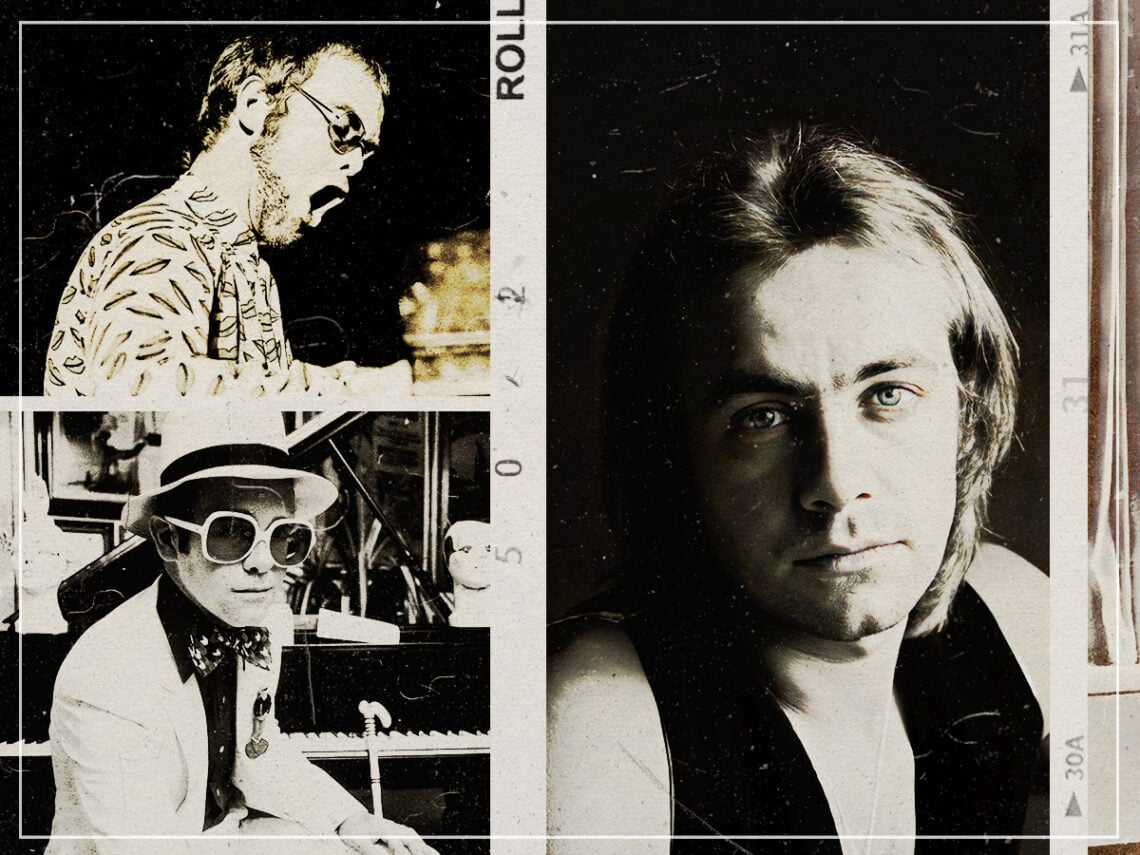
The Elton John song Bernie Taupin called “a perfect marriage”

It’s hard to think of Elton John’s music with the help of Bernie Taupin. Even though John was known as a master of melody whenever he sat behind the piano, Taupin’s ability to create vivid pictures in the listener’s mind was unlike any other singer-songwriter on the scene, describing wistful characters on ‘Levon’ and ‘Candle in the Wind’ with a firm degree of sympathy. While Taupin usually had a few lyrics that didn’t hit the mark, he thought one deep cut gelled perfectly with what John came up with.
For the first few years of both writer’s developments, though, it looked like Taupin wouldn’t work with John. Since John was known as a musician writing his songs, the lyrical quality was so poor that one label executive handed John an envelope out of pity, which contained the first lyrics from Taupin.
While the lyricist may have come from a completely different world than John, they quickly became musical soulmates when they sat down to write, often putting together the ideal arrangement for a song without thinking too hard. Instead of the usual back-and-forth between artists, though, John was known to sit with Taupin’s pieces of lyrical prose and write the song around the words.
Quickly becoming one of the mainstays of singer-songwriters, Taupin was starting to become desensitised to fame when working on tracks on Goodbye Yellow Brick Road. While the title song evokes the bittersweet feeling of fulfilling one’s dreams and being crushed under their weight, the various characters populating the rest of the album are reminiscent of Taupin’s childhood.
Throughout songs like ‘The Ballad of Danny Bailey’, Taupin would write vivid tales taken from the Westerns that he saw as a child. Going through the kinds of movies that he would watch as a kid, ‘Roy Rogers’ became a loving ode to the days lost to time, when all Taupin had to worry about was whether the titular cowboy and his trusty horse, Trigger, would survive to see another day.
Putting together a lavish musical accompaniment behind it, Taupin thought that the song was one of the most accurate portrayals of his lyrics that was ever made, telling Classic Albums, “‘Roy Rogers’ is another one of those songs that’s a perfect marriage of lyrics and melody. It really is so indigenous of my childhood. All I watched was Westerns. That was a total homage.” Even though Taupin would be singing what was on his mind, it’s not like John didn’t feel the same way.
One of the first things the duo bonded over was their love of westerns, which would be explored in some of their earlier work like ‘Ballad of a Well-Known Gun’. Even though John has admitted that he tries to suit the lyrics, he said he didn’t need to waste time putting the final version of ‘Roy Rogers’ together, explaining, “Sometimes I’m singing Bernie’s lyrics, and I’m singing what he wants to project. And I don’t mind that at all, but when you get a song with a lyric that you both want to say, it’s so much easier to write.”
Despite a few winks to the audience with John’s mispronunciation of Rogers’ name in the chorus, every piece of this track was a labour of love for John and Taupin. Regardless of how many times they may have worked with the same style of song, ‘Roy Rogers’ is a snapshot of the time before they were famous, watching the gunslingers on the screen with stars in their eyes.
