


The one Elton John lyric Bernie Taupin wishes that he could take back

Following his meteoric launch to stardom in the late 1960s, the Rocketman, Elton John, relocated to the US to join ranks with the rock star elite of the era.
When he wasn’t grooving along to the latest funk and disco innovations at Studio 54 on the East Coast, Elton could often be found raising the roof at his opulent mansion in Los Angeles. His parties were so decadent that he reflected in his memoir with a general amazement that he survived them.
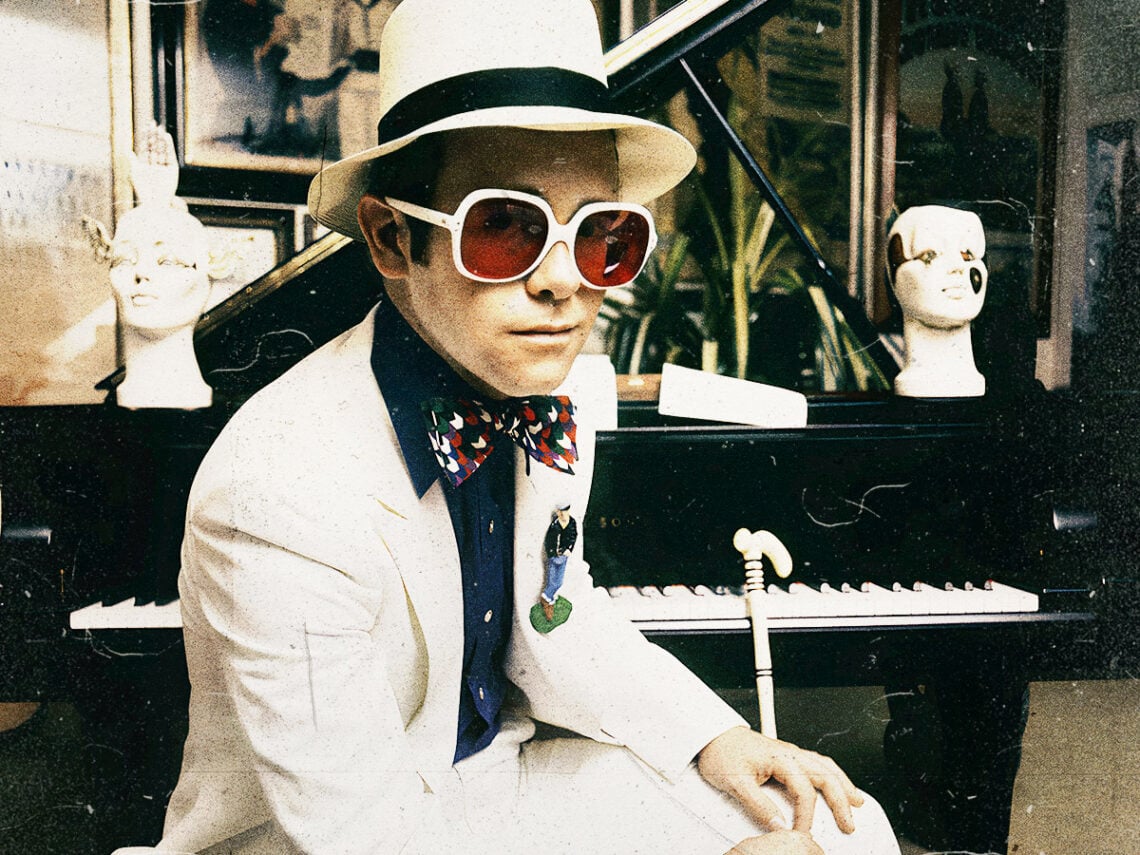
In the popular 2019 biopic Rocketman, director Dexter Fletcher also examined the heady highs and crashing lows of Elton’s hit-filled career. Throughout the 1970s, the star’s piano virtuosity and gregarious nature took lengthy strides, enhanced by the lyrical prowess of his songwriting partner Bernie Taupin. However, behind the loud sunglasses was an internal struggle that predestined the star to derailment.
What started with social lubrication snowballed towards excess, addiction and isolation. “I’m not being flippant when I say that when I look back, I shudder at the behaviour and what I was doing to myself,” Elton once recalled. Thankfully, Elton survived his addiction and has cited several friends as crucial figures in his recovery. Taupin was chief among them.
In a 2023 interview with Goldmine, Taupin revealed that their supportive friendship flowed in both directions. After describing Elton as the “ultimate psychiatrist” following his 1990 bid for sobriety, Taupin revealed he always goes to his old friend with any personal issues.
“If you need to get something off your trust, he’s the first person you need to go to to get some easy answers,” Taupin explained. “He is a complete constant. You can always rely on him.” In fact, many fellow stars have over the years.
Later, Taupin remembered that Elton was hugely supportive when he first moved to London in the late 1960s just as their fateful creative union was commencing. “I was a fish out of water floundering about in the big city,” Taupin said.

“So he was definitely a crutch to lean on,” he continued, “and he did it magnificently and took care of me and made sure that I wasn’t abused by the cynical mindset of others that might have viewed me as being a little wet around the ears and green when l actually really wasn’t. I was far more intelligent than they give me credit for.”
In their respective personal lives and musical output, Elton and Taupin reveal themselves to be sentimental and emotionally intelligent human beings. This delicate touch can be heard in much of the pair’s beloved balladry, including the classic single ‘I Guess That’s Why They Call It the Blues’.
Released on the 1983 album Too Low for Zero, the song appeared reflective of Elton’s concurrent addiction struggles, but the lyrics were actually a reflection of Taupin’s innermost feelings. It represents perhaps the lyricists most personal song, and yet, it also proves to be one that he has regretted in some ways in the years since.
“I wrote this in Montserrat, an island that, tragically, no longer exists,” Taupin once revealed (a volcanic eruption in 1995 buried the capital in 12 metres of mudflow and thick ash). “Basically, it’s a letter home with a small tip included about making the most of time, not wishing it away just because you can’t be with the one you love. Time is precious; read books, paint a picture, bake a cake. Just don’t wallow, don’t be content.” In some ways, the unfortunate fate of Montserrat embodies that.
The song’s message is didactic and important, but Taupin has come to resent its maudlin insincerity. “The whole ‘loving you more than I love life itself’ is something I would never say now,” he added. “It’s kind of a crass sentiment and totally false. It’s quite another thing to love someone deeply with your whole heart without stooping to this kind of lie.”
In other words, in a bid to dive deep in search for sincerity, he dug too far and presented a falsehood. “I loathe giving songwriting advice but were I pushed, I’d say, ‘Never say you love someone more than life or that you’d die for someone in a song.’ It’s just such a disservice to your own spirit,” he added.
Continuing, “I’d like to think that I’d lay down my life for my children, but until you’re faced with the reality, it’s kind of a moot point. Rambling, I know, but relative nonetheless.” For a song founded on honesty, this moot point has actually always stuck in his craw.
Despite Taupin’s newfound reservations, the song remains a favourite of Elton’s, especially on the live stage. “It’s just a great song to sing,” he once noted. “It’s timeless.” And it was a giant hit, too, hitting fourth and fifth in the US and UK charts respectively. Besides, there are certainly more regrettable lyrics in the annals of pop, that’s for sure.
