


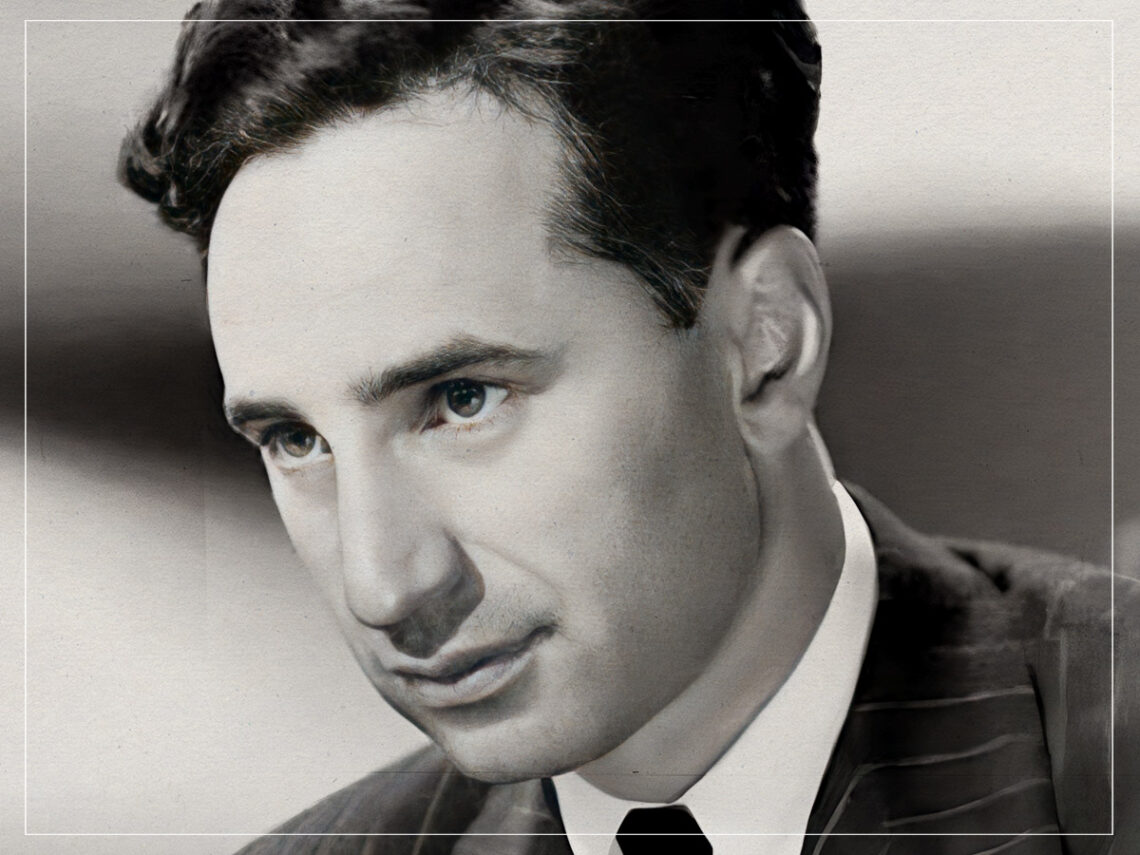
Elia Kazan names the greatest actor of all time: “I don’t think anybody’s as good”

Few figures are as closely tied to the evolution of Hollywood as Elia Kazan.
Before becoming a theatre and film director, he began his career as an actor, co-founding the iconic Actor’s Studio in 1947. In Kazan’s institution, Lee Strasberg began teaching “the Method”, later known as “Method acting”. Thanks to his experience and dedication to the craft, Kazan could always spot a great actor, so it’s perhaps fitting that a former student of Strasberg’s is the actor Kazan believes to be the best of all time. In fact, he is the one who discovered this acting prodigy and gave him the roles that made his name.
When Kazan was casting his 1947 Broadway adaptation of Tennessee Williams’ classic play A Streetcar Named Desire, he knew exactly who he wanted to play: the animalistic, brooding Stanley Kowalski. He had produced a play named Truckline Café for Harold Clurman, which featured a five-minute monologue about murder delivered with fierce magnetism by a young actor named Marlon Brando. In 1988, Kazan told Fresh Air, “He was stupendous…and that was his audition. He didn’t know it.”
Brando was cast in the play and three years later played Kowalski in the iconic 1951 film version, also directed by Kazan. In the classic scene that sees Kowalski bellowing his wife Stella’s name with unbridled emotional intensity, Kazan admitted that he didn’t have to give Brando a lot of direction. He revealed, “I just told him to get on his knees at the bottom of the staircase. But I didn’t tell him what to do with his voice or how he should shout it. He just knew.”
In truth, Kazan felt like he and Brando had such a symbiotic connection that the actor often knew exactly what he wanted, even if he couldn’t articulate it himself. He said, “Many, many times with him, he was ahead of me, and he understood what I said and understood it better than I said it. And I hardly had to tell him anything.”
Three years after Streetcar, Kazan and Brando teamed up again for On the Waterfront, which earned Brando an Academy Award for ‘Best Actor’. Amazingly, though, he initially turned down the role, leading Kazan to turn to the seemingly unusual choice of Frank Sinatra for the part of boxer and dockworker Terry Molloy.
“Frank would’ve been very good,” insisted Kazan. “Frank comes from Hoboken, and he’s a street kid too, and he’s tough. And he would’ve been good. And he’s tough the way Brando’s tough.” He believed that Sinatra exhibited a quality similar to Brando’s. At the same time, he appears ready to defend himself with his fists, yet “also has a very poetic and romantic side that comes out in his songs.”
Kazan was ready to forge ahead and make the movie with Sinatra as his star, but then fate intervened, and a scheduling conflict meant “Ol’ Blue Eyes” had to drop out. Thankfully, the director was able to go back to Brando and convince him to do the movie. In truth, that’s what he wanted all along. After all, even if Sinatra would have done a serviceable job in the part, he’s no Brando.
As Kazan matter-of-factly stated, “He would’ve been damn good too, but not as good as Brando. I don’t think anybody’s as good as Brando.”
Once again, as on Streetcar, Brando delivered an instantly iconic scene with his “I could’ve been a contender” speech – and once again, Kazan claimed he barely had to give him any guidance. In fact, he claimed in his memoir that the scene almost directed itself because Brando was so dialled in. Kazan assured Fresh Air, “I wasn’t kidding in the book. I wasn’t being falsely modest. I think I’m a damn good director…But…I didn’t direct that scene much. Very little. I just put them there.”
In truth, would Kazan have expected any less from the actor he named the greatest of all time?
