


‘How Deep Is Your Love’ movie review: a remarkable documentary

Very little is known about the deepest parts of Earth’s oceans. Exploration of these areas is still new, and knowledge of the habitat is very incomplete, but what is known is fascinating and strange. Advances in oceanographic technology have recently allowed for a thorough and groundbreaking British-funded survey of one of the deepest points in the Pacific Ocean: the area known as the Clarion-Clipperton Fracture Zone, a massive trough in the seabed up to 6,000 meters deep at some points.
This survey, its results, and the political issues driving it are the subjects of an ominous but astonishing and informative film by documentarian Eleanor Mortimer. This particular zone in the eastern Pacific is not officially owned by any nation; the UN considers it the common property of all mankind. It is managed by the International Seabed Authority, an intergovernmental organisation meant to protect the environment of any area of ocean over 200 meters deep and, in particular, to manage any deep-sea harvesting or mining activity.
It is the growing interest in undersea mining that has made this study necessary. The ocean’s ‘midnight zone’, the name given to any area below 1000 meters deep, is lined with mineral nodules, formed gradually over millennia, which are rich with the very elements needed for ‘green energy’ technology: solar panels, electric car batteries, and the like.
How much harm such mining would do to the zone’s environment is uncertain, since the area remains largely a mystery. In this documentary, scientists aboard the research vessel Falkor are assigned to conduct an intense, in-depth study of the organisms living in the zone and their habitat, partly through the use of an underwater camera drone.
Director Mortimer’s film is a perfect balance of scientific data, appreciation for the beautiful but bizarre inhabitants of the ocean floor, and a cautious depiction of looming economic and political factors. As the vessel sets out, and the first images of largely unknown creatures are scanned, the excitement of the onboard oceanographers is contagious.
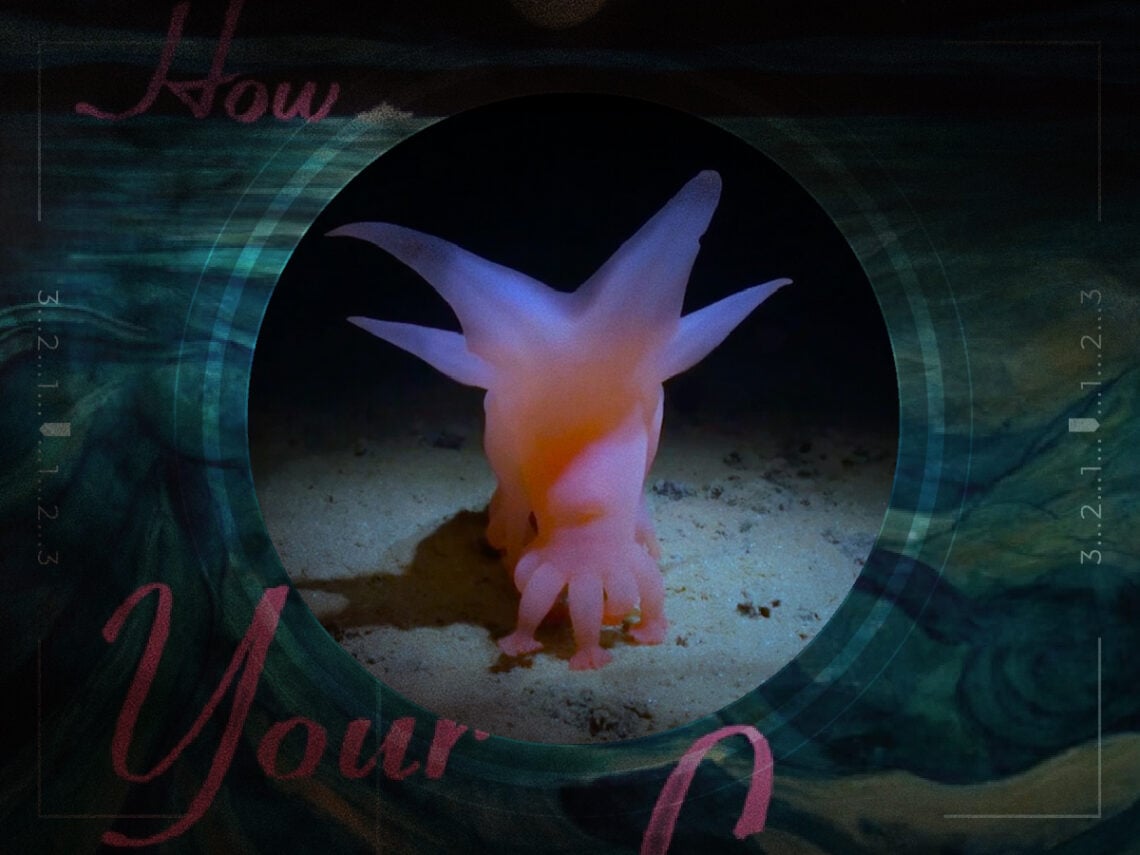
The animals that appear onscreen through the scanning devices are almost too strange to be real, most of them bearing no resemblance to any known aquatic species. One of the crew’s tasks is to assign each animal a Latin-based scientific name, since virtually all the organisms they find will be new and unknown.
Until they can determine their basic characteristics leading to a suitable name, the crew assign a temporary name based on the creature’s appearance, identifying them by such surprisingly apt names as ‘Barbie Pig’, ‘Headless Chicken Monster’, or ‘Gummy Squirrel’. The footage of these unlikely beings is remarkable, and set off by a musical score by composer Fraya Thomsen that enhances their beauty or their sheer weirdness.
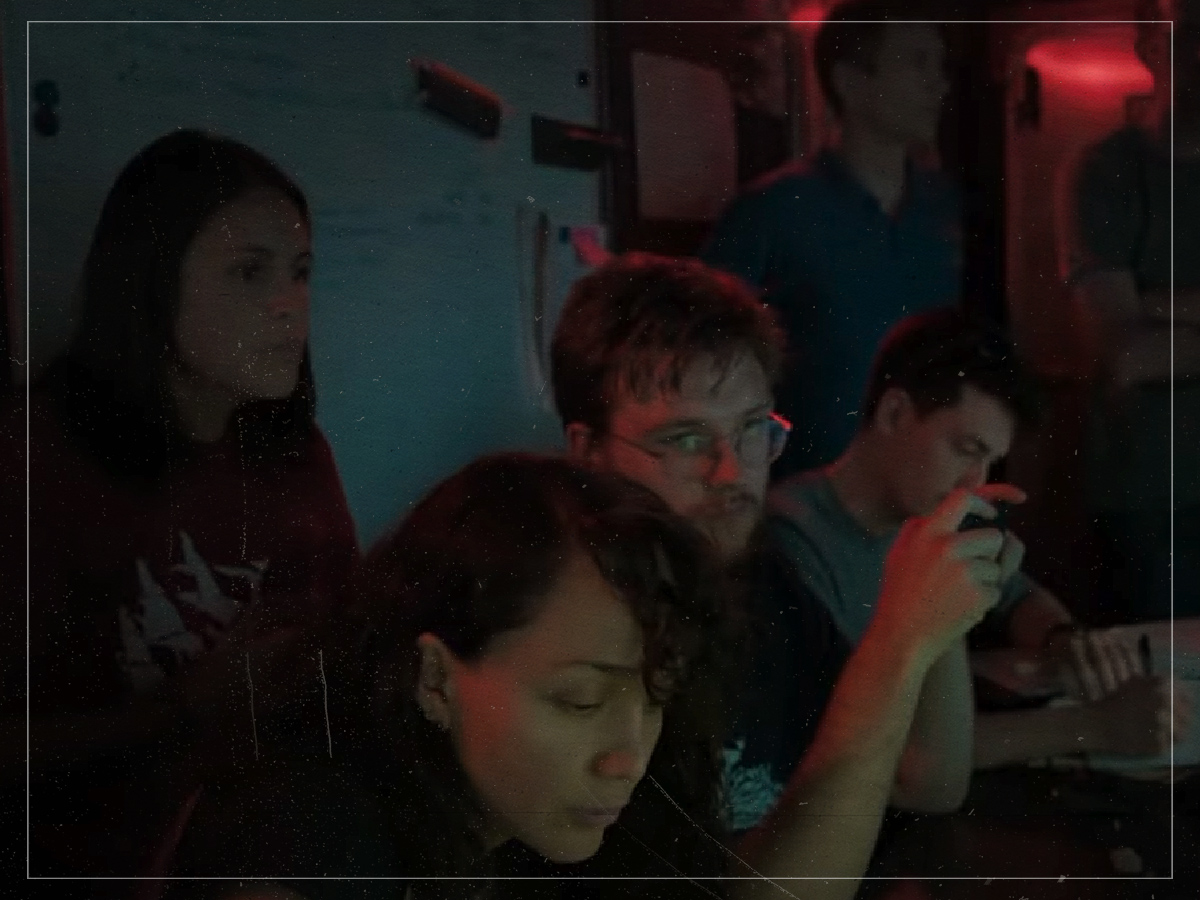
However, this is not a straightforward gathering of information. The researchers’ earnest work is done against a background of conflict. Nations and corporations are planning mining efforts and pressing for access, while activist groups like Greenpeace go to sea to oppose these plans. The scientists are unwittingly under scrutiny, seen by some as impeding deep-sea mining, by others as normalising the idea, especially given that collecting and studying the coveted mineral nodules in the seabed is part of their mission. The actual mining negotiations are part of the story, although most such discussions are kept carefully secret.
A sense of tension often comes from the pressure on the researchers to produce data, while most of the organisms and their place in the ecosystem will take months, if not years, to fully identify. To be certain that mining can be done without irreversible damage would take even longer. The documentary takes pains to give an accurate and balanced view of the facts, even while revelling in the actual discoveries being made by the Falkor and its crew.
While interested parties wait for the expedition’s results, the scientists aboard are engrossed in this unfamiliar world. A poignant part of the study involves collecting samples for direct examination, using a remote-control grappling device.
As the narrator (the director herself) points out, the only way for an earthly land creature to meet with a deep-sea species is if one of them is dead. The organisms being examined die while being brought to the surface, due to the enormous pressure change. The scientists learn to appreciate and admire the life of this unfamiliar habitat, and to regret the necessity of destroying a small part of it in order to learn more.
This remarkable documentary manages to both inform and inspire. It expresses the wonder of the barely known environment at the inaccessible depths of the ocean, while sharing the findings of the researchers discovering it before our eyes. At the same time, it provides the essential facts, both scientific and economic, about the plans and possible effects of undersea mining that hangs over the project.
The delicate creatures living in the zone could be threatened not only in the most obvious ways, such as being crushed by machinery, but even by the sudden introduction of unfamiliar light, noise, and alterations of habitat; in this early stage of research, it is still uncertain how much this ecosystem can tolerate. The ominous aspects of these plans are offset by light, sometimes silly humour – including the incongruous Bee Gees reference in the title – and the research crew’s high spirits and passion for their work, which keeps the account upbeat and enjoyable.
However, the film is also careful to supply the facts behind mining plans, the contesting pros and cons of disrupting one environment to possibly preserve another, and the difficult decisions that are ahead for us all.
