


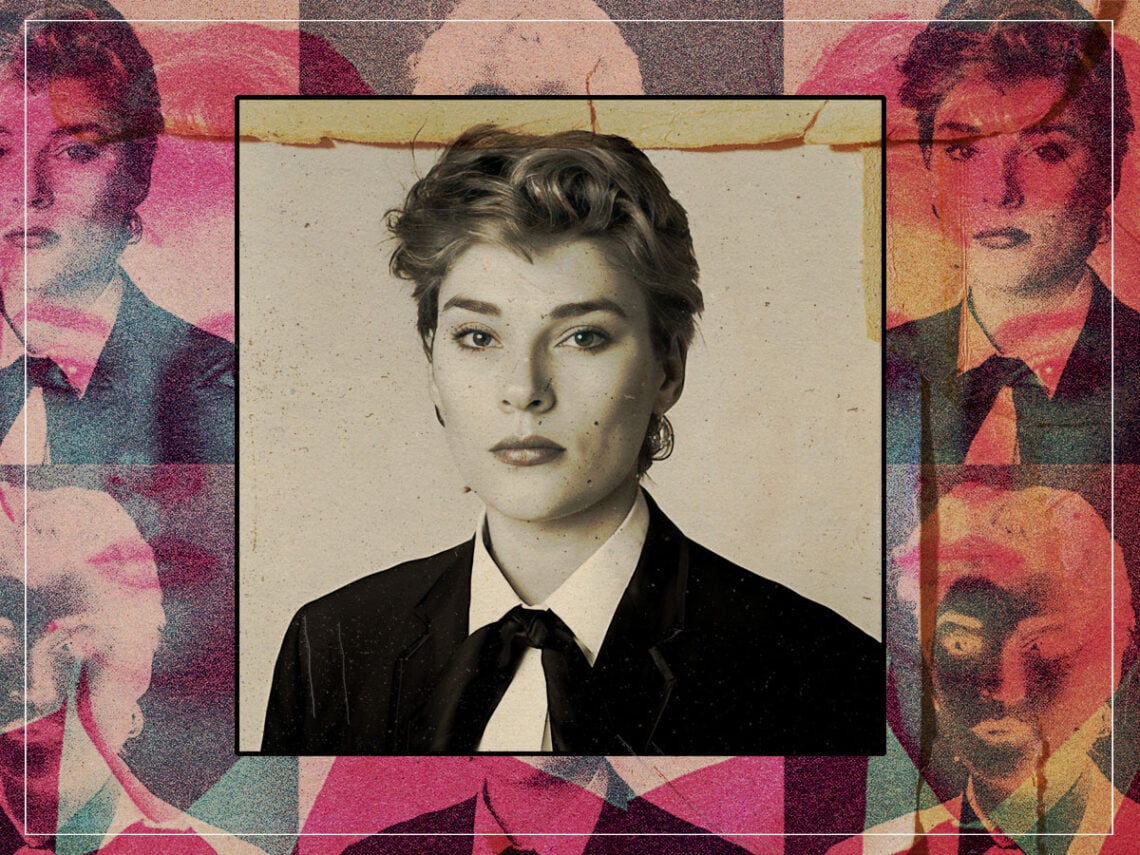
Edwige Belmore: the chaotic life and times of France’s ‘Queen of Punk’

The vast majority of discourse surrounding the revolutionary stylings of the punk rock revolution is limited to those bands who rose from the sticky floors and sweat-stained walls of CBGB in New York and London’s The Roxy Club. Inevitably, though, the nonconformist nature of punk was not limited to the English-speaking world. Outside of the UK and America, one of the world’s most vibrant punk movements was occurring in France. Among the many groups that populated the world of French punk, few names commanded the same respect as Edwige Belmore.
It should come as no surprise that punk found a natural home in France, given its long and illustrated history of revolution challenging those in positions of power and authority. Perhaps that is why the nation produced some of the greatest punk acts worldwide, including the likes of Lizzy Mercier Descloux or Bérurier Noir. Edwige Belmore was something of a rarity. It seemed as though punk was running through her veins long before mohawks and bondage trousers hit the streets of Paris.
Belmore had been forced to fend for herself from a young age, abandoned by her parents and subsequently kicked out by her adopted parents at the age of 17, left to forge her own path through the streets of Paris. France’s capital in the 1960s was seen as a beacon of style and grace, helped along by the French New Wave cinema movement and iconic musicians like Françoise Hardy and Jacques Dutronc. For Belmore, though, the reality of the city was far less appealing. Luckily, the young rebel found solace in the revolutionary sounds of punk.
At the age of only 19, Belmore attended a Sex Pistols show, and everything seemed to fall into place. The gig produced a visceral reaction in Belmore, who burned her entire wardrobe and shaved her head immediately after the show. Punk rock had arrived, and it caused a complete rebirth for Edwige Belmore. The few early adopters of punk in Paris quickly recognised the uncompromising and powerful attitude of Belmore, and soon, she found herself within the ranks of the scene’s elusive group, L.U.V.
With the pioneering all-female punk band, Belmore honed her craft to become perhaps the most prominent woman within the French punk movement. It was also through her work in the scene that she became something of a cultural icon worldwide. Like Descloux before her, Belmore soon found that New York was calling, and she found a natural home within the eclectic world of the city’s underground, forging friendships with the likes of pop art progenitor Andy Warhol and becoming a regular at Studio 54.
In many ways, the work of Edwige Belmore soon eclipsed the Parisian punk scene, which first inspired her. All of a sudden, she was modelling for iconic photographers and designers, as well as appearing on magazine covers and in films. The image of Belmore with her peroxide blonde hair is an instantly recognisable image of punk rock, yet many people remain unaware of her incredible music career.
L.U.V., for instance, are a largely forgotten band, almost impossible to listen to except through low-quality bootlegs. Meanwhile, her later group Mathématiques Modernes remain a pretty obscure outfit, underappreciated by the masses – yet everybody knows the image of Belmore kissing Andy Warhol. In some ways, perhaps her image was to her detriment, as it took attention away from the incredible music she was creating within the early days of punk and post-punk.

Never Miss A Beat
The Far Out Punk Newsletter
All the latest Punk content from the independent voice of culture.
Straight to your inbox.