


Edward Hopper, the realist painter that inspired a classic Paul Weller song

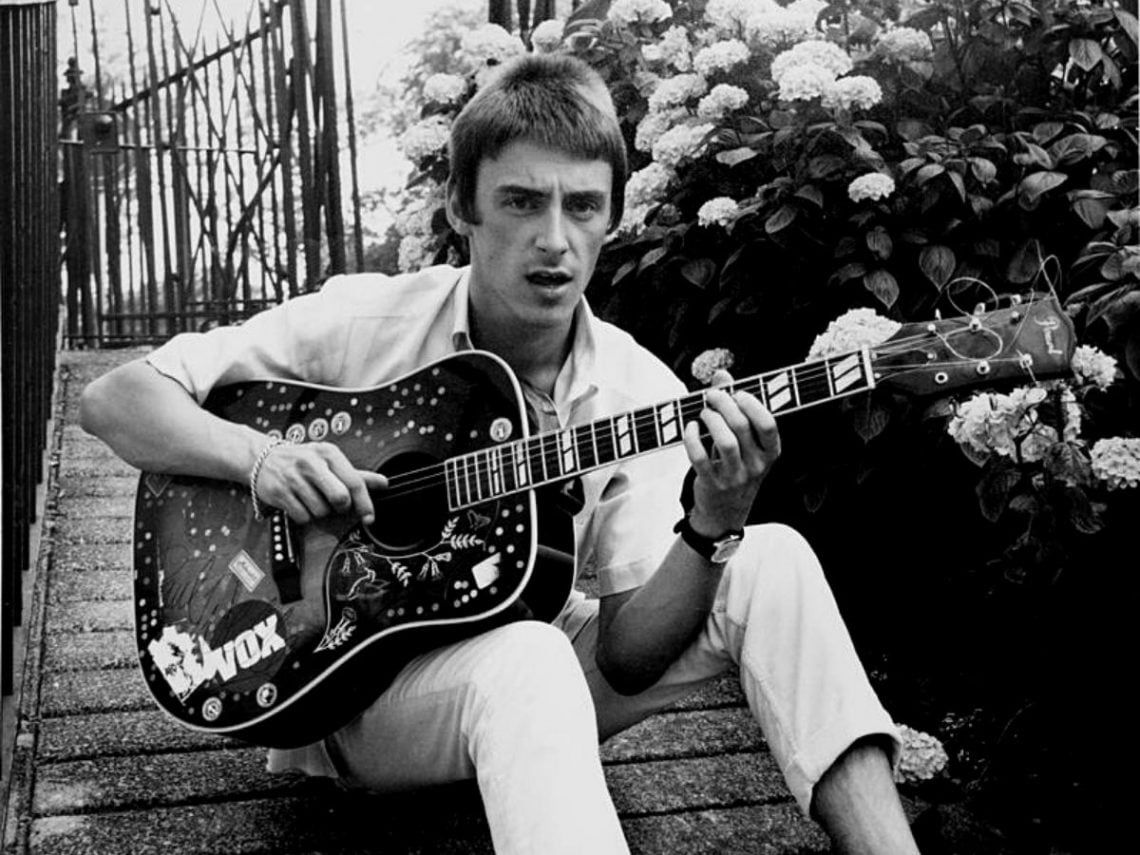
Paul Weller is one of the finest musicians that Britain has ever produced. Enjoying a long career that has invariably been comprised of successes, whether it be as a vocalist, guitarist or songwriter, Weller ranks up there with the best, and duly, his list of disciples is a scintillating one.
Weller has always understood that to progress and be considered valuable, artists must challenge themselves and strive to create a refreshing product. This notion is what has seen him be hailed as a punk champion and master of blue-eyed soul, two juxtaposed facets of his career that show just how ambitious he’s been. This has also resulted in Weller’s back catalogue being one of the more interesting from his generation.
Notably, Weller is known by another name aside from the one he was given at birth. This is ‘The Modfather’, a title that denotes his kingship over everything mod. It has its roots in the efforts of his first outfit, The Jam, as they pioneered the mod revival.
Lasting for 11 years, from 1972 to 1983, the Woking trio rose meteorically on the coattails of punk and were widely regarded as one of the country’s most exhilarating and essential acts. The tip of their spear was undoubtedly Weller, and the fresh-faced young mod said much more about the country’s state than any of his snotty punk peers, including John Lydon.
His lyrics in songs such as the indomitable ‘Eton Rifles’ and the anthemic ‘Going Underground’ are utterly timeless, and they are augmented by the spiky noise of his Rickenbacker and the direct basslines of Bruce Foxton, who is one of the era’s most criminally overlooked masters of the four-string.
Following The Jam’s implosion, Weller formed The Style Council with Mick Talbot, quickly becoming one of Britain’s most talked about groups. A stark creative change from The Jam, the duo’s refined version of blue-eyed soul that leaned on electronic instruments, was utterly refreshing, producing hits such as ‘Long Hot Summer’ and ‘Shout to the Top’, with the latter of which cherished by mods everywhere.
The Style Council split in 1989, and before too long, Weller was looking to new pastures. This time, he decided to fully commit to being a solo artist, and after the release of his critically acclaimed debut album in 1992, he produced opus after lauded opus, segueing seamlessly into the mature epoch of his career, delivering an array of cuts from ‘Wild Wood’ to ‘From The Floorboards Up’.
One of his best solo cuts is ‘Hopper’ from 2017’s A Kind Revolution. A mellow, acoustic-driven piece that’s augmented by a heavenly set of backing vocalists and uplifting brass, unsurprisingly, the track was inspired by American realist painter Edward Hopper. The New York native was famous for his oil paintings that picture the loneliness of nightlife in America in the early 20th century, which include the seminal Nighthawks and Automat.
“It was a vehicle to write this kind of existential art of nonsense really,” Paul Weller told Q magazine. “To be happy to be part of just the fabric of life and time: ‘I’m sat in the corner, I’ve merged with the wall,’ and it’s alright and I’m quite happy with that. It started off as just a poem.”
