


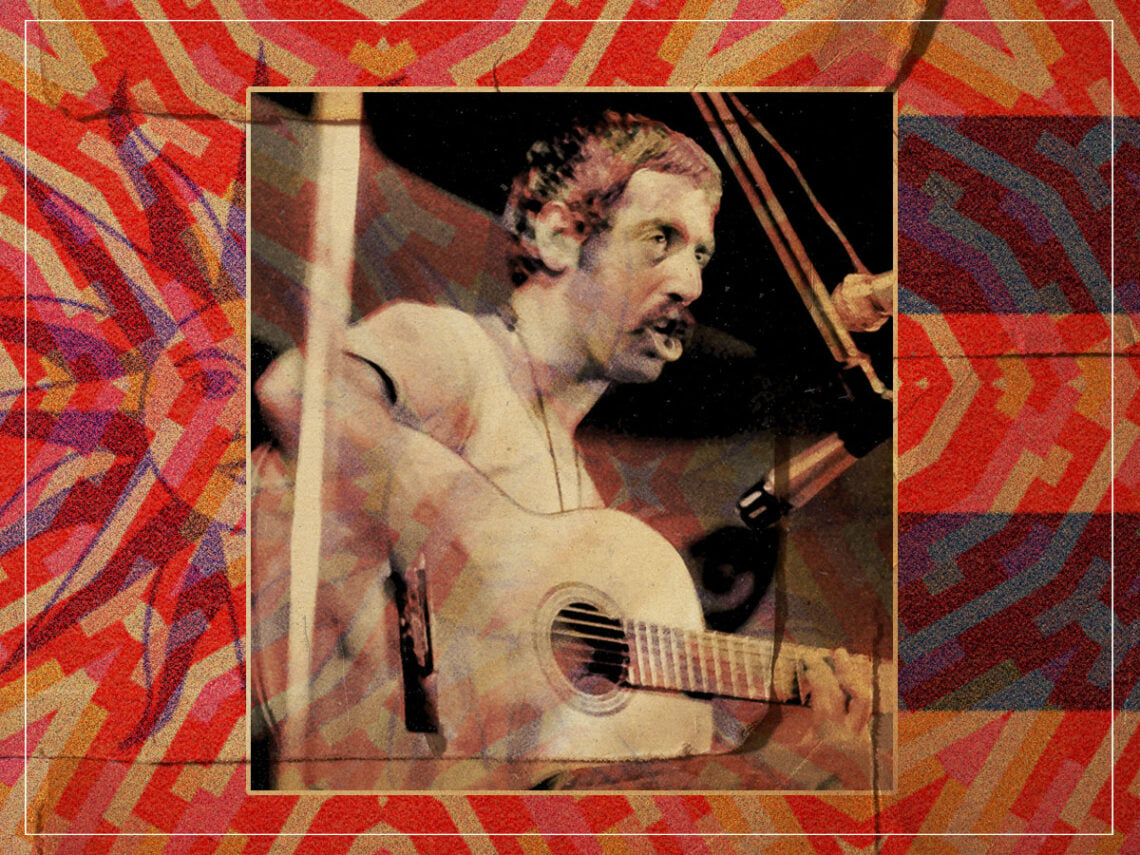
Eduardo Mateo: the definitive sound of modern Uruguay

The diverse and vibrant landscape of Latin music has been capturing the attention of audiences worldwide for decades. Often characterised by euphoria, blaring horn sections and an innate funk, the music scene of South America is wonderfully unique and captivating. However, what most people think of as ‘Latin music’ is quite limited to the sounds of bossa nova and MPB from Brazil, which gained global recognition during the 1960s. As such, the surrounding countries are often overlooked, meaning incredible artists like Eduardo Mateo go underappreciated by the wider world.
Hailing from Montevideo, Uruguay, Mateo was a vitally important figure within the development of modern music scenes in his home nation. As opposed to much of the wider Latin music scene, which favoured complex rhythms and arrangements, much of Mateo’s work was focused on short tracks with seemingly simple lyrical content. However, his songs took on much deeper meanings than you might expect. After all, there was nothing simple about his endlessly unique style of music.
Mateo had entrenched himself within the world of music during his youth, finding a natural home playing guitar with a variety of local groups in Uruguay throughout the late 1950s and 1960s. At this time, the scene was largely dominated by Brazilian-influenced bossa nova style music, and traditional styles of Uruguayan candombe music – a drum-based style that was established by liberated slaves in South America. Soon, though, the exciting sounds of Western rock and roll began to permeate through the continent, with The Beatles proving particularly popular in Uruguay.
These newfound influences had a profound impact on the young Mateo, who began adapting his songwriting and guitar stylings to something much more exciting and original. By the time he began to release his own solo work during the early 1970s, with Mateo Solo Bien Se Lame his first solo album, his work incorporated seemingly disparate influences of bossa nova, candombe, afrobeat, funk and rock.
Over the next two decades, Mateo would embark upon a seemingly exhaustive quest to develop and perfect his distinctive sound. Records like Botija De Mi País or Cuerpo Y Alma remain some of the finest musical exports to ever rise from the obscure music scene of Uruguay. However, Mateo was a perfectionist who was never particularly satisfied with the work he produced – in spite of the intense popularity and widespread acclaim it has brought him in Uruguay and the surrounding nations.
Reportedly, the closest Mateo ever came to being wholly satisfied with his work was on the groundbreaking 1989 album La Mosca. Produced by the incredible Hugo Jasa, La Mosca (‘The Fly’) was Mateo’s magnum opus, featuring much more complex songwriting than his earlier work and characterised by a complete devotion to ethereal space rock. The album helped to firmly establish the sounds of modern Uruguayan music, putting the national on the musical map and finally dragging it out from the shadow of Brazilian music.
Tragically, La Mosca would be Mateo’s final album, as he was to die of abdominal cancer in 1990 at the age of only 50. Despite his condition, the songwriter and guitarist remained in good spirits right until the end, content with the music he had produced over the course of his life. Although the musician succumbed to his illness, that music has yet to die out. Even today, decades after his passing, his records are still hailed as the finest products of the Uruguayan music scene, spawning various reissues and resurgences of popularity in his work, and quite rightly so.
