


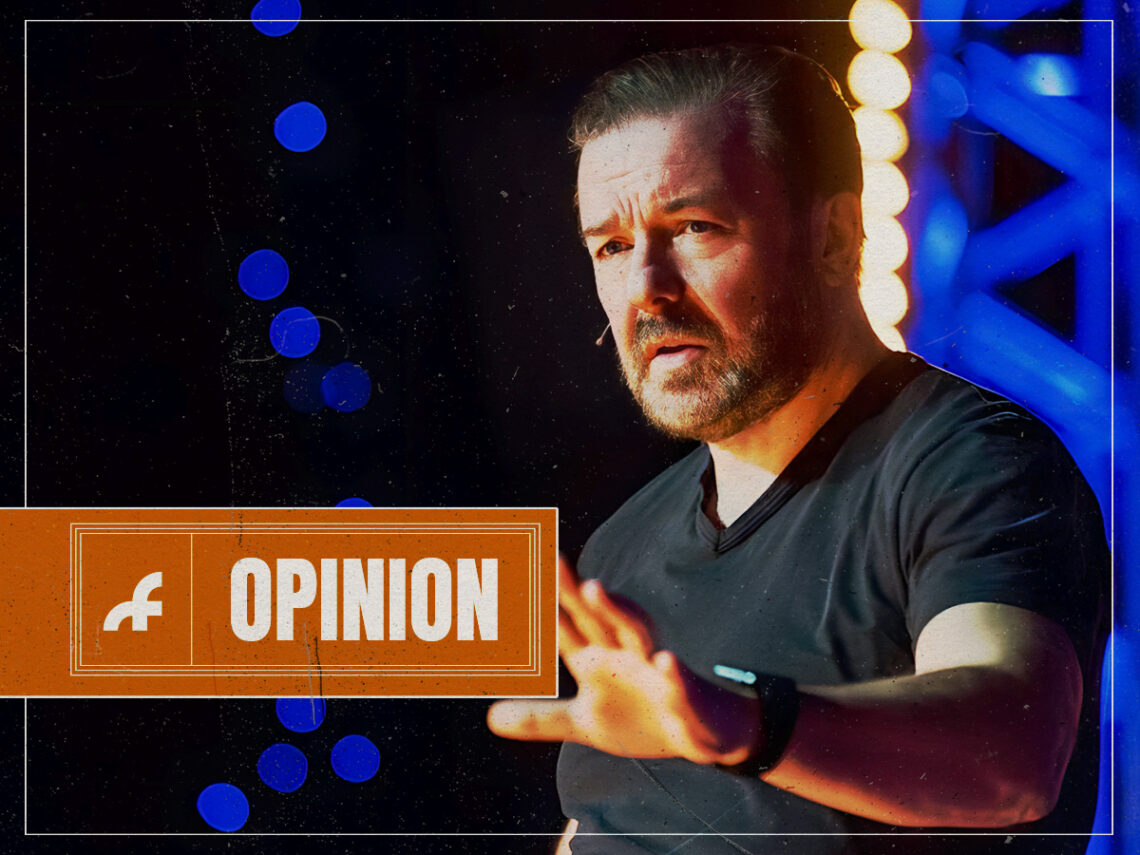
Why are “edgelord” comedians obsessed with transphobia?

Last year was a gutting one for trans acceptance. National hate crimes were at an all-time high, human rights were few and far between, figures with huge platforms continued to spread anti-trans discourse, and internet trolls with mouths full of slurs were everywhere to be seen. But hey, comedy based on such topics is just a bit of fun, right?
Every time Ricky Gervais comes under fire, he resorts to his favourite line: “Joking about bad things isn’t the same as doing bad things”. This is a rather simple notion to understand. The same thing happened with Matt Rife in recent months: the jokes are bad, yes. They offend a lot of people; of course they do. But it’s OK because comedy is supposed to be dark and push boundaries.
However, this notion becomes a little overcomplicated when we’re talking about “punching down” – to borrow a phrase recently used by Dave Chappelle – and oppressing the already oppressed. However, comedians have been joking about taboo topics since the dawn of time. In 1983, Eddie Murphy delivered his famous quip, “You can’t hit women no more!” while discussing women’s changing attitudes to domestic abuse.
Beating down women has been a go-to for many comedians over the years, and so it makes sense that trans people are now seen as an easy target. Despite assuring us that “of course, I support trans rights”, Gervais’ tyrannical approach, unfortunately, isn’t the first instance of comedians masking insidious and harmful values under the guise of lighthearted, it’s-acceptable-because-it’s-not-real humour.
In reality, it is lazy, simplistic, and reflective of the echo chambers our society perpetuates, but why is this particular subject an ongoing choice? Comedians could poke fun and tear down the correct people, but somehow, focusing on transphobia has become their most loved gimmick. To peel the layers back and understand the trend, we’d have to delve deeper into the realm of comedy in film and television.
Transphobia in comedy, like many forms of discrimination and prejudice, has roots that stretch across history and societal attitudes. Its origin isn’t tied to a specific moment or comedian but rather to broader societal perceptions, stereotypes, and biases toward gender identity and expression. In the 1990s sitcom Friends, for instance, we know now that Marta Kauffman was severely undereducated when it came to transgender people, resulting in the dangerous characterisation of Chandler’s father.
Similarly, many shows and movies before Friends enjoyed poking fun at those who broke gender norms—male characters who wore dresses were hilarious. The idea that a person might present as anything other than what they were born was a source of ridicule, not respect. That’s where television made its money by scrutinising queer representation.
A major element of comedy is its penchant for drawing on stereotypes and marginalised groups for humour, reinforcing misconceptions and fostering an environment where discrimination is normalised. The Little Britain era is horrific to look back on, but remember: there was once a time when watching it and even quoting its most famous lines felt completely normal.
Granted, it’s likely that many comedians might have perpetuated these stereotypes without necessarily intending malice, influenced by prevailing societal attitudes that belittled or mocked those whose gender identity didn’t conform to societal norms. In today’s world, however, these issues are much more complicated than simple remarks about real lives.
Let’s be clear: this isn’t to say that queer people should never be central to a comedian’s jokes. Trans people can make fun of trans experiences for the purpose of making other trans people feel safe, supported, entertained, and less alone. It becomes problematic when a cis, white man—say, Ricky Gervais—decides that he has the power to effectively shoehorn entire groups of society into otherness.
While comedians like Gervais, Rife, Chappelle and many others may feel like their ridiculing of negativity might actually have an adverse effect and, in turn, comment on issues like transphobia in a more positive light than we give them credit for, all it does in actuality is enable people who actually share those views. Comedians aren’t combatting hate by utilising it. They only fuel its existence further.
