


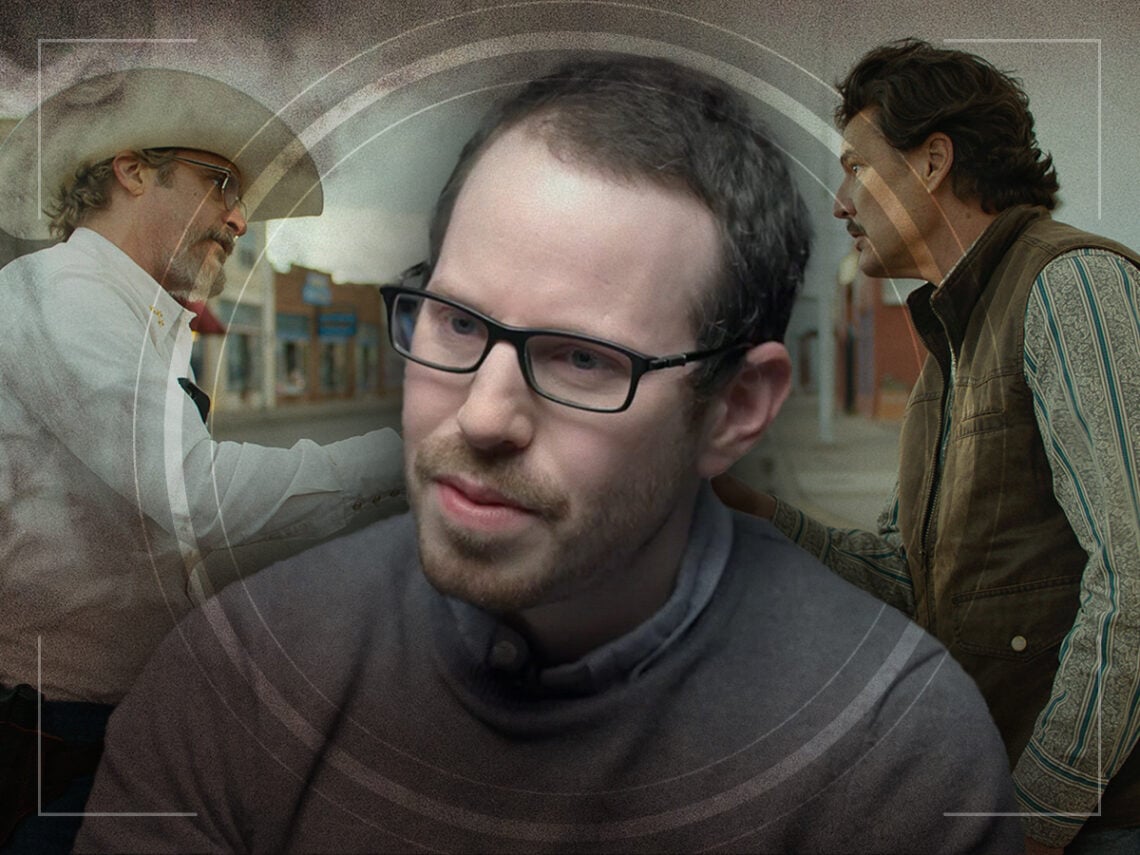
‘Eddington’ review: Searching for hope to unite a fractured world with Ari Aster

It can sometimes feel as though hope is a lost cause. The planet is burning alive, people are being stripped of their human rights, and we’re being brainwashed into thinking that genocide isn’t really that bad. Human connection can feel scattered and rare, with people being pushed apart through divided ways of thinking and niche ideologies that have irreparably broken the threads that used to unite us. Our similarities led to creating communities and compassion, and now our differences seem to be the driving force behind everything we do.
This fragmented state of being has only magnified in the last few years, with many pointing the finger at the damage caused by one year in particular. The madness induced from months of living in isolated bubbles, with the barrage of misinformation and paranoia encouraging some to indulge in their most extreme thoughts and become absorbed by their own version of reality. Discontent and anxiety about the world seemed to erupt from every corner, with Black Lives Matter rallies happening alongside anti-vaxxer parades as people moved towards more extreme ends of the ideological spectrum and became increasingly polarised in their political leanings.
It was a time that allowed all the worst people to find community on the internet, validating some of the craziest conspiracy theories and allowing them to block out any pool of thought that went against their beliefs or proved them wrong. The world itself became a hellscape, which lent itself as the perfect subject matter for Ari Aster, a master of bringing out the nightmare within the everyday.
His latest film, Eddington, takes place in a world where truth has lost all value. People have been left to their own devices for too long, existing in a purely digital space, hence lost in online culture and an endless sea of information. While some become obsessive about perfecting their banana bread recipe or whipped coffee, others convince themselves of far-fetched truths that become dangerous when unchecked, culminating in chaos when they eventually clash in the open.
While Eddington focuses on the power struggle within a small town, it acts as a microcosm to explore the global disconnect that arose from the pandemic. People became untethered from any sense of collective truth and allowed their fears, traumas and anxieties to bleed into every aspect of their critical thinking. The world seemingly spiralled towards the point of no return, with everything bubbling to the surface and leading to a moment in time that felt ungoverned by logic and order.
The central relationship between Pedro Pascal’s mayor and Joaquin Phoenix’s town sheriff highlights the clash between the left and right, both rivalling each other in their devolution. Aster highlights how their beliefs are purely self-serving, as every speech and public appearance feels as hollow and broken as the political system they work within. Everything is in service of their selfish pursuit of power and manipulation of their reputation, with Pascal’s character making laughably obvious attempts to gain support through capitalising on his marginalised identity and personal tragedies, whether it be the mysterious disappearance of his wife or duties as a single father.
Phoenix’s character embodies the opposite end of this spectrum, with the sheriff being unafraid of voicing his most controversial opinions and using vulnerable people as a scapegoat for the world’s problems. He is someone we feel both pity and contempt for, as he manipulates the fears of the far right to reclaim power while using his platform to validate the most misguided ideas.
However, beneath his politics, we see someone whose personal life is crumbling, with his failing marriage only bolstering his mission as he desperately clutches at a quest that gives him the illusion of control. His sense of powerlessness in his personal life is what births his most extreme views, trying to assert any sense of agency by aligning himself with nonsensical causes and in an attempt to get away with as much as he can and more. This is, unfortunately, a subconscious tactic employed by millions of people, with countless others being indoctrinated by their fears and the state of uncertainty, trying to reclaim a sense of sovereignty by creating their own truths liberated from facts.
However, while it may feel like doom and gloom in many ways, and there is certainly little joy to be found in a film that revolves around one of the worst years in recent times, sometimes we need to be confronted with just how far gone we are in order to find our way back. Aster described how his writing process was fuelled by a cocktail of hope and fear, with the director highlighting his permanent state of anxiety about the world and his desperate need to make sense of a reality he no longer recognises.
While it isn’t without its flaws, the urgency of the central message redeems any of its imperfections, with the director reiterating our need to re-engage with each other and convene within our collective truth. While Eddington ends on a sombre note, it reminds us of the harrowing fact that our differences will never unite us, and in order to find our way back to humanity, we must focus on our points of connection, no matter how few and far in between.
