


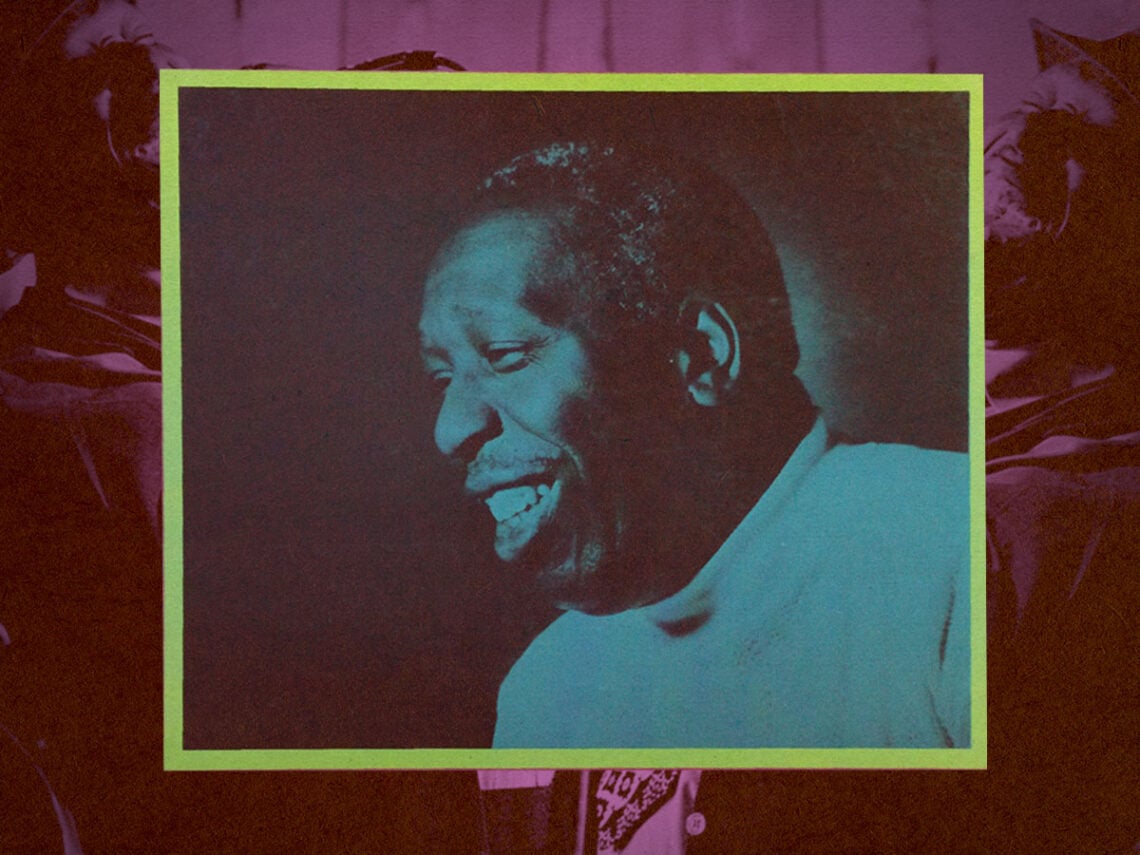
Eddie Jefferson: The unsolved murder of a jazz great

On May 9th, 1979, a 60-year-old jazz artist, only beginning to get the recognition he’d been seeking for half his life, was gunned down outside a club in Detroit after a gig.
Nobody ever served time for the crime, and almost 50 years later, it’s become a sadly forgotten tragedy, a senseless end to a vibrant and creative life.
Born in Pittsburgh in 1918, Eddie Jefferson came up in the same generation as jazz greats like Miles Davis and Charlie Parker, and would regularly rub shoulders with them over the years. His own talent as a jazz performer, however, didn’t involve playing a horn or even singing in the traditional sense. Instead, he created his own interpretive art form, known as ‘vocalese’. “Vocalese is telling a story,” Jefferson told the Chicago Tribune in 1972, “It’s a way of getting jazz across to the people—squares as we call them, who don’t understand the music.”
While it borrows elements of scat singing, vocalese really developed when Jefferson started adapting the melodies of wordless jazz works of the ‘40s and ‘50s into lyrical pieces. He would start by memorising and humming the solo from something like Coleman Hawkins’ ‘Body and Soul’, and then would gradually replace the hums with words, carefully chosen phrases used to add context to the original performance and the performer himself.
In the Hawkins example, as Jefferson explained, “It starts out, ‘Don’t you know he was the king of the saxophone’, and goes on to tell of his hardships, his travels, how he was loved wherever he went, and how he always kept on playing. It’s Hawk’s story set to his own improvisation. I have to have a real feeling for a solo, or I can’t do it.”
Originally a dancer in the club scene in Chicago, Jefferson’s unusual new role as bebop’s resident interpreter and storyteller brought him into contact with Parker, Davis, and a host of other stars of the era. His re-working of James Moody’s ‘I’m in the Mood for Love’, performed by one of his ‘students’, King Pleasure, became a surprise chart hit in 1952. Nonetheless, it took a while for the man himself to gain wider appreciation in his own right.
Finally, in the 1970s, that began to change, as Jefferson teamed up with a young sax player named Richie Cole to form a new touring band focused on what they called “authentic” improvisational jazz music. It won them a large audience and even led to Jefferson earning his first-ever Grammy nomination in 1979 in the category of ‘Best Vocal Jazz Performance’ for his work on the album The Live-Liest.
Unfortunately, that same year, after a set with Cole at Baker’s Keyboard Lounge in Detroit, Jefferson was the victim of a drive-by shooting shortly after he walked out the back exit of the building around 01:30. Within two days, a man named William Perryman was arrested and charged with the murder, identified as supposedly fired by Jefferson from a job as a touring dancer, and was a disgruntled vengeance seeker. When the case came to trial, however, Perryman was acquitted, and no one else was ever charged.
That year, two other men in Detroit’s jazz scene, club owner Henry Normile and promoter Guy Willetts, had also been gunned down under disputed circumstances, raising some question as to whether Jefferson’s death might have been linked to those killings. Regardless of the perpetrators of the crime or their motives, though, the result was the same: a unique voice in jazz history was silenced, and a distinct form of musical storytelling was never quite the same.
