


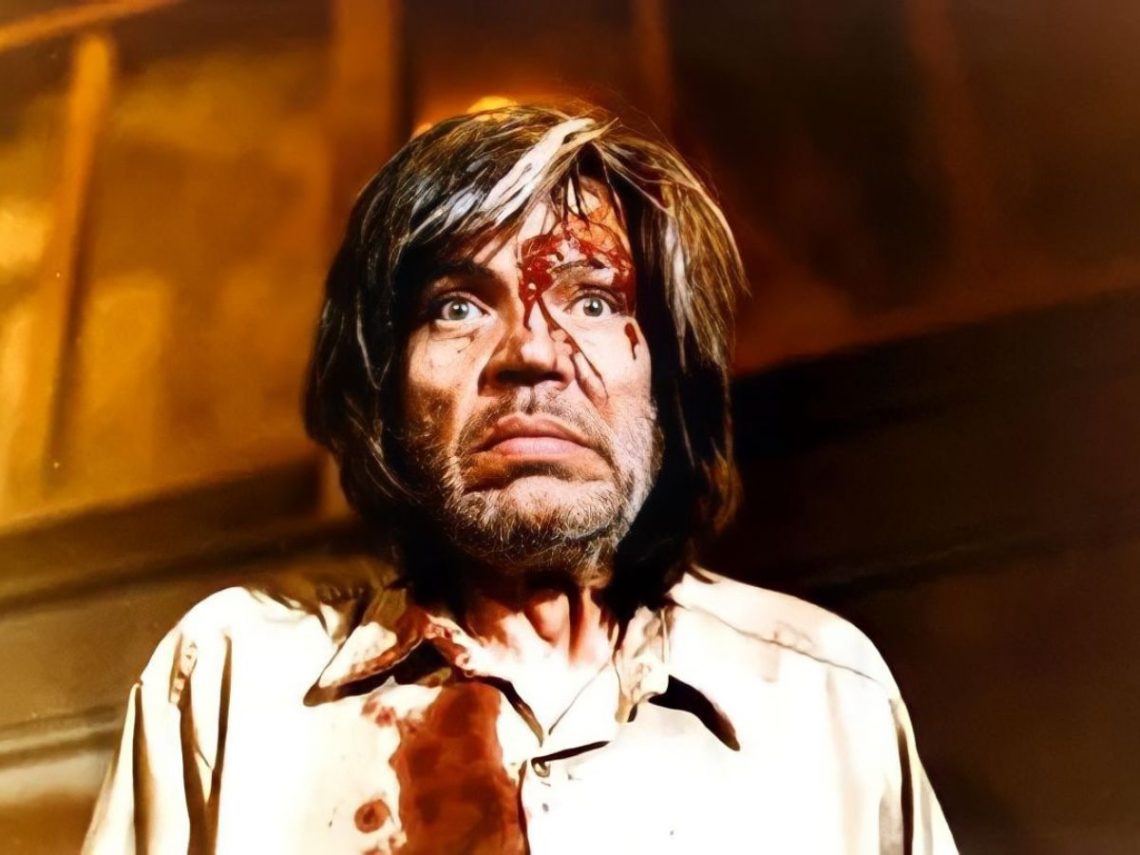
‘Eaten Alive’: The Tobe Hooper film so outrageous it was banned in the UK

In the horror community, the Texas Chainsaw Massacre director Tobe Hooper is a treasured and dearly missed talent. The American director made waves with his intense, unsettling, graphic approach that resulted in timeless classics and him becoming one of horror’s most influential filmmakers. Remarkably, one of the director’s contributions, Eaten Alive, unnerved audiences to such a degree it recieved a ban in the UK.
Released in 1977, Eaten Alive is an exploitation film about a deranged hotel owner who kills his guests and feeds them to his pet crocodile. The film features a B-list cast of stars Carolyn Jones, Neville Brand, Roberta Collins, Robert Englund, William Finley, Marilyn Burns, Janus Blythe, and Kyle Richards. There were claims that the story, written by Kim Henkel, was inspired by Joe Ball, a man who ran an alligator attraction during the 1930s. Legend has it that Ball would invite young women to his park, murder them and feed the corpses to his pet alligators.
Eaten Alive achieved what Hooper cited as a “surrealistic, twilight world” by setting a sound stage rather than a practical on-location set. This approach gave the film an atmospheric and haunting tone as it burst out of the screen as unnatural and dreamlike, resulting in a chilling watch.
However, this experience was restricted to a wide range of audience members when the film was first released on home video in the UK in 1982 under the alternative title Death Trap and met with controversy. It immediately became associated with video nasties, meaning low-budget exploitation flicks that presented either violent content or taboo social content, due to its shocking material of people being eaten alive by an animal at the hands of a serial killer and was prosecuted under the Obscene Publications Act 1959. Violent and controversial content serving as a film’s subject matter is a severe social discussion in film culture. Some voices argue that it leads to violence in real life as replicas of ‘celebrated’ portrayals in visual media infiltrate viewers, leading to copies of films being removed from all stores, while others perceive these moments of horror as fractions of art itself.
This was the fate Hooper’s film met, becoming banned in the country and remaining so for a decade. For Eaten Alive to eventually see the light of day, the BBFC cut out 25 seconds from the original runtime. However, in 2000, the uncut version was finally re-released on DVD.
Eaten Alive also oversaw some challenges before its release, as the director clashed with producers several times throughout various stages of the filmmaking process. Hooper became so frustrated by these disputes that he quit the project shortly before production ended. Despite the fallout with the creative heads, the director maintained a healthy relationship with his cast, claiming actor Neville Brand, who played the sinister Judd, knew exactly how to expand the character from Hopper’s direction and Henkel’s writing.
Hooper’s film is perversive in its entertainment value, presenting a sadistic and terrifying killer with a creative yet twisted murder method. Eaten Alive showcases an underrated yet crucial mindset of horror filmmaking in which an exploitative and graphic nature rivals story exposition and tension for a horror film’s spotlight. The film still marks a fruitful period for one of horror’s best, leading on from his influential masterpiece documenting Leatherface’s killings that was also banned in New Zealand and Mexico.
Eaten Alive spares no expense in grit and intensity, startling audiences in between through Judd’s insanity and his unsettling nature. Hooper utilises a Southern Gothic overlay to accompany his horrific twisted visuals, encapsulating a strange feeling that still draws audiences in. Making for a bloodier change compared to Hooper’s previous works, this film makes for a thrilling horror ride that defeated an initial banning.
Watch the trailer below.
