


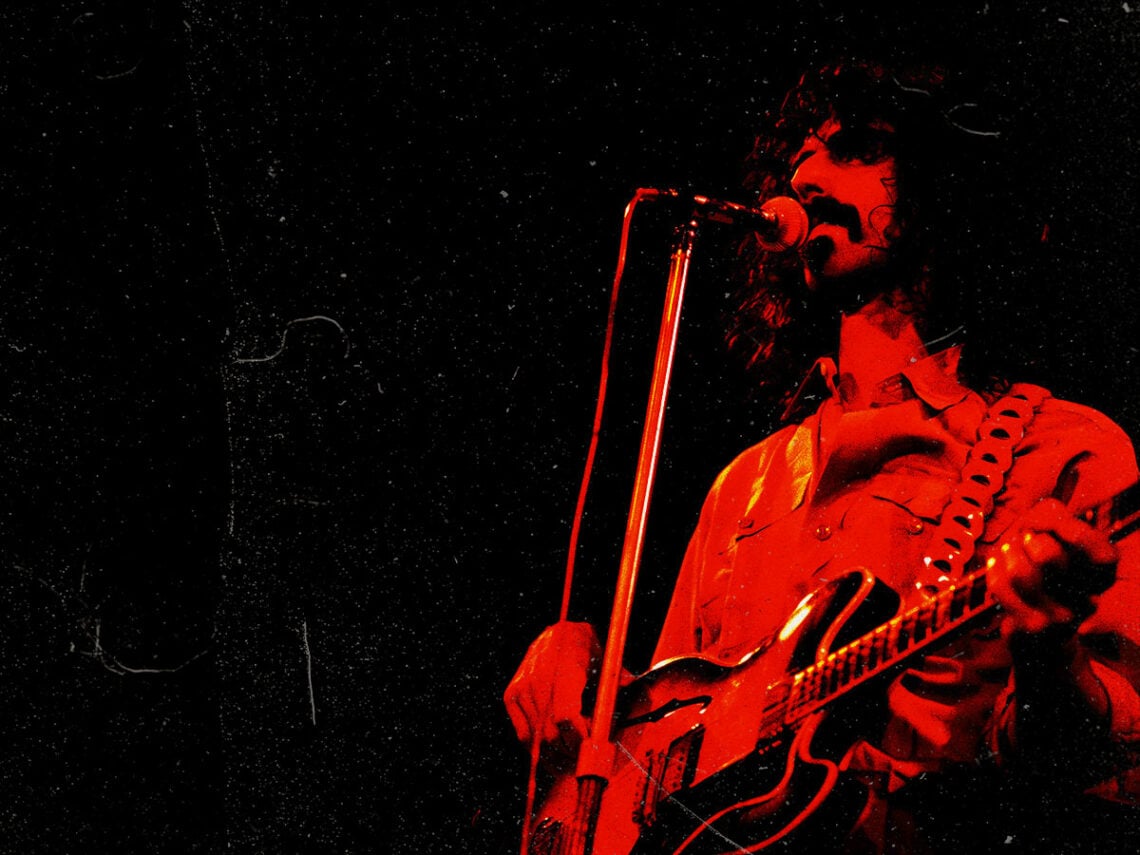
“Unwanted attention”: The easiest way to get kicked out of Frank Zappa’s band

Frank Zappa was never a hippy. A freak, yes—the radical fringe of the 1960s counterculture who espoused creative rejection of social mores and established etiquette with fiercer militancy—but the Summer of Love held little presence in his wieldy oeuvre across iconoclastic rock, cartoon jazz fusions and studied classical works.
Zappa’s ultimate feeling on the hippy movement that latched on to his Mothers of Invention ensemble was made savagely known on 1968’s We’re Only in It for the Money, an acidic riposte to the peace and love idyll of the day featuring a nightmarish inverse of The Beatles’ Sgt Pepper’s Lonely Hearts Club Band of rotten vegetables and stormclouds in its memorable gatefold.
Alongside his libertarian worldview and shrewd business acumen, Zappa captained his revolving backing band with a fierce demand. “People thought Zappa was some kind of freak-out hippy, but he was seriously dedicated,” Chester Thompson revealed to The Telegraph in 2024. Drumming for two years in his backing group until 1975, Thompson’s percussion would feature on fan favourite LPs such as One Size Fits All, Studio Tan, and the Bongo Fury collaboration with Captain Beefheart.
Operating a baptism of fire, Zappa oversaw an intense regimen for the 25-year-old session veteran as he did for anyone else in his creative circle.
“That was my first introduction to practising for 40 hours each week,” Thompson revealed. “It was eight hours a day and there was no time wasted. Every time we finished a rehearsal, I felt that my brain was sweating. It was really intense music, really difficult music, and I always say it was the best school I ever went to”.
At odds with the hedonism and virtuoso showboating of the classic rock era, there were two mortal sins any musician could commit in Zappa’s eyes. One was deviating from the material’s meticulously arranged composition and notation with individual flair. “Window or aisle, how would you like to return home?” would be Zappa’s quip to any eager recruit insisting on their own creative stamp. The other transgression Zappa had no patience for was the indulgences swimming in every hotel, green room, and tour bus in the music biz at the time.
“The quickest way out of that band was to get caught taking drugs,” Thompson made clear. “Zappa had no tolerance for it. And, you know, he was open about it. He said that the main reason was that drugs break bands up. People end up in jail, it gets you unwanted attention from the police, or from authorities when you’re crossing borders, and he just wanted no part of that. He was all about getting the work done. He was not a fan of it by any means. Because he was not how people think he is”.
He wasn’t wrong. While drugs had played a crucial role in informing the countercultural expression he reluctantly orbited, the psychedelic, liberatory joys of marijuana and LSD soon passed into cocaine and smack as the 1970s rolled by, accelerating band demises and shorter lives. One of the leading freak figures who successfully saw a celebrated career beyond West Coast psych up until his death in 1993, Zappa’s longevity was no doubt singularly driven by his rejection of rock ‘n’ roll bullshit and an unwavering commitment to his craft and artistry.
