


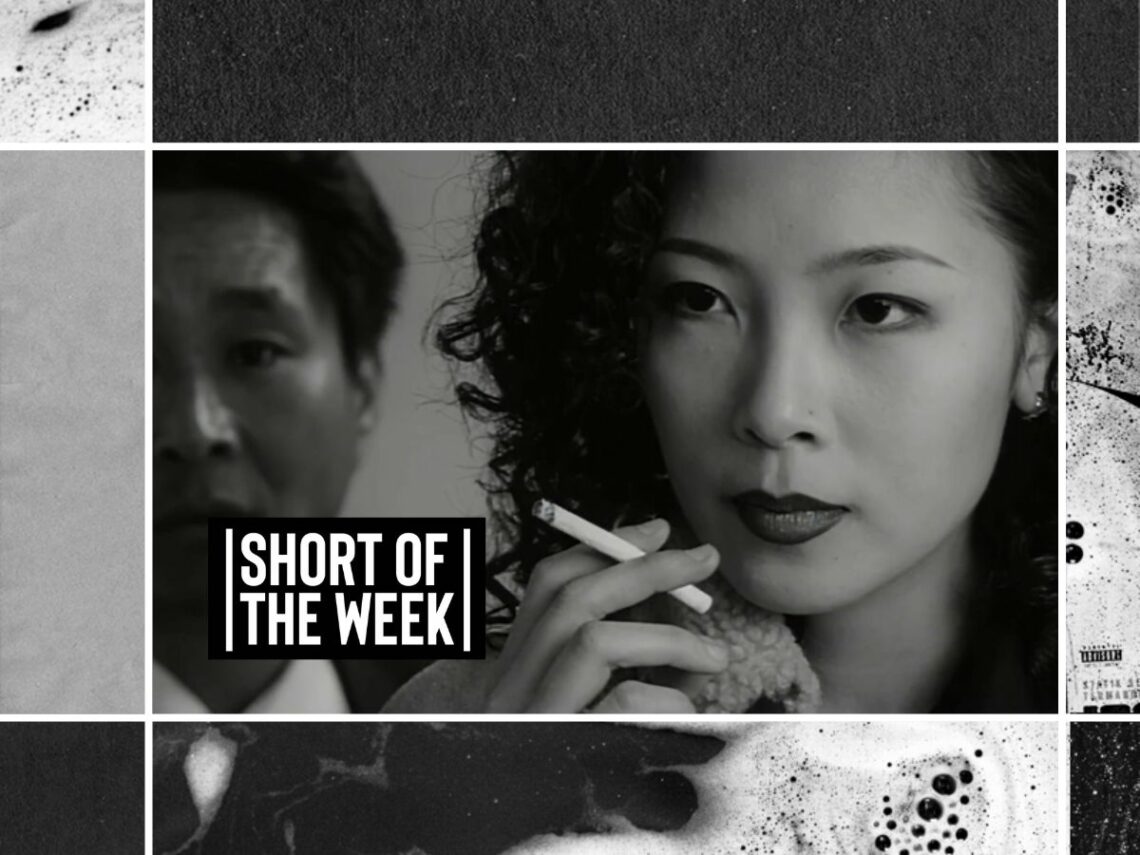
Short of the Week: An early Park Chan-wook thriller

After the recent success of Bong Joon-ho at the Oscars, many western film fans have been discovering the brilliance of South Korean cinema. While learning more about modern South Korean films, it’s almost impossible to escape the influence of one of the greatest auteurs of the 21st century – Park Chan-wook. Having garnered a global following due to the impact of masterpieces like Oldboy and The Handmaiden, Park’s unique approach to the thriller genre has inspired many young artists.
Last year, Park made another fantastic addition to his illustrious filmography with Decision to Leave – a tense and enigmatic drama about a detective who falls in love with a suspect from one of his cases. Regarded by many as one of the best movies of 2022, Decision to Leave was definitely among the standouts of the year. For this edition of Short of the Week, we have decided to go back to the beginning of Park’s career.
As a student of philosophy during his university years, Park initially hoped to enter the world of art criticism, but he changed his mind after witnessing the majesty of Alfred Hitchcock’s Vertigo. After completing his degree, he started writing about films and was eventually able to enter the industry as an assistant director. Although Park made his debut feature in 1992, the early work that we are going to focus on is his 1999 short Judgement.
During a conversation with The Guardian, Park reflected: “All my films that deal with vengeance essentially talk about how in vain it is to lash out towards people, and there’s nothing you can get out of an act of vengeance. Sympathy for Mr Vengeance deals with the conflict between the classes, and also, even though none of my films talk about the topic of anger or hatred towards women, which does exist in our society, it is important for us to accept the fact that we have this illness. We have to look at it squarely, and that is the only way we can bring about a resolution.”
Despite being an early effort, Judgement contains almost all the aforementioned themes that have become central to Park’s art. The film tackles the collective trauma of the Sampoong Department Store’s collapse in 1995, an unprecedented mishap which resulted in more than 500 deaths and almost 1000 injuries. The central conflict in Judgement involves a fight over the dead body of a girl, with greedy parents trying to cash in on the rebates offered by the government.
Park conducts many interesting formal experiments – pairing Schubert with footage of unimaginable death and destruction, a sudden chromatic shift and even engages in dialogue with the rigid structures of South Korean soaps. While it’s still a tad amateurish for Park’s high standards, Judgement is a fascinating work that contains precursors to his later projects.
Watch the film below.
