


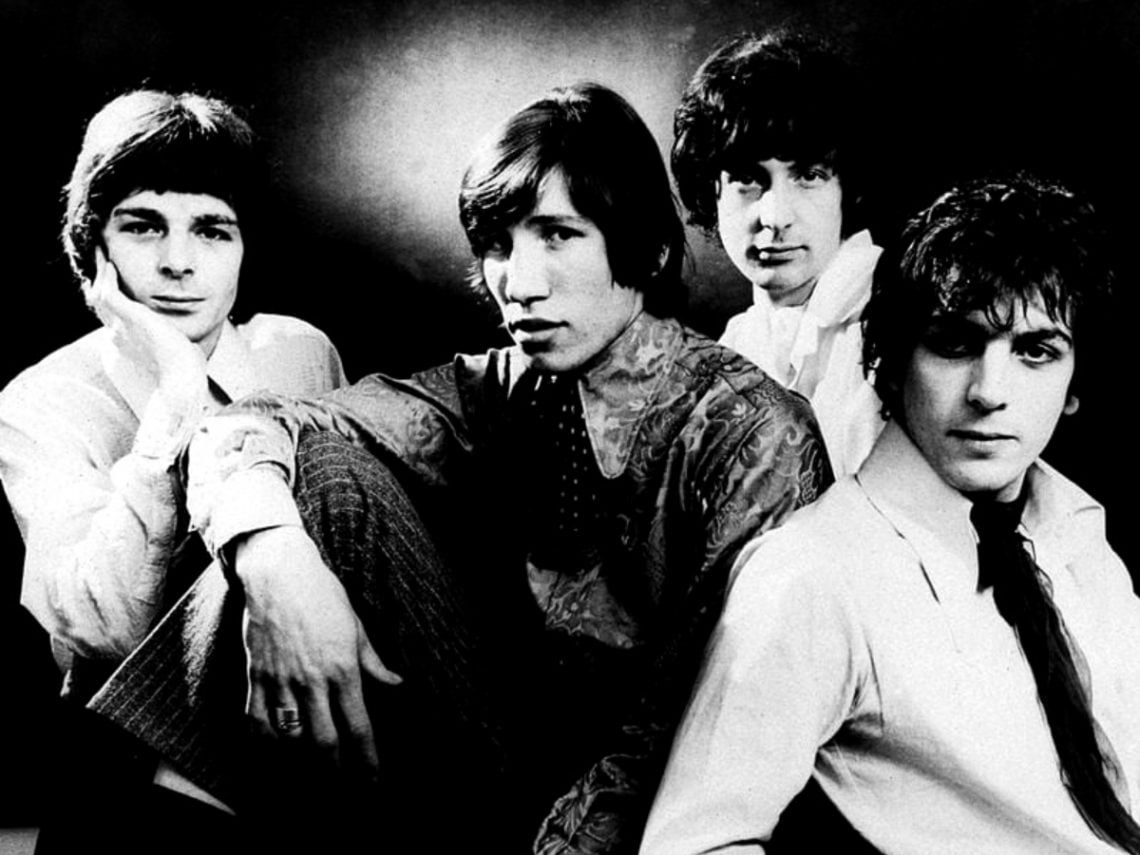
Listen to an early demo of Pink Floyd song ‘Money’

That’s got to be one of the best licks of the 1970s, right? Groove-laden, undulating and utterly infectious, ‘Money’ by Pink Floyd can put a strut in anyone’s step – squares included. Featured on the band’s 1973 album Dark Side of The Moon, it’s perhaps the most inventive track from the band’s most pioneering LP. Here, you can listen to Roger Waters’ initial demo for the song, featuring acoustic guitar and solo vocals.
Swapping between 7/8 and 4/4, ‘Money’ sees Pink Floyd at their most rhythmically explorative. According to David Gilmour, the song was partly inspired by Booker T and The M.Gs: “Getting specific about how and what influenced what is always difficult, but I was a big Booker T fan,” he told Rolling Stone.
Adding: “I had the Green Onions album when I was a teenager. And in my previous band, we were going for two or three years, and we went through Beatles and Beach Boys, on to all the Stax and soul stuff. We played ‘Green Onions’ onstage. I’d done a fair bit of that stuff; it was something I thought we could incorporate into our sound without anyone spotting where the influence had come from. And to me, it worked. Nice white English architecture students getting funky is a bit of an odd thought… and isn’t as funky as all that [laughs].”
After coming up with the central guitar arrangment and vocal, Waters bought ‘Money’ to the rest of the band, who then helped develop the instrumental section and give colour to the track as a whole. Once they’d gotten to grips with the song’s complex time signatures, Pink Floyd began experimenting with looped samples, which can be heard in their isolated form at the tail-end of Water’s demo recording.
To create the rhythmic cash register loop, Waters used the studio’s brand-new 16-track recorder, which, thanks to its user-friendly design, made layering sounds much easier. That’s not to say the process of splicing segments of audio and pasting them onto stretches of tape wasn’t laborious; this was in the days before samplers, so Waters had to do things the hard way, recording and then physically sampling the sound of tearing paper and bags of money being thrown into an industrial mixing bowl. Of course, all the ear hears is the sound of a cash register being filled with more and more cash.
Although this early demo doesn’t feature much in the way of studio wizardry, it does highlight how important Waters’ central guitar riff is to the overall atmosphere of the track. Make sure you check it out above if you haven’t already.
