


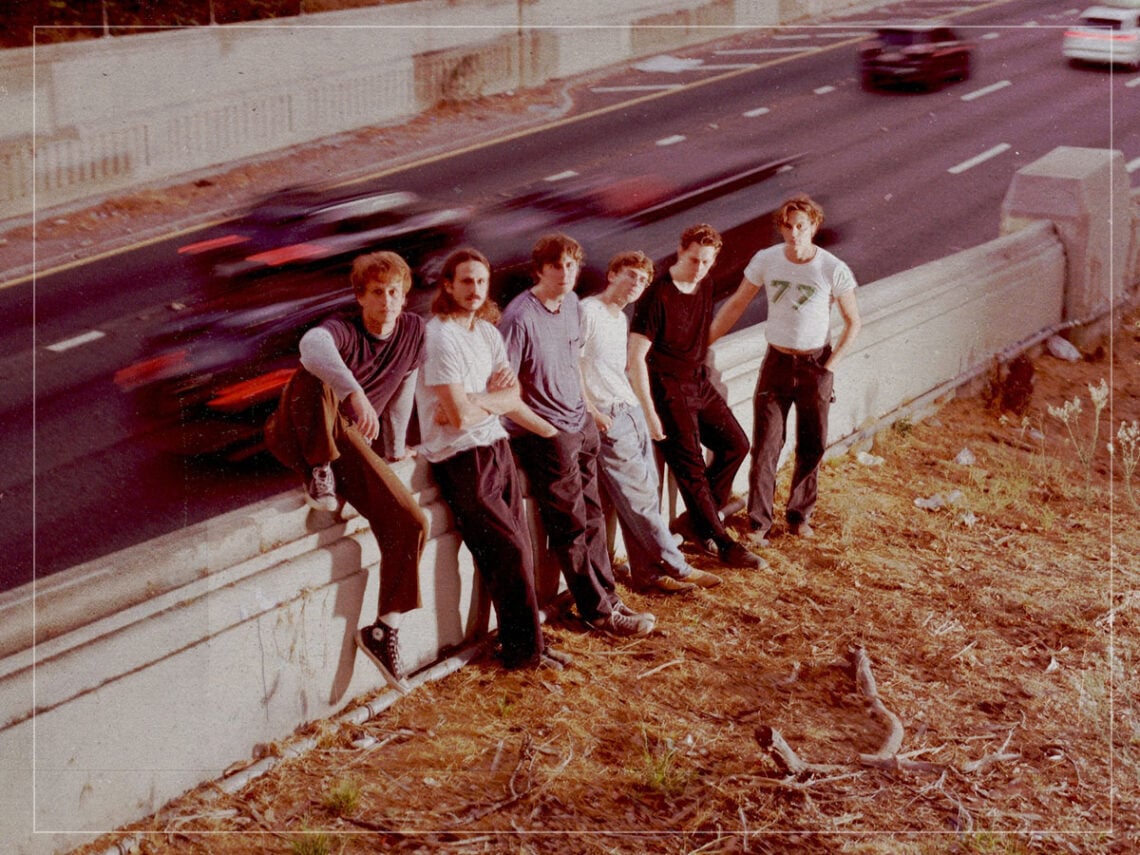
Dutch Interior: the first band to be targeted by an AI hoax?

Artists across different creative spaces have felt, and continue to feel, the negative effects of artificial intelligence as its usage rapidly proliferates, but Dutch Interior is now dealing with its consequences from an entirely different angle.
While most creatives are competing against the convenience and soulless efficiency of AI, the Southern Californian outfit has found itself at the receiving end of malicious rumours for which they can’t hold any human being accountable. The indie group put out their third studio album, Moneyball, to critical acclaim in Spring 2025, but just a few months later, their image took a major blow due to false information generated and broadcast by Meta AI on Instagram.
In early July, band member Shane Barton posted a video on the social-media platform in which he detailed the conundrum and the puzzling position his team was put in as a result. A few days prior, Dutch Interior had shared a reel in which a sound engineer could be heard disparaging the band for not having enough online followers. The video accumulated thousands of views soon after going live, except the top of its comments section featured a search suggestion from Meta AI that read ‘Dutch Interior controversy’.
Upon clicking the link, the group was shocked to see a write-up that referred to them as an indie rock band from the Netherlands that was linked to white supremacy due to their name. It went on to state that they even changed their name in an attempt to distance themselves from far-right ideologies, claiming that Dutch Interior was actually derived from a poem and had no connection to race. The summary concluded by noting that the group’s music has been removed from streaming platforms despite their efforts to clear the air.
The above information is entirely incorrect, since the band is from the United States and was never involved in any controversy due to their name, which is actually based on a series of surrealist paintings by Spanish artist Joan Miró.
“We just want to know how this can be allowed,” Barton concluded. “Our video got tens of thousands of views, which means thousands of people who have never heard of us could have been exposed to this misinformation. Now, we’re even hesitant about posting this. Who knows what the AI will make up in the comments of this video?”
Two weeks later, he shared another video on Instagram in which he revealed that the situation had worsened, for in addition to the fake summary attached to the sound-check video, the one they made in response to it also had a link containing further misinformation. This time, it stated that the band had been accused of cultural appropriation and insensitivity, adding that they used traditional symbols such as Native American headdresses and African textiles in their imagery that “reduced complex cultural heritage to mere fashion statements”. It ended by noting that Dutch Interior’s response to the backlash was deemed ‘dismissive’ and ‘unapologetic’ by many.
People in the comments had informed the band that Meta AI had made up even more lies that were so egregious, Barton chose not to repeat them in the post to deny it further traction. He wrapped up by saying that they are exploring their options and trying to figure out how to move forward with the issue, which includes working with the press to get the word out about this nasty maligning of their reputation, imploring fans and followers to screenshot any false information that Meta AI generates about the band and send it to them.
