


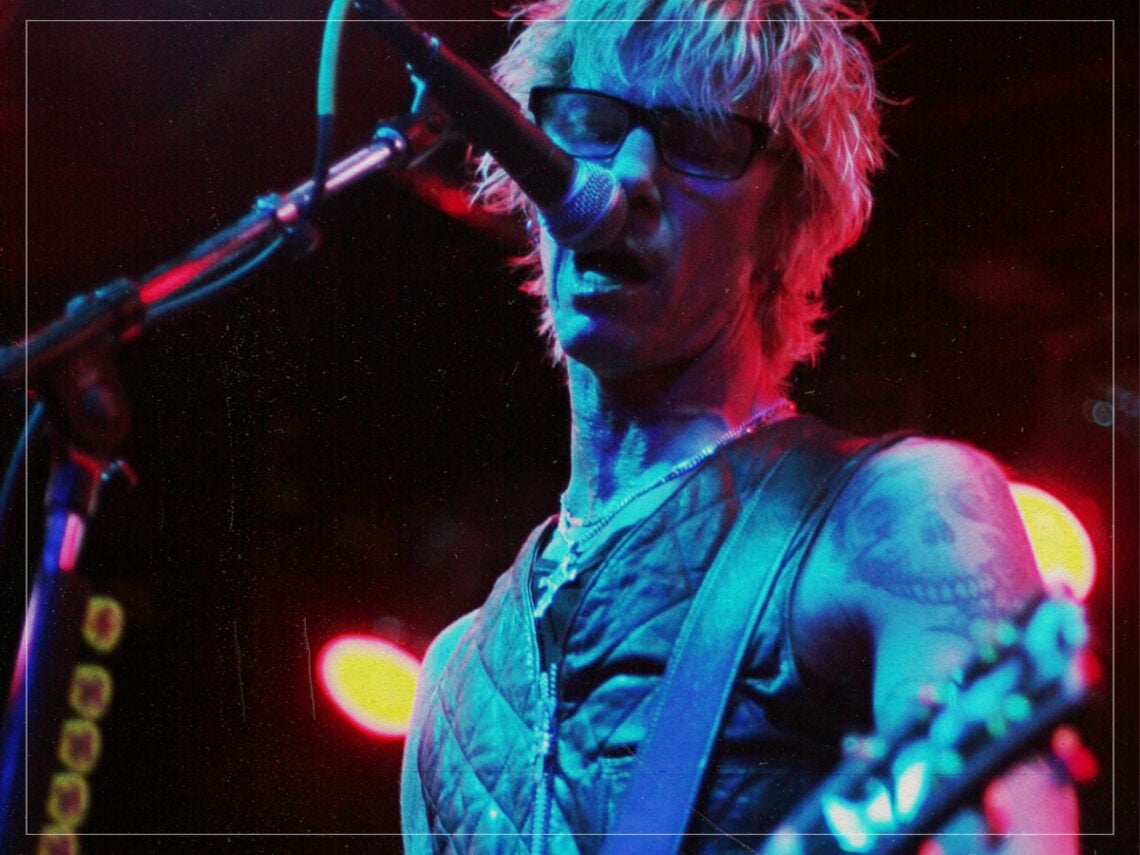
The bassist Duff McKagan called out of everyone’s league: “He was a bad motherfucker”

Nothing about Guns N’ Roses was designed to be easy listening. These were the gutter rats that somehow picked up instruments and found out how to make them talk whenever they made anthems like ‘Welcome to the Jungle’, and they weren’t going to make something sugar-coated whenever they played for the masses.
Duff McKagan may have been responsible for giving the band their punk edge, but one of the most dangerous bass players he had ever encountered came when he heard John Paul Jones.
Then again, Jones may be considered one of the single most laid-back individuals in all of rock music. He may have had a hand in putting together one of the greatest bands to walk the face of the Earth, but considering how little ego he seems to have at times, you’d swear that it was just another day at the office when he started making classics like ‘Black Dog’.
That’s because the idea of being in a band was just another day at the office. Jones had been a veteran of the studio scene, and being asked to join the ranks with Jimmy Page was just an opportunity to play among friends. Once you start to understand what he’s doing on the bass, there are times when he’s more vicious than Page ever dared to be.
Outside of his brilliant arrangements for classical instruments and keyboard flourishes, Jonesy’s bass tone is one of the most ferocious in rock history. After storming out of the gate with the bass break in ‘Good Times Bad Times’, Jones never let up for a second, often making riffs that played around with the time signature while also managing to lock into the groove with John Bonham every single time.

There are a few moments in Jones’s career that defy categorisation. No one would have thought to use an eight-string bass on something like ‘Achilles Last Stand’, but hearing him play alongside Page over a ten-minute journey makes it feel like there is another guitar player in the band.
Since all the spotlight is on Page during most Zeppelin songs, McKagan was dumbfounded when he heard what Jones could do, telling Loudwire, “It really hit me when I was part of a Jimmy Page tribute in Seattle, and I went to the woodshed to learn his stuff. Man, I’m talking like seven hours a day; that’s when I gained a true appreciation for John Paul Jones. He was fluid, effortless, and beautiful. I could say so much about John Paul Jones; he was a bad motherfucker.”
It’s a common experience among bass players discovering Led Zeppelin from the inside out rather than simply listening as fans. On a first pass, it’s easy to be distracted by Page’s riffs, Robert Plant’s vocals or Bonham’s earth-shaking drums. Only when you start learning the songs do you realise that Jones is quietly stitching everything together, constantly moving beneath the surface without ever pulling the music away from its centre.
That’s arguably why his reputation has continued to grow with successive generations of musicians. Jones wasn’t interested in dominating a mix or treating the bass as a lead instrument for the sake of it; every flourish, counter-melody and rhythmic detour ultimately strengthened the song itself.
Beyond just his bass playing, Jones deserves a place among people like Paul McCartney and Geddy Lee for helping give the bass a voice in the musical conversation. Whereas most just lay down the root notes, hearing Jones fly off the handle on tracks like ‘The Lemon Song’ was unofficial permission for aspiring bass players to play to their heart’s content as long as it served whatever song they happened to be working on.
It’s not like McKagan isn’t immune to some of that influence, either. He may not have been aware of Jones’s tone in 1987, but hearing his bass screaming out of the speakers on ‘Rocket Queen’ and ‘It’s So Easy’ is the punk rock answer to what Jones had been doing. It’s hard to really pinpoint where someone like Jones was going half the time, but whenever you hit play on a Zeppelin record, you knew that there were going to be a few surprises on the low end.

Never Miss A Beat
The Far Out Led Zeppelin Newsletter
All the latest stories about Led Zeppelin from the independent voice of culture.
Straight to your inbox.