


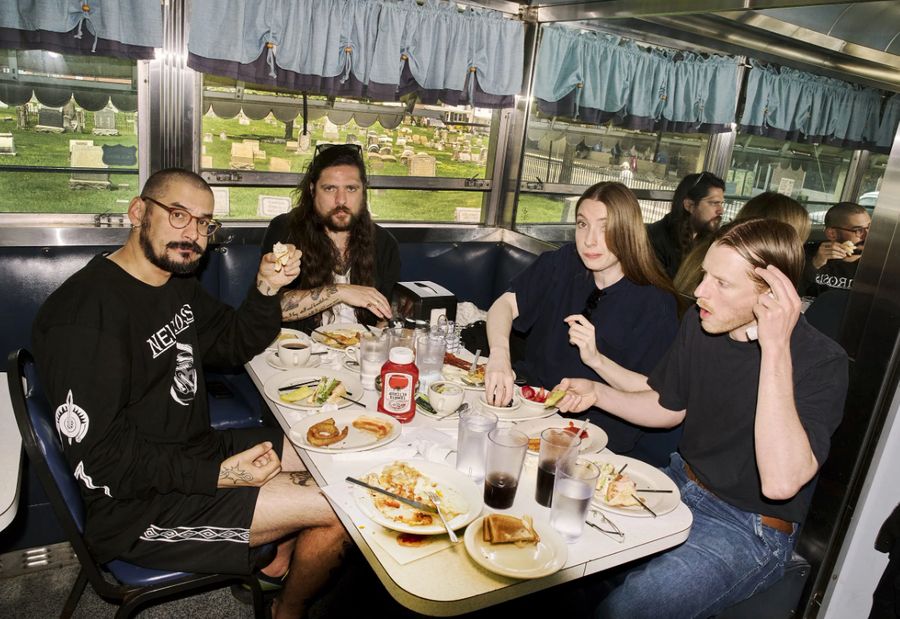
Dry Cleaning define the absurdity of Britain with ‘Stumpwork’

Dry Cleaning have followed up on the excellent debut album with Stumpwork, released on 4AD. There is a contrasting chilled-out intensity to Stumpwork, particularly on the album’s opener, ‘Anna Calls From The Arctic’, as well as its title track. Sonically, this mostly occurs from both Lewis Maynard’s exceptional basslines in marriage to Nick Buxton’s percussion and the persistent switch between Tom Dowse’s delicate and deliberately forceful riffs.
It’s business as usual for Florence Shaw, though, and throughout Stumpwork, she treads through both the obscurity and mundanity of the new Twenties. There’s always been a humorous side to Shaw, which is now particularly evident in lines on Stumpwork such as, “I wanted to thank you for organising the Edinburgh trip, which, apart from what happened to my Kindle, was amazing!” on ‘Conservative Hell’, or “Don’t touch my gaming mouse, you rat!” on ‘Don’t Press Me’.
As we learned on New Long Leg, Shaw’s lyrics are largely composed of snippets of dialogue overheard, inescapable advertising unwantedly viewed, or fleeting thoughts bubbling into consciousness. These seem to have occurred in all manner of places, self-admittedly during walks in both London and Bristol and perhaps out on tour across the world. As Shaw says in the album’s opener, “I see shit everywhere.” Shaw had also impressively improvised many of the lyrics during the recording sessions at the acclaimed Rockfield Studios.
Dry Cleaning have previously said that after the completion of New Long Leg, they got straight into a writing process for what would become Stumpwork as they wanted to spend twice as long on it. As such, it makes perfect sense that Shaw, in particular, wanted to spend as long as possible composing her lyrics, seeing as, rather than the traditional method of writing a tune about a specific feeling or object, the words are seemingly collated from all over the place. Though it may seem that they are then thrown together at random, it feels that they are more likely carefully assembled.
Discussing the thematic nature of the album, Shaw said, “I wrote about the things that preoccupied me over this period, like loss, masculinity, feminism, my mum, being separated from my partner for little stretches in the lockdown, lust. I think if you make something observational, which I think I do, it’s political.” Dowse added, “I do think these things seep into the music if you’re an observant person, even unconsciously, and surely no one can ignore the severity of the degradation we’ve witnessed in the past few years.”
As to the sonic influences of the record, there is an evident homage to everyone’s favourite 1990s slackers, Pavement, as there is perhaps to Television. Dry Cleaning have been doused in the now-muddied waters of the post-punk tag for some while now, and the tired trope is something they are evidently striving to depart from. Whilst it can be admittedly difficult to describe the band without those two fabled words, there is clear confidence on the record that sees them stride forward into a sound entirely their own – as if they hadn’t already on their debut.
Ultimately, Stumpwork attempts to define the absurd horrorshow that British culture and interpersonal relationships have become over the past few years. Through Shaw, in particular, Stumpwork tackles the worrying socio-political state of Britain in the only way Brits know, through relentless mocking, hiding the actual anxiety underneath layers of jokes and obscurity. That’s not to say that righteous concerns are not given ample room on the album; they are, but they just need a little digging up to bring them to the surface. A little Stumpwork, you might say.

Never Miss A Beat
The Far Out New Music Newsletter
All the latest New Music from the independent voice of culture.
Straight to your inbox.