


‘Dottie Gets Spanked’: Todd Haynes on child psychology and popular culture

Considered by many to be an integral part of the New Queer Cinema movement, Todd Haynes is undoubtedly among the most important directors working today. Ever since his stunning 1991 debut feature Poison, Haynes has produced several transgressive works that have explored essential sociopolitical issues through his unique aesthetic framework. In addition to narrative features, the beloved American auteur has also proved his skills by working on fascinating television and documentary projects.
Although Haynes had been interested in filmmaking since he was in school, it was after graduating from university that he became a proper part of the independent cinema landscape in New York City. During that period, he made several fascinating shorts, but one particular work stands out even among those early gems. Titled Dottie Gets Spanked, it followed the much more well-known Poison while developing the sensibilities of New Queer Cinema.
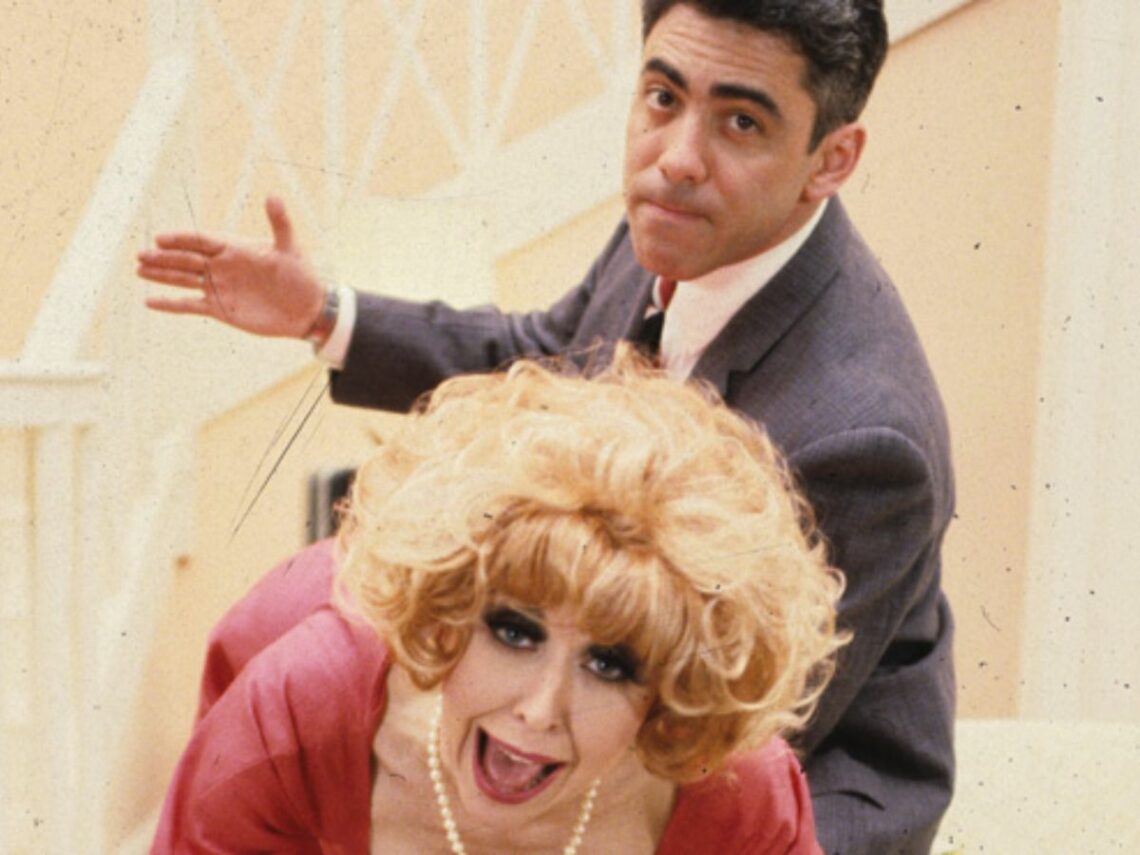
Based on his own childhood memories and his fascination with Lucille Ball, Dottie Gets Spanked tells the story of a six-year-old boy named Stevie who is obsessed with a Lucille-like TV personality called Dottie. Although most people around him don’t understand his obsession, Stevie is haunted by Dottie in his nightmares as well as his fantasies. Haynes constructs a powerful commentary about childhood repression and Freudian psychosexual elements, resulting in a coming-of-age narrative that resonates with a lot of people.
During a conversation with Scott MacDonald, Haynes said: “I grew up in Los Angeles, and I think my parents met Lucille Ball on a vacation somewhere, so I was able to go to her show as a kid. I visited during the run of Here’s Lucy. As in Dottie Gets Spanked, I made her a book and handed it to her when we visited the set. We all know that the television Lucy she portrayed was a sort of child woman, so it was phenomenal to watch the real-life Lucille Ball controlling the entire production like a general. There was a sort of mock director standing to the side, but Lucille was clearly in charge of everything, and then suddenly she’d be back in character, crying ‘Waaaaaaa!’ — the child-woman again. That duality was fascinating to me, partly because it mirrored a different duality in my life and my fantasy world.”
Apart from the film’s deconstruction of Ball’s mythology, Dottie Gets Spanked also raises important questions about societal perceptions revolving around childhood punishments. Haynes added: “At a certain point, PBS, through ITVS, was trying to get independent filmmakers and experimental filmmakers involved in television; they wanted to produce short films dealing with issues of family. I decided to work with my childhood fascination with Lucy and to focus on the spanking issue — even though my parents didn’t believe in spanking.”
Haynes’ portrayal of childhood psychology is so effective because it is autobiographical in nature, inspired by his own conflicted nightmares about physical punishment at a very young age. He translates the psychosexual subtext of the film to the screen by incorporating an explosive montage at the end, showing how the fear of receiving physical punishment can transform into desire.
Watch the film below.
