


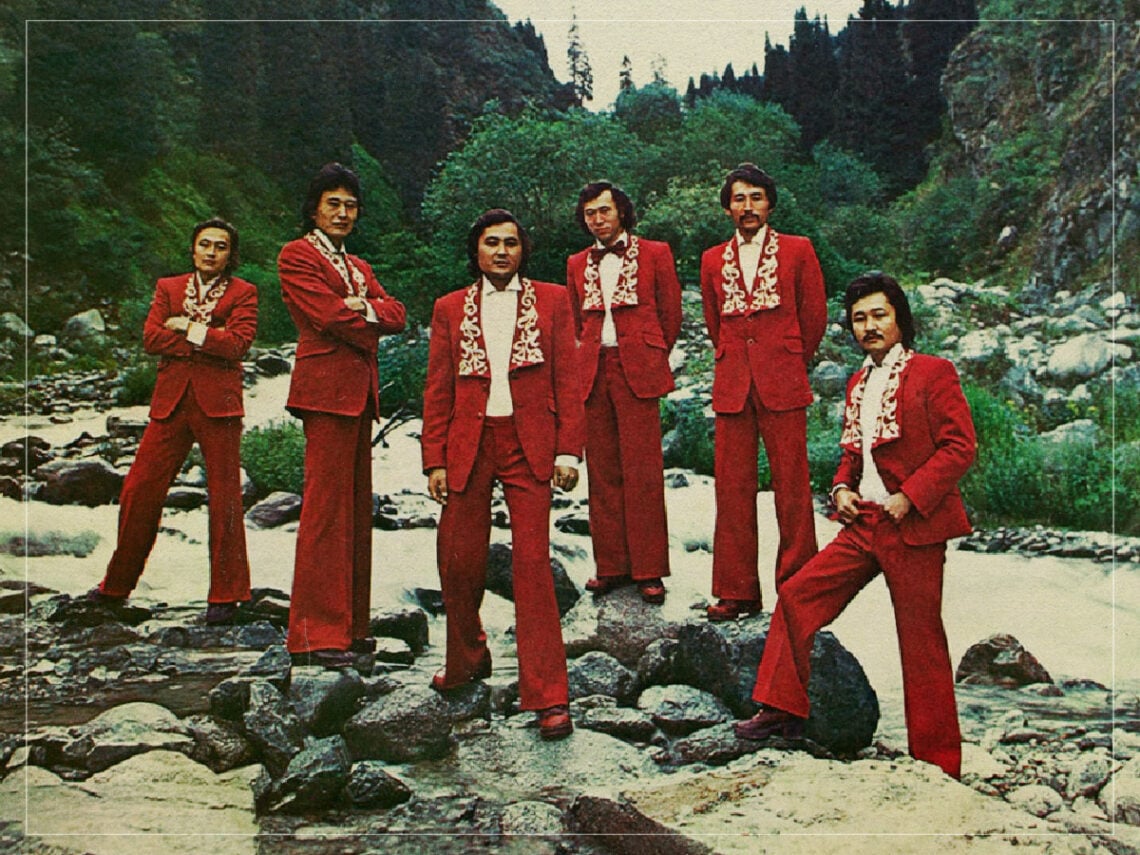
Dos-Mukasan: The lasting legacy of the ‘Kazakh Beatles’

When The Beatles recorded ‘Back in the USSR’ in 1968, it was an obvious satirical wink at classic American rock ‘n’ roll tropes, borrowing from Chuck Berry’s ‘Back in the USA’ and The Beach Boys’ ‘California Girls’ to create a sort of subversive Cold War pop song parody.
There may have been early versions of the song in which Paul McCartney pointed out the exploits of the ladies from each nation in the Soviet Union, but in the end, we only hear about the girls from Ukraine, Russia, and, of course, Georgia, enabling a pretty hilarious Ray Charles pun. However, while Kazakhstan was overlooked completely, which might have been for the better when you consider how other British entertainers would later choose to skewer that country, the people of Kazakhstan were listening.
At the time, there was already a young Kazakh folk band called Dos-Mukasan that was starting to venture where no Kazakh folk band had dared to go before: incorporating Western rock ‘n’ roll into their sound.
Formed in 1967 in Almaty, then the capital of the Kazakh Soviet Socialist Republic, the original Dos-Mukasan lineup consisted of students from the Kazakh Polytechnic Institute and the Al-Farabi Kazakh National University, including Dosym Suleyev, Mukhtar Kul-Mukhammed, Kamit Sanbayev, and Aleksandr Litvinov. The band’s name doesn’t actually mean anything in the native language but was constructed from the first syllables of those founding members’ names, that is, Dos, Mu, Ka, and San.
Up to this point, the general Soviet talking point on rock music was that it was, quite clearly, a consequence of the decay of Western society, and as a result, it was hard to access across the USSR, and even harder to emulate in your own music.
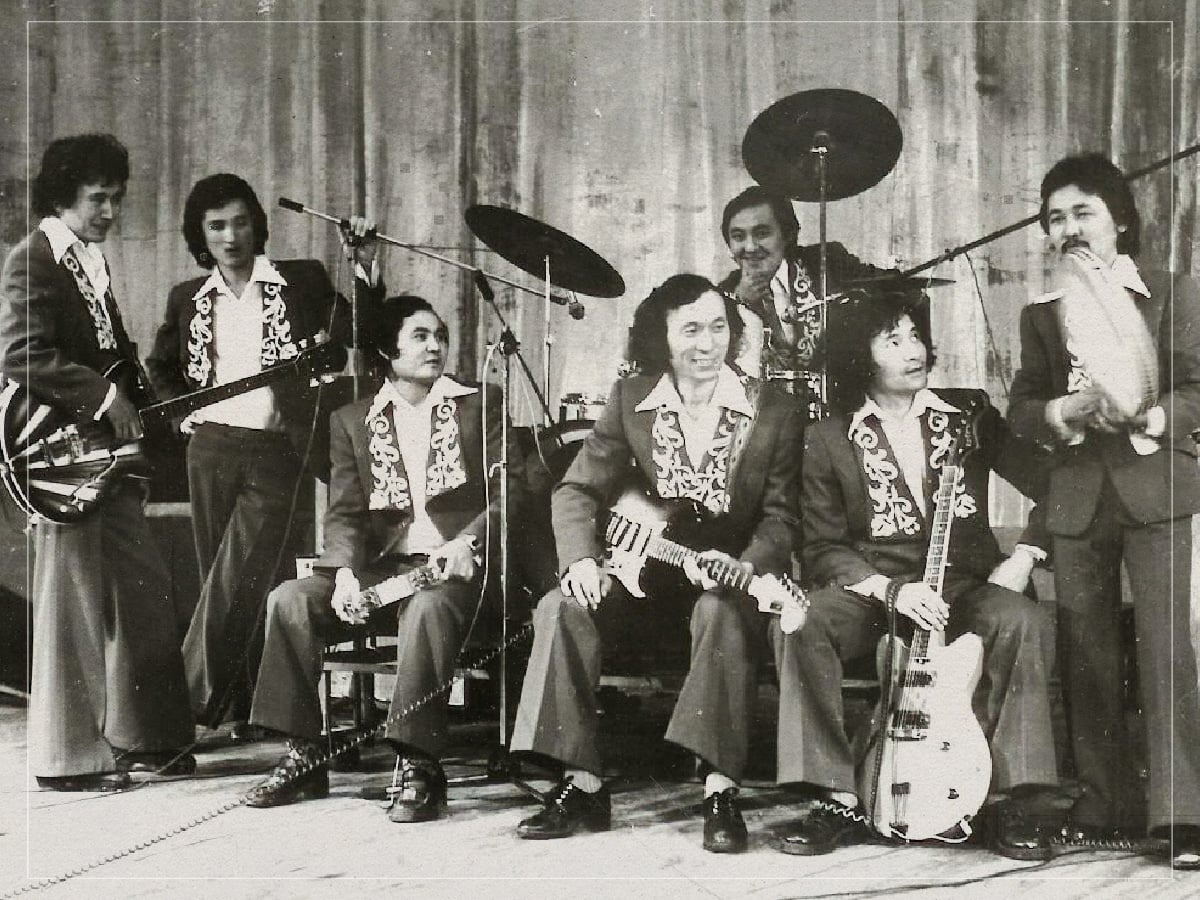
Dos-Mukasan was one of the first bands in Kazakhstan, or across the Soviet Union for that matter, to figure out a workaround of sorts. Having heard The Beatles and The Rolling Stones, they were just as enthralled with rock as any other university kids around the world. To create their own version of it, they were careful to fuse those rhythm and blues elements with traditional Kazakh song structures, so that their music often combined electric guitars, bass, and drum kits with folk instruments like the dombra, Kazakhstan’s national two-stringed lute.
Lyrically, Dos-Mukasan also drew from Kazakh poetry, folklore, and themes of national identity, creating a dividing line not just between themselves and British and American rock, but also between the Russian art and music that was dominant across the USSR. This got them labelled “nationalists” by some disgruntled critics in Moscow, but it only increased their popularity, and soon enough, they were able to perform at state-sanctioned festivals, appear on television, and even tour beyond Kazakhstan’s borders.
“I will not hide it, the popularity was frantic,” founding member Murat Kussainov said in 2010, as translated by the Astana Times, “Over the years, the professionalism of the ensemble only grew stronger… We reached our heights through hard work. We always evaluated the situation soberly and knew what our priorities should be above all. Probably, because we studied higher mathematics, physics, astronomy, and philosophy in the most difficult faculty at the Polytechnic Institute. It was there that I learned to think analytically.”
That might be the nerdiest-sounding quote ever uttered by a rock star, and it’s probably a consequence of the translation, but to be fair to Kussainov, analytics really did have to be a big part of the approach if you wanted to have success in the Soviet Union playing music that many people in the highest offices saw as treasonous.
Dos-Mukasan managed to thread that political needle and became one of the first rock bands in Central Asia to achieve genuine mass appeal, reaching a peak in the 1970s, when they earned their nickname, the ‘Kazakh Beatles‘. They won prizes at All-Union music festivals and were frequently cited as proof that Soviet culture could evolve without losing its national character, but to young Kazakhs, the appeal was simpler and more electric: this was music that sounded modern, confident, and thrillingly different from the stiff sounds approved by Moscow, or their own parents.
By the late ‘70s, internal changes and shifting cultural winds began to slow the band’s momentum, as members pursued other careers, and Dos-Mukasan eventually disbanded, although, like most Western rock bands from the same era, numerous reunions have taken place since. A feature film, a legit Dos-Mukasan biopic, was also made in 2022, celebrating the group’s ongoing legacy in Kazakhstan.

Never Miss A Beat
The Far Out Beatles Newsletter
All the latest stories about The Beatles from the independent voice of culture.
Straight to your inbox.