


Outsider inspiration: when Don Henley saw a kindred spirit in Janis Joplin

One of the saddest facts of music history is that Janis Joplin never got to see the legend status she now holds. As her beloved record Pearl was released after her death, she missed out on seeing how the world would celebrate her. Instead, her life was stained with a distinct sadness that Don Henley spotted and knew well.
Joplin’s life has been memorialised time and time again in music. Leonard Cohen captured a moment in time when he wrote, “I remember you well in the Chelsea Hotel”, immortalising her legendary heart in ‘Chelsea Hotel No.2’. Patti Smith penned a poem dedicated to her determination, writing, “I was working real hard / To show the world what I could do”. But in all the art about the singer, there is a visceral sense of sadness and disappointment.
Joplin was a supreme talent and ferocious artist who strived hard for her music. But under that, there was a clear current of desperation as she hoped that success would equate to happiness, or popularity might heal some hurt from her earlier life, or magically wipe her insecurities away. Patti Smith’s poem continues, “When the crowd goes home / And I turn in, and I realise I’m alone / I can’t believe / I had to sacrifice you,” touching on the loneliness that those around Joplin seemed to see.
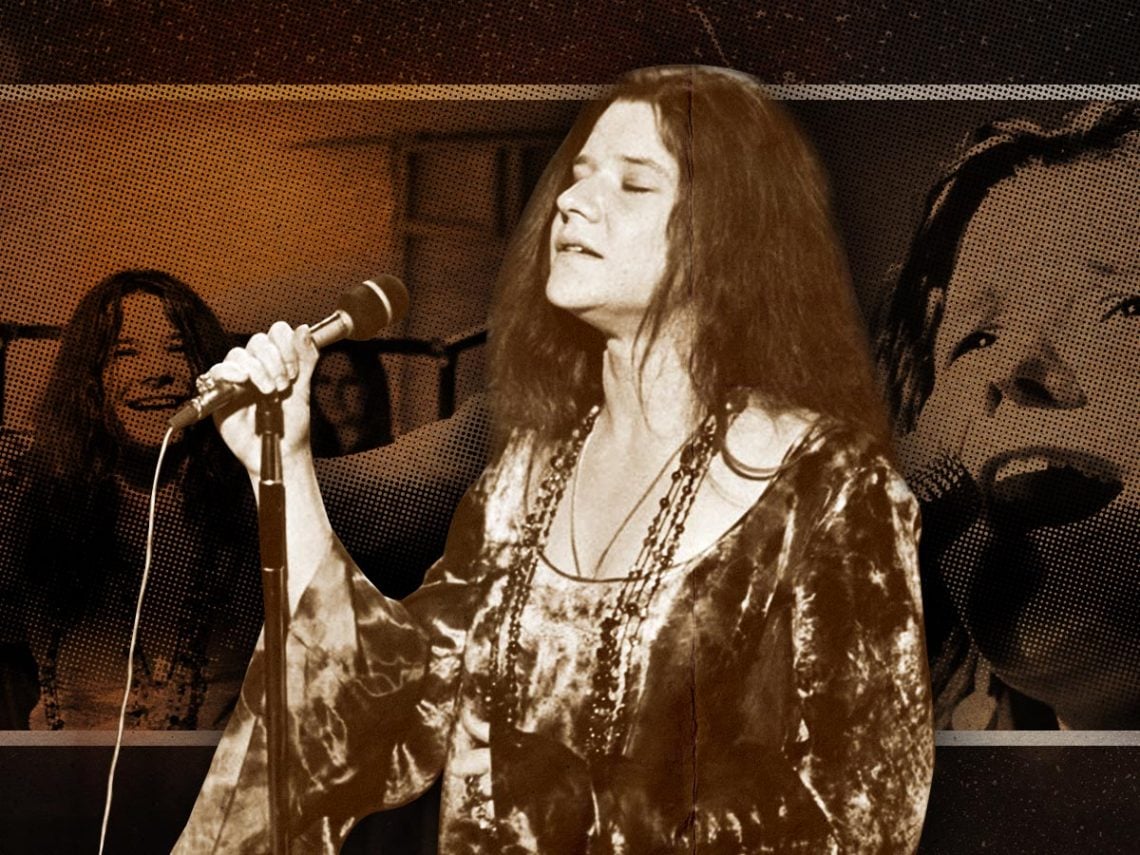
Don Henley was one who spotted it. He was new to Los Angeles when he saw Joplin at the Troubadour in September 1970. She was sat alone at a table, and the image stuck with him. A week later, she was dead.
That one run-in with the singer struck a chord with Henley that seems to make sense of the wide-ranging love and empathy towards Joplin, capturing the feeling of care surrounding her memory. “She was another one who wanted to show the people back home,” Henley said of Joplin. As the son of a farmer and now a newbie in a town where everyone was busy trying to make it, the Eagles musician saw himself as an outcast too, seeing Joplin as a peer on the outside of the inner circle.
“Janis had been bullied in high school,” he continued in conversation with Louder Sound. “They’d made fun of her because she was different,” he said. Henley seemed to relate to the way that her youthful experience had morphed into an insecurity-fueled motivation. “She was looking for acceptance, which is why a lot of us went to California: to find our tribe,” he added. “I think all of us were misfits in our own way, which is why we go into the business. The popular kids at school were the football players. They got the pretty girls. A lot of famous rockers were high-school nerds.”
Maybe that’s the key to it all. Unlike the polished stars who soared easily to the top or the singers with model looks and rich families to bolster them, Joplin seems to represent the everyman. Born in Texas to a blue-collar family and then spending years trying to balance making her passion work with a need to survive, her story is a common and relatable one for anyone who has had to strive.
The undercurrent that runs through it all in the form of this mission to prove people wrong and prove her worth is relatable too, existing as a unifying thread that so many creatives feel if they were the cool kids or the popular kids at school, spending their youth being laughed at for their dreams rather than supported in making them. Cohen and Smith both definitely felt that, too, capturing that feeling of existing on the outskirts in their work. It seems that Henley felt it, too, as he saw Joplin as a kindred spirit.
