


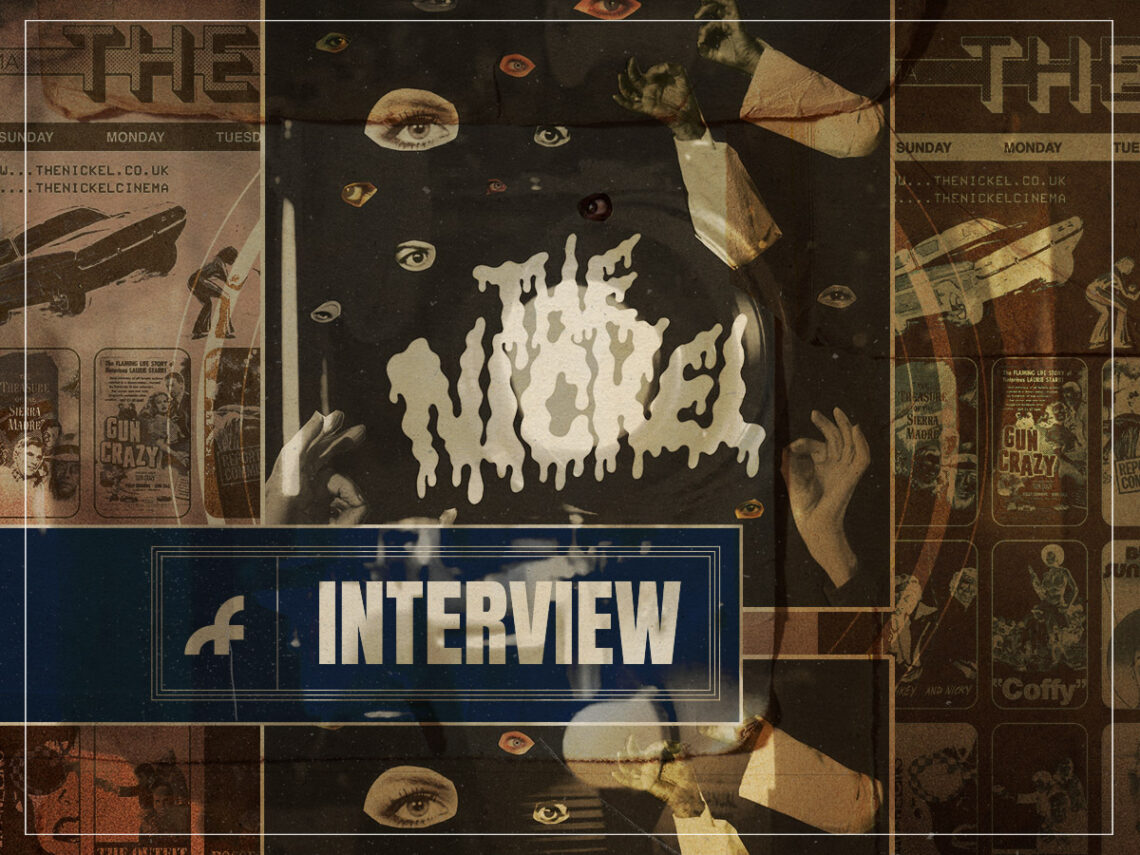
Dom Hicks talks The Nickel, London’s crucial new hotbed for provocative cinema

While cultural doomsayers persist in uttering their verdicts, at least a few beacons of light remain among us. Sure enough, this is an age in which our avenues of culture have assumed a homogenous and corporatised guise; we get our movies through Jeff Bezos’ Amazon, our news through Elon Musk’s X, our music through Daniel Ek’s Spotify, and just about everything else through the ever-widening platform of Mark Zuckerberg’s Meta.
With technological advancements steering the cultural scene at a rapid pace, maybe we would benefit from taking some inspiration from the past. In part, that’s the approach that Dom Hicks is taking, the owner of south London’s forthcoming cinema, The Nickel, an independent venue and enterprise through which he hopes to wrangle the film medium back from the barbarous claws of the conglomerates and disseminate it amongst the capital’s genuine cinephiles.
Speaking with Far Out, Hicks admitted that he has always been “obsessed” with cinema, so much so that he earnestly conformed to the “cliché” of working in a video rental shop in his youth, a la Quentin Tarantino. In fact, it was curating the ‘Staff Selects’ shelf that first introduced Hicks to the idea of cinema programming. Although lending his personal and more obscure collection of DVDs out to the customers would make for early employment exit: Hicks’ manager could not find Sam Peckinpah’s Bring Me the Head of Alfredo Garcia on the shop’s system despite it turning up in the deposit box one morning…
Inspired by movie theatres such as The Scala, Spectacle, The New Beverly and The Prince Charles, The Nickel will be a small, intimate screen dedicated to all manner of marginalised and semi-forgotten subgenres of the cinematic medium’s long, bloody, gory, sexy and downright weird past.
Naturally, though, there are obstacles to contend with. “Cinema is having a bit of an existential crisis,” Hicks admitted. “I mean, there are bigger cinemas closing down all over London. I think the Odeon in Covent Garden just closed. There are a couple of Picturehouses that have just closed. So it might seem, at first glance, to be a bit of a strange move to try and open a cinema when people are desperately trying to cut ties.”

However, Hicks is hoping that by “swimming against the tide”, he can showcase the fact that big cinema companies have been “barking up the wrong tree” when it comes to what movie nuts really want from a filmgoing experience. He said: “This push towards bigger screens and bigger sound systems and comfier Lux chairs and dining experiences; I’m not sure people really respond to that.”
Instead, the community ought to be given precedent per the cinema-to-audience relationship. In that light, Hicks is hoping that The Nickel can be “a place that might expose you to something that you wouldn’t otherwise see at home.”
He explained: “I think we have got the potential, as we’ve seen in places like [King’s Cross’] Scala back in the day, to be a fairly radical place where cinema is a quite subversive field for outsiders and marginalised artists to go, rather than just a sort of docile place to take the kids.”
Putting on a weird video nasty on a Sunday afternoon might not be enough to fill every seat in the house at The Nickel, so Hicks is wary of the need to cast a “wide net”, even when programming a more subversive kind of cinema, so don’t be too surprised to see the odd screening of John Huston’s The Treasure of Sierra Madre alongside something far weirder like The Man Who Stole the Sun or Rat Pfink a Boo Boo.
If Hicks needs to compliment some half-unknown Grindhouse movie with the odd classic, then it’s at least in keeping with the spirit of 1970s Grindhouse. “They were places for the marginalised,” he said of the personally inspirational theatres of New York City’s 42nd Street. “They were places for punks and all sorts of reprobates. It’s about things being provocative and things being a bit radical, a bit ridiculous, a bit outrageous. I think that people are ready for that.”
As safer and safer bets are made in Hollywood, audiences are simply becoming bored of the medium, so it’s little wonder there’s a newfound cultural interest in the more obscure corners of the film world. Explaining the appeal, Hicks noted: “We’re so used to this kind of very manicured, cleaned-up, soft edges type of content now. Offensive, provocative films were made from a true outsider perspective by artists who weren’t coached in the language of what works, what’s commercial, and what will appeal. We sort of tend to forget that art is better when it’s not quite so manicured.”

Naturally, in today’s socio-political landscape, there’s a concern not only in film programmers but in filmmakers, too, that offence ought to be avoided at all costs. However, this glossy state of creativity leads to a lack of opinion in an audience, and those without opinion cannot incite cultural or social change. Referring to the “always strong audience response” of Pier Paolo Pasolini’s Salo, or the 120 Days of Sodom, Hicks explained, “Maybe the work could be saying a terrible thing, then we can respond to it. People react, and there’s nothing wrong with that: having a reaction rather than just agreeing.”
Hoping to bring in programmes, seasons and double features from a diverse array of London’s fringe-most film clubs, it’s the community itself that will prove to be essential to the success of The Nickel, not only from an economic perspective but also in order to facilitate the kinds of conversations and debates that Hicks wants his punters to have with one another. There are plans for a zine, a podcast, pre-feature shorts, curated programming notes and a buzzing bar all at the venue, which Hicks hopes will be “a proper place to hang out afterwards and before, where a kind of conversation can happen.”
“I always feel a bit bummed out by the fact that you see the movie, you get up, and you’re out, and there’s no sort of opportunity to marinate in what you’ve just seen with other like-minded people,” he said. Of course, there are risks in opening an independent cinema in a financially-driven city like London, but considering the brilliant response and fundraising campaign The Nickel has enjoyed so far, to try to change the landscape of cinema and yet fail “would be a good hill to die on” for Hicks.
The market is certainly there for success, though, and it’s belief in The Nickel’s mission that Hicks thinks will lead to reward. “If you can hold on to your principles for as long as possible, then I think you can create a venue where people will go without knowing anything about the film because they trust in the experience and the curation attached to it,” he said. “If you can make it like that, where it sort of just feels like something worth risking, you don’t even really need to look at the listing. You just turn up, see what’s on, and give it a shot.”
With Camberwell in his sights, which used to have four neighbourhood cinemas back in the day, with the last one closing in the 1970s, Hicks is hoping venues like The Nickel can bring an end to the “empty, sterile” multiplex. There’s an antagonism in Hicks that drives him, a vitriol that admittedly rises in all of us cinephiles when we see what has befouled our beloved medium. “We’ve accepted a kind of a cultural scene when we mix the idea of film and cinema with just the word content, and I hate that,” Hicks said. “I don’t think film is content.”
“I can’t accept that,” he added. “I can’t accept the idea that streaming services run by corporatised tech bros are now not only the platforms to watch things on but also the commissioners and production houses that make the stuff. All that rubs me up the wrong way.” In response, Hicks has “formed a rebuttal,” a fearsome movement of proper cinema that could well wrestle the power back from the corporations, and with that in mind, The Nickel is certainly one of the most exciting new cultural homes in the capital.
