


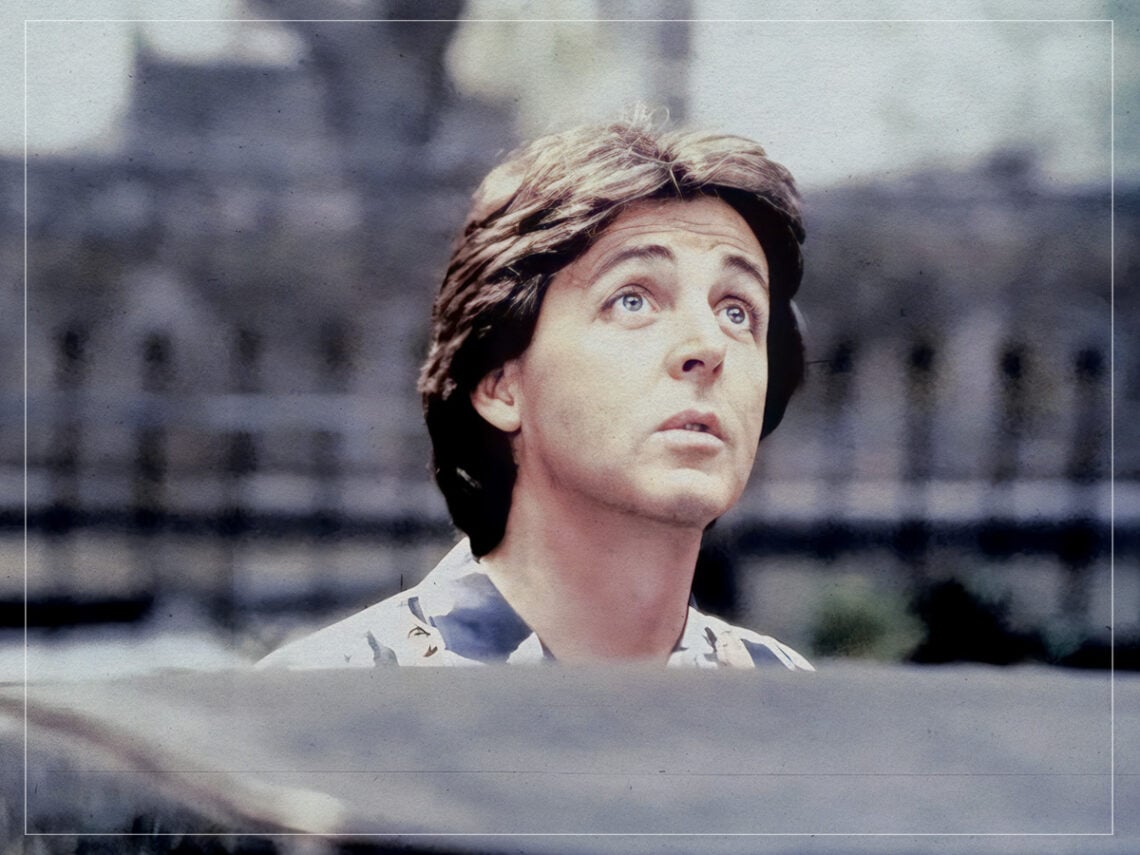
Does Paul McCartney think The Beatles changed the world?

Take a moment and imagine being Sir Paul McCartney for a second. Imagine one moment being a kid from suburban Liverpool with dreams of being a musician, then waking up one morning several decades later being hailed as one of the 20th century’s most important figures. Someone who changed the world as we know it through music. It must be a tough thing to take in, even before one remembers how we’re all our worst critics. So, the fact that Macca, at 82, seems to have his head still screwed on straight is something of a miracle, but is his humble, thumbs-aloft nature an act?
We already know he can get a little peeved about his head-bobbing and family-friendly reputation as the “safe” Beatle. Purveyor of ‘Obla-Di-Obla-Da’ in the Fab Four and the ‘Frog Chorus’ out of it. He’s very keen to let people know that he wrote ‘Helter Skelter’ and ‘Why Don’t We Do It In The Road’ as well, so let’s not get it twisted; this is a man who cares deeply about legacy. To the point, he may also care a little too much about what other people think of him, but then, where does one begin and the other end?
During an interview with Waterstones on the release of his lyric collection, the question was asked of McCartney fairly directly. “As singers documenting a changing world, are you happy with what the world has become?” As anyone who is asked that question would respond, McCartney was immediately taken aback.
“Loaded question,” he begins over a knowing look to James Daunt conducting the interview before taking a moment to think about his response.
Charmingly, his first thought is his vegetarianism. He talks about how he’s “very delighted to see that that is catching on”. It’s not all good news, though. The continued presence of wars and atrocities is a downer, especially coming from a generation that, as he put it, “hoped that as we’d get more and more civilised, that kind of thing would lessen.” He settles in a reasonable position of appreciating the good while acknowledging how much more progress needs to be made, referencing that “whenever someone like Greta Thunberg comes along, we make fun of her.”
Then comes the big question. Daunt asks, “Today, will the talented kid in Liverpool find that space to… become the creative force that you have been?” McCartney ends up talking about the path that he, John, George and Ringo laid over half a century ago. He talks about how “it’s not as easy because the field is very much more crowded now than it was for us, but then there was no reason why we should have become famous either.”
In a way, he is right. The Beatles coming from the background they did just didn’t happen until they came along. Never forget that when they became international celebrities, many people in their orbit thought their Scouse accents would need to be subtitled at best or outright dubbed at worst for films and interviews. That stardom could come to anyone, no matter the background, and is the lasting legacy of The Beatles to McCartney, and it’s difficult to argue with him.
He invokes Ed Sheeran as the prime example of this in the 21st century. Practically, the route is different thanks to, in Paul McCartney’s words, “devices and YouTube and things like that that we didn’t have.” For Sheeran, though, fame “didn’t happen to him through anything other than his own talent.” That is, I’m sure you can agree, one hell of a legacy for one pop group to have.

Never Miss A Beat
The Far Out Beatles Newsletter
All the latest stories about The Beatles from the independent voice of culture.
Straight to your inbox.