


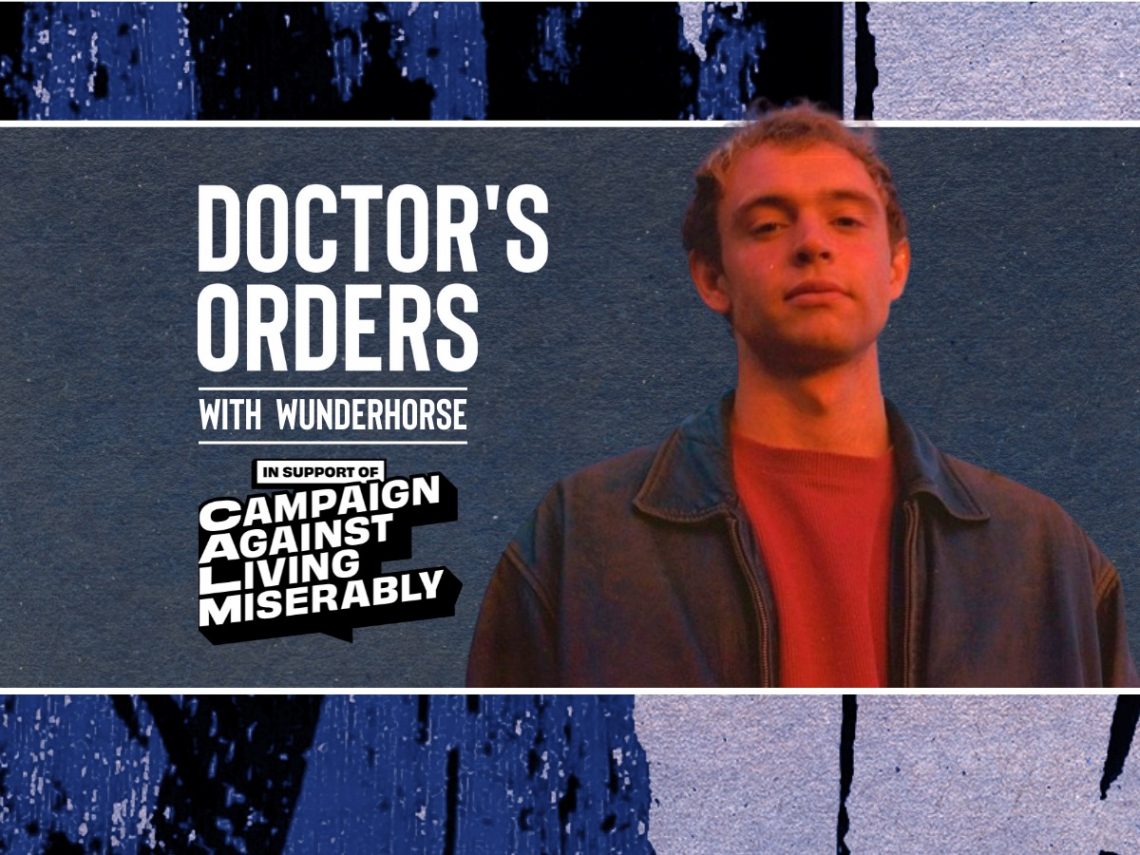
Doctor’s Orders: Wunderhorse prescribes his nine favourite albums

Wunderhorse, the new alias of former Dead Pretties frontman Jacob Slater, has welcomed Far Out to peer inside his mind and get a flavour of his musical education. With today’s exciting release of Cub, Slater’s debut solo album, we feel it’s high time we figure out where this undeniable songwriting genius gestated.
In partnership with CALM, we’ve asked a selection of our favourite artists and public figures to share nine records that they would prescribe for anyone and the stories behind their importance. Doctor’s Orders sees some of our favourite musicians, actors, authors, comedians and more offer up the most important records, which they deem essential for living well. CALM, whose full working title is ‘Campaign Against Living Miserably’, offer a free, confidential and anonymous helpline for those most in need of mental health support.
When perusing Slater’s nine selections below, it is apparent that deeply lyrical songwriting is paramount. With the inclusion of Bob Dylan, Van Morrison, Joni Mitchell, Tom Waits, Neil Young and John Martyn, he’s left barely any of the top-flight songwriting stones of the 1960s and ’70s golden era unturned.
The music Slater released during his brief recording stint with Dead Pretties was notably heavier, focussing on the raw seedy sound of neo-punk. This sonic embodiment of volatile hedonism reflects a closed chapter in the young musician’s life.
“I was tired of having to get up on stage and pretend I wanted to throw myself around and smash things up every night and sing these intense songs,” Slater said of his time fronting Dead Pretties in a recent press release. “They were good songs, but I didn’t think we’d be able to transition into doing the more introspective music that I wanted to make. I thought it would just alienate people”.
After leaving Dead Pretties, Slater began to focus on his physical and mental health and ultimately followed a path more befitting his creative dream. “I stopped taking drugs, and I stopped the band. The two things seemed to go hand in hand. I thought if I carried on with the band, I wouldn’t be able to not keep doing that to myself,” he said. “There’s the old myth that you need to take a load of drugs to be really creative, but I was much more creative when I wasn’t taking drugs. I wanted to love that part of myself again, and I wanted to fall back in love with music again”.
While this self-destructive chapter of Slater’s career seems to have come to a close, the selection of Iggy and The Stooges’ Fun House posits a bookmark of nostalgia. Fans among us still hoping for a touch of “raw power” in Slater’s style can rest assured that strands of this early punk DNA are very much alive in Cub.
After seeing Wunderhorse perform live during Brighton’s Great Escape Festival in spring, I felt Slater might be a fan of Radiohead, especially after hearing the delicate high notes of ‘Poppy’. Naturally, I was contented to see the Oxford indie legends receive some attention in Slater’s selections, but intriguingly, he didn’t choose the album I would expect.
Radiohead’s most creatively revered period occurred between 1997 and 2000, thanks to two seminal accomplishments. Early in this chronological spectrum lies OK Computer, while three years later, we were treated to something unprecedented and electric, Kid A.
After listening to Cub, I found that more ties could be bound to Ok Computer or perhaps its predecessor, The Bends. Slater’s selection leaves me hoping that, like Radiohead, he might be prepared to push sonic boundaries and venture into electronic experimentation as he marches forth.
See the nine albums Wunderhorse holds dear below.
Wunderhorse prescribes his nine favourite albums
Van Morrison – Astral Weeks
“This is, without question, my favourite record of all time. It doesn’t feel like a collection of songs at all, more like a collection of planets, a solar system wherein each song is a world unto itself. That might sound a bit vague and pretentious, but if you know and love the record as I do, perhaps you’ll understand what I’m getting at. Recorded over just three sessions in the autumn of ’68, the songs were basically unrehearsed and improvised on the day”.
“Astral Weeks is the convergence of many different styles; the traditional elements of folk, the bold exploration of jazz and Van’s stream of consciousness lyrical imagery that seems to echo the writings of James Joyce. Something happened in those sessions that nobody can fully explain but I’m very glad the miracle was captured on vinyl. Astral weeks came into my life when I wasn’t in a particularly good place and it pulled me out of a deep hole and into the sun. That might sound like the kind of cliche you hear all the time when people discuss their favourite records but in this case it’s true, Astral weeks really did change the way I experienced the world around me and made me reconsider my place within it.”

The Who – Quadrophenia
“Quadrophenia is the first record I ever heard. My dad played it to me when I was about four years old, and it lit a fire in my gut. Keith moon’s thunderous drums on ‘the real me’ had me pounding on any surface that would take it until my parents got me some bongos for Christmas. Moon’s drumming and Townsend’s guitar gave a language to the frustration I felt at not being able to communicate my feelings at that early age. As I grew older, I began to take more notice of the lyrics, and realised that the frustration I was feeling was one of the main themes of the record”.
“A concept album, it follows a young ‘mod’ as he strives to find his place in the world, unsure of himself and initially desperate to fit in, he slowly becomes disillusioned with the fickle social scene around him and spirals out of control as he wrestles with his identity and his inability to communicate his emotions to his peers. This album was a real light in the dark for me during those confusing teenage years, and I returned again and again to songs like ‘Cut My Hair’ and ‘Love Reign O’er Me’, Townsend’s words assuring me that I was not alone.”

Joni Mitchell – Hejira
“Joni Mitchell had already established herself as a world-class songwriter long before this record came out. Her masterpiece Blue was a staple of any reflective teenagers record collection and I’m sure many people would have been happy for her to continue writing songs like that forever. Joni, ever the artist, had other ideas. She had hinted at incorporating jazz into her music on the criminally underrated Hissing of Summer Lawns but it was Hejira that brought this vision into focus. Jaco Pastorius (arguably the greatest bassist of all time) features heavily on the record, his otherworldly bass lines weaving effortlessly between Joni’s phrasing and bringing new light and shade to the music of an artist whose incredible talents as a painter have always been reflected in her music. The title track is a perfect example of this”.
“There is a yearning for movement and adventure on this record, counterbalanced with the loneliness that comes with never settling anywhere for too long. On ‘Amelia’ for instance, Joni tells the story of Amelia Earhart, a pioneer of solo aviation whose body was lost at sea. The lyrics in this song encapsulate the themes of the record perfectly; ‘Maybe I’ve never really loved, I guess that is the truth, I’ve spent my whole life in clouds at icy altitudes’.
“If you are looking for an adventure but are unable to quit your day job and give yourself to the ‘refuge of the roads’ as Joni would put it, I suggest you listen to Hejira, and explore the internal landscapes of one of the greatest songwriters to ever pick up a guitar.”

The Stooges – Fun House
“Some things hit their peak early on. Pop music never improved on the Beatles. Heavy rock went downhill after Zeppelin. And punk, in my opinion, never surpassed the Stooges. Do me a favour. Go out and buy this record. Take it home. Turn your speakers up to full. Play it. If what happens next doesn’t make you want to have sex with everything that moves whilst burning the nearest major city to the ground, it’s either not loud enough or you’re already dead”.
“This record is important. This record is freedom. This record is what it sounds like when you don’t give a fuck. And I’m not talking about tattooing it on your skin, or posting it on Instagram, or incorporating it into your edgy political beliefs so that people will notice you. This is the fuck not given of the true individual, someone who dances their little fire in the shadow of a looming tsunami for no other reason than it feels good. This album is a sonic celebration of the alienation that inevitably comes as a result of being totally authentic. In a world where true originality is becoming a rare, almost dangerous thing, Fun House dares us to be ourselves, no matter the consequences.”

Tom Waits – Blue Valentine
“Tom Waits is a musical shapeshifter who defies categorisation, so it’s difficult to pick just one of his records as a favourite but I think I’d have to go with this one. It’s got a bit of everything he does best. If you like Tom’s snarling seedy side, then try ‘A Sweet Little Bullet From a Pretty Blue Gun’ or ‘Wrong Side of the Road’, if you want to hear him croon, listen to his version of ‘Somewhere’ and if you have a soul somewhere inside you then ‘Christmas Card from a Hooker in Minneapolis’ and ‘Kentucky Avenue’ will have you weeping like a real human being”.
“Since I heard his song ‘Burma Shave’ (a must listen) I’ve been totally captivated by almost everything he’s done. He’s a collector of stories from places beyond your door, the witness unaccounted for at the scene of every crime, he is Bukowski in Sinatra’s stolen clothes and I love him.”

Neil Young and Crazy Horse – Everybody Knows This Is Nowhere
“That guitar sound. Holy shit. Neil Young is breaking down the Great Wall of China with his own balls. That’s the first thing I thought when I heard ‘Cinnamon Girl’ and ‘Cowgirl in the Sand’. I’d never heard anything so mean and raw in my whole life. It makes modern guitar distortion sound like a wet fart. Aside from the unmatched guitar tone on the record, it has some of Neil’s best songs on it too which is saying something, the man has written more classic songs than any solo songwriter except perhaps Bob Dylan”.
“The two tracks mentioned above, along with ‘Down by the River’, were allegedly composed in a single day when Neil was in the grip of a raging fever. I have tried to induce a fever myself in the hope of achieving a similar result but only became hot and upset.”

Radiohead – Kid A
“I didn’t come around to Kid A for a while. In my early teens, my ‘I only like loud guitar music and nothing else, so take your synthesisers elsewhere’ attitude was more than just arrogance, it was an identity. Kid A frightened me. What if I liked it? What if I sold my guitars and bought a Moog? Thankfully none of that actually mattered very much and I soon found myself head over heels in love with the Orwellian nursery rhymes of Kid A.
“I’ve always been a huge fan of Thom Yorke’s lyrics, seamlessly blending the sickly sweet and the terrifying, the mundane and the extraterrestrial, and his work on Kid A is no exception. In the interviews I’ve seen of this period, Thom mentions a [William S. Burroughs’ cut-up] technique that involves writing down a single phrase, putting it into a hat full of other ‘one-offs’ and combining them at random as a way of overcoming writer’s block. This gives the album a wonderfully eerie disjointed feeling. Imagine a robot, put back together in the wrong way, trying its best to warn you of the perils of the future, but the snatches of information are muddled, the facts turned to riddles by short circuits and burned-out wires. Radiohead made a big left turn with Kid A, swapping guitar distortion and big choruses for synthesisers and hypnotic drum grooves.
“At the time, there were many who thought this change of sound would alienate the fans and spell the end of Radiohead as a band. Thank god they were wrong.”

Bob Dylan – The Real Royal Albert Hall 1966 Concert
“Between ’65 and ’66, Dylan would record, release and tour three albums: Bringing it all back home, Highway 61 Revisited and Blonde on Blonde. Three of the greatest albums of all time. In a year. That is bonkers. Somewhere towards the end of this mad period, Dylan played London’s Royal Albert hall and recorded the show. Although most people now consider the aforementioned three records to be classics, many of Dylan’s acoustic fans at the time hated the new electric sound. You can hear them booing all over the albums second side.
“There are many standouts on this record, (especially a haunting ‘Visions of Johanna’ on the album’s exclusively acoustic first side), but Dylan’s screaming of ‘HOW DOES IT FEEL?’ during ‘Like a Rolling Stone’ puts chills up my spine every time I hear it. Here is a man at his wit’s end, having put together his greatest work to date and the audience are baying for his blood as if he’d betrayed them, as if he fucking owed them something. So what does he do? He tells the band to play as loud as possible and screams the questioning chorus refrain over and over again into the faces of his so-called fans in a symbol of single-minded unwavering defiance, daring them to blink first. Punk never got more punk than Bob Dylan.”

John Martyn – One World
“John Martyn, by all accounts, was a bit of a contradiction. Gentle and violent in equal measure, he’d be whisper-singing you a love song one minute and putting you in hospital the next. Both extremes of his nature are evident on many of his records, but in my opinion, none paint a better self-portrait than One World“.
“Helplessly beautiful love songs like ‘couldn’t love you more’ sit side by side with tracks like ‘Dealer’, in which John threateningly growls ‘LET ME IN’ over and over like a baritone saxophone with a debt to collect. This record also features Johns most accomplished use of his ‘Echoplex’, an early tape delay that layered his guitar phrasing over itself (if you’re thinking Ed Sheeran, don’t), allowing him to become a sort of sonic architect. This is masterfully demonstrated on ‘small hours’, a truly unique and otherworldly song, recorded at 4 in the morning by a lake in the English countryside. I could wax lyrical about ‘Small Hours’ all day but it’s the kind of song that suffers the more you try to describe it so all I will say is that it is (in my opinion) John Martyn’s finest moment and that everyone should hear it before they die. Perhaps you hear it when you die. Who knows. It certainly wouldn’t be a bad way to go out.”


Never Miss A Tale
The Far Out Bob Dylan Newsletter
All the latest stories about Bob Dylan from the independent voice of culture.
Straight to your inbox.