


31 years ago, Radiohead released the album that changed their history

If you didn’t live through it, there’s something quite romantic about the 1990s. The decade was closing out the most explosive cultural century in the history books, and with every new year, there seemed to be a new fad or fashion that was turning the notion of rock music into something more and more complex.
By the mid-90s, grunge had taken hold of the United States and, in turn, the entire world. But, there was a sort of pushback in Britain; they didn’t exactly identify with grunge across the pond, as the perceived whining didn’t line up with the boon of behaviour in the UK. Out of this rebellion came Britpop. Damon Albarn of Blur once said: “If punk was about getting rid of hippies,” quipped Damon Albarn in an interview with the NME, “then I’m about getting rid of grunge.”
His Mancunian adversary, Noel Gallagher had a similar notion. In fact, Oasis’ beloved hit ‘Live Forever’ was written as something of a response to Nirvana’s ‘I Hate Myself and Want to Die’. “That’s fucking rubbish, kids don’t need to be hearing that nonsense,” he said in the Lock the Box interview back in 2006.
However, back in 1993, it seemed for a time that Radiohead was another byproduct of the weird amalgamation between Britpop and grunge; ‘Creep’ from their first album, Pablo Honey, skyrocketed the group to mainstream success. The single was a blessing and a curse for Radiohead. It got their name out into the stratosphere, but at what cost?
Many made fun of them for the song, calling them the whiny British alternative to the Seattle sodden grunge rockers. It got to the point where Radiohead felt like caricatures of themselves. Their next album, The Bends, was going to be far different, they thought to themselves.
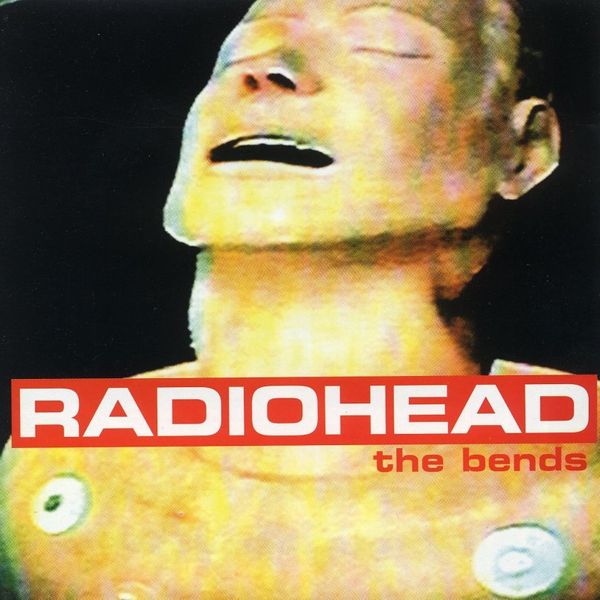
Radiohead pushed themselves and refused to compromise. EMI, their record label, pushed them to make another single, like ‘Creep’, but Radiohead would have nothing of it. It took them two years to put The Bends out, but once they did, it solidified them as more than just a tight band – it made them realise that they are not what the scenes around them dictate them to be; they are their own band. It’s part of the band’s legacy and the throughline of their entire discography. At every point where they are expected to zig, you bet your bottom dollar they are zagging.
Because of The Bends’ achievement, they decided from now on (although they had already decided after ‘Creep’) that they would only do things their way. The Bends just proved that they could do this and still be successful, garnering enough support and recognisably brilliant chart positions to confirm that it wasn’t the scene they were attached to but the music they made that would make them one of Britain’s crowning musical achievements.
Radiohead fooled everyone with The Bends. They gave the impression that they were a Britpop band. From the three guitars whirring riffs into the atmosphere to Thom Yorke wearing the colour button-up shirt with a leather jacket and Johnny Greenwood beating on his Fender Telecaster, they were a slightly evolved Radiohead from the guys who made ‘Creep’. Pablo Honey had presented Radiohead as a pre-emo pop-punk bunch of whiny teenagers who wrote a brilliant anthem for the socially anxious. The evolution now revealed the Oxfordshire boys as sophisticated young men undergoing an existential crisis — so still anxious, but more grown-up.
The Bends is made up of one hit to the next. Each song can stand on its own. Although the album as a whole is tethered together under an umbrella of a specific sound. Radiohead, through the prism of The Bends, is your typical Britpop band in 1995. Each and every song can be stripped back and played on an acoustic guitar. During this time, Radiohead were not completely dissimilar to a band like Suede. The difference between these two bands, however, is that Radiohead are inherently not a pop band because they are not so obsessed with their image. That’s not to say that Radiohead doesn’t have an image. Instead, their image was formed — as it is now — organically; there is very little pretension when it comes to Radiohead.

The meaning behind the phrase, ‘the bends’, is slang for decompression sickness that usually affects scuba divers: an illness that can create nitrogen bubbles within the blood as pressure decreases. Typically, this can happen if a scuba diver ascends from their dive too quickly. In the case of Radiohead’s album, ‘the bends’ is referring to high pressure that specifically Thom Yorke felt after the release of their massive hit, ‘Creep’.
When Pablo Honey and the record’s single, ‘Creep’, came out in 1993, the band underwent a rigorous touring and media regimen. Radiohead’s mad scientist, who was responsible for a lot of the band’s unique sounds, Johnny Greenwood, commented on this period of time: “We seemed to be living out the same four and a half minutes of our lives over and over again. It was incredibly stultifying.”
The increased pressure especially took a toll on Thom Yorke, the band’s main songwriter and singer. In fact, Yorke and the rest of the band even came to hate their smash hit, ‘Creep’. It should come as no surprise that an artist like Yorke would be slightly self-deprecating and, for lack of a better word, be happy to shit on his own music. Commenting on ‘Creep’, Yorke wryly stated that they had “sucked Satan’s cock” for the song.
One of the other key ingredients to The Bends‘ success, besides the incredible songwriting, is the producer, John Leckie. Leckie has produced The Stone Roses, Robyn Hitchcock, XTC, The Human League, The Fall and countless others. It was very much Leckie who brought the album to life in many regards.
Through the grand anticipation and pressure placed on Radiohead to deliver singles, which they refused to do. Instead, they delivered a brilliant Britpop, alien-like album. It took Radiohead two years, from start to finish, to deliver The Bends. In a way, this was very much a make-or-break moment for Radiohead.
The Oxford group took to hours upon rehearsing, writing, re-writing, and fighting uphill against immense executive pressure. All these high-pressure moments fed in and fulfilled the iconic image of The Bends as an inherent but accidental concept; it truly lived up to its expectations and more.
Perhaps the album’s greatest achievement, though, is that it also gave them one more foothold from which to spring into a new direction. The record would soon be considered just another step forward in their relentless march toward creative purity. An album deliberately dabbled in Britpop energy, Yorke and co would again reject this style for something even more cerebral on the next record. And, for this reason alone, it can be considered the crystallising moment of the band’s legacy.
