


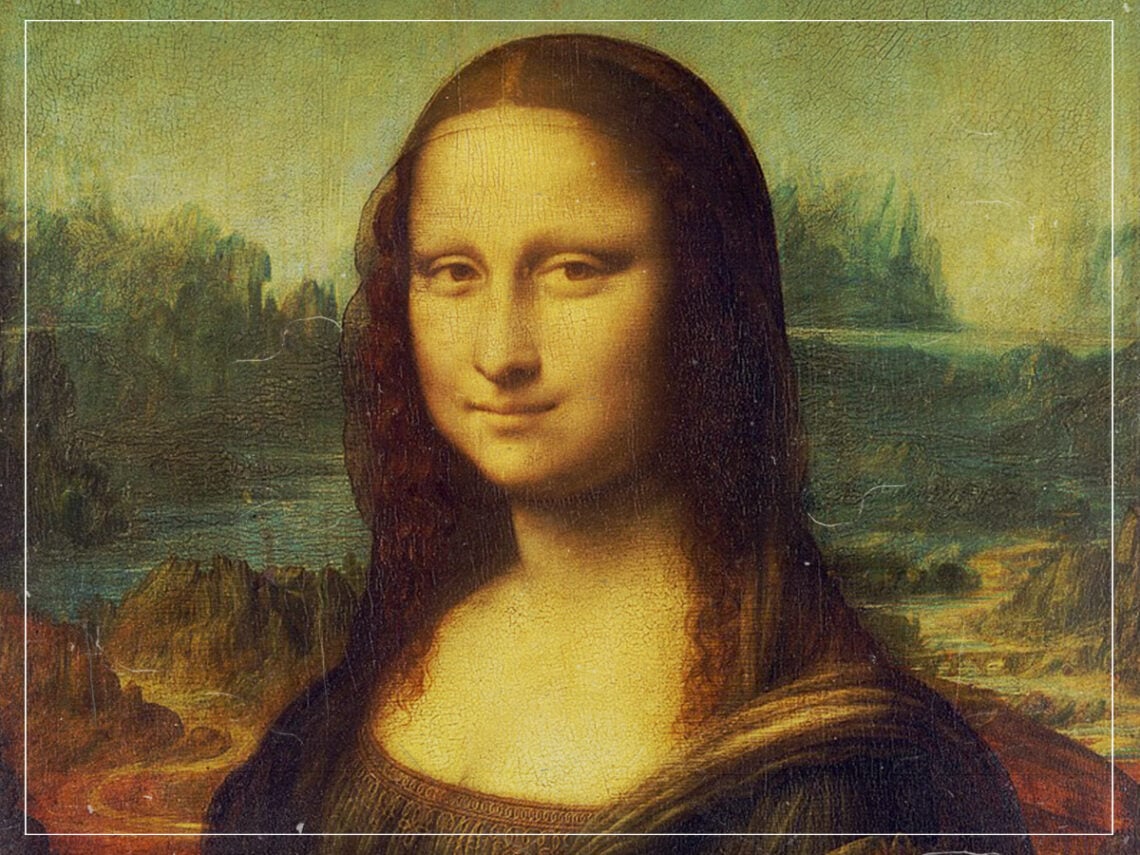
Do the Mona Lisa’s eyes actually move?

For centuries, the question surrounding Leonardo da Vinci’s La Gioconda or, as it is more commonly known in English, the Mona Lisa, has been how her eyes appear to move. However, much more recently, the very nature of the question has been questioned (bear with me). Now scholars and art experts have pivoted their research, going deeper into the mystery to ask whether the Mona Lisa’s eyes ever moved.
Thankfully, there’s one simple answer to this, but it requires some context. To start off, the idea that Mona Lisa’s eyes move is a very historical and famous notion. This became known as the ‘Mona Lisa effect’ and has been tested on many different portraits throughout history. The idea centres on the notion that a viewer looking at a portrait can sometimes feel looked at, irrespective of their position relative to the image. This idea is actually much older than the Mona Lisa, but it took on this name because of her fame. We can actually trace the effect back to the ancient Greeks because of the two-dimensionality of ancient mural paintings; however, the effect isn’t as effective (pun intended).
So, during the Renaissance period, the introduction of linear perspective by the architect Filippo Brunelleschi transformed the way painters created a sense of dimension and space, forever making paintings increasingly life-like. Simply put, linear perspective means that we are always drawn to the eyes of a figure in a portrait or to the centre of a landscape.
Going back to the Mona Lisa, the world’s most-viewed painting, if you ask anyone who’s seen it, they will probably tell you that within the first few seconds, they were drawn by her gaze, thanks to the principles of linear perspective. Now, here we get closer to the answer.
Several studies have been conducted to understand whether the Mona Lisa’s eyes give the impression of movement. One of the main ones has been at Bielefeld University in Germany, where scientists and art scholars united forces to settle the mystery once and for all.
Two researchers asked 24 participants to assess the gaze of the Mona Lisa. However, instead of simply asking each participant whether they felt if the titular subject was looking at them—a binary response likely to be influenced by existing beliefs—they displayed the painting on a computer screen and asked the participants to measure the direction of the gaze on a two-meter (6.6ft) carpenter’s rule placed horizontally between them and the screen.
Furthermore, they manipulated whether only the eyes and nose or the entire head were visible to the participants. The image zoom ranged from 30% to 70% with increments of 10%. All images were centred on the same pixel on the bridge of the nose and cropped to match the screen resolution (1280 px by 1024 px).
Unlike with human eyes, where the ratio of pupil to the white part (sclera) changes depending on where the eye is looking, in a painting, this ratio constantly stays the same, and this made their conclusion crystal clear: the ‘Mona Lisa effect’ does exist but the one painting that doesn’t demonstrate it is the Mona Lisa herself. In fact, the results went as far as to demonstrate that the Mona Lisa looks about 15 degrees to the right, meaning she is looking at your right ear or over your shoulder.
Having said that, I think we should give credit where credit is due and change the title of the ‘Mona Lisa effect’ to attribute it to a painting that actually does successfully show it. As is, the Mona Lisa attracts 30,000 visitors daily, so she might just be a little overrated.
