


The disturbing monotony of Michael Haneke’s ‘The Seventh Continent’

Austrian filmmaker Michael Haneke is well known for his confrontational cinematic style, which often forces his viewers to come face to face with the widespread nature of brutality and the violence that permeates everyday life. Pulling back the curtain on things we’d rather ignore, Haneke’s movies attack capitalism, societal rules, regulations and expectations, and the innate barbarity of humanity.
From the evil played upon a middle-class family by seemingly well-to-do men in Funny Games to bizarre and traumatic events inflicted on a sexually repressed woman in The Piano Teacher, Haneke’s movies do not hold back in depicting depravity. However, less talked about is his debut, The Seventh Continent, a truly horrifying piece of work that will linger with you indefinitely, its power lying in its simplicity.
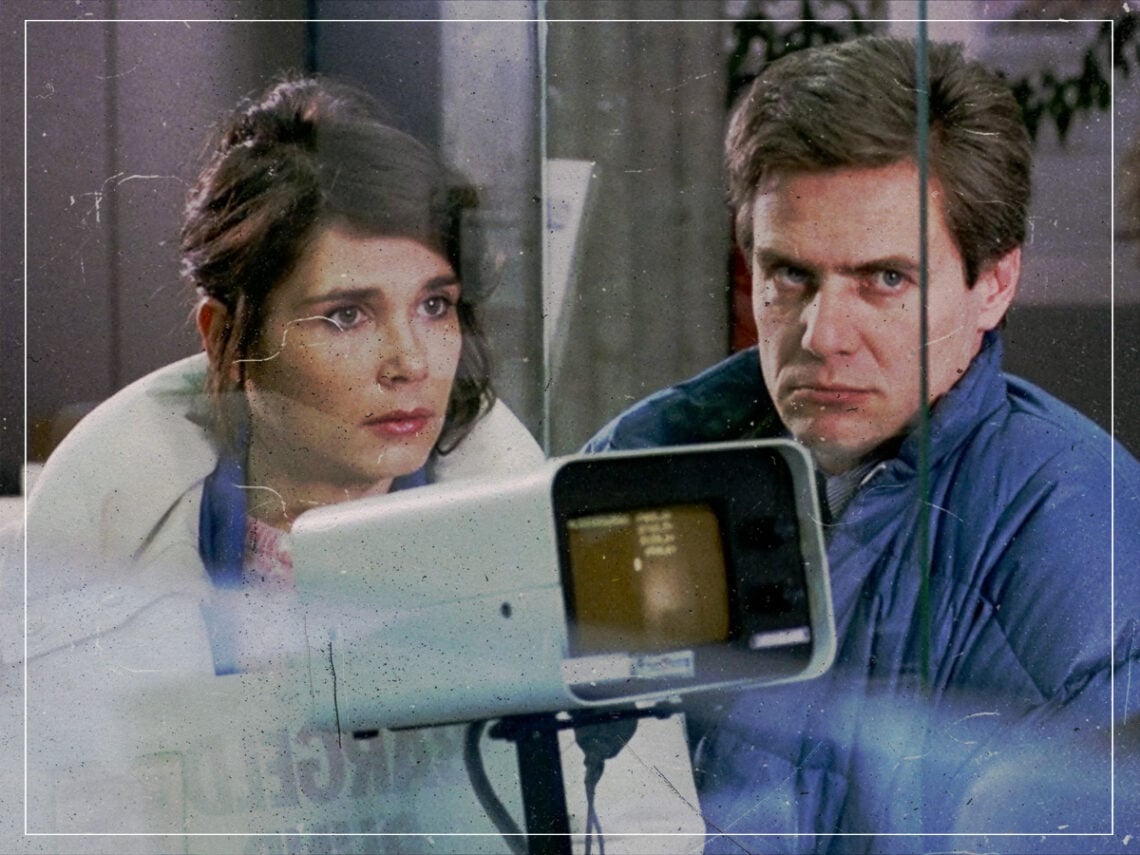
The movie follows an Austrian family consisting of Anna, Georg (it is no coincidence that these are the same names used in Funny Games), and their daughter Eva. They are successful, living an idealised life in the eyes of society – if they lived in the United States, they’d be the epitome of the American dream. Haneke comments on the idea that everything we are promised in society through hard work, adherence to social norms, and being part of a nuclear family is not everything it’s cracked up to be.
In fact, these expectations of modern life drain us and leave us acting like slaves to a system that does not care about us as individuals – the only care is profit. Capitalism exploits us and tricks us into thinking that success and happiness come through dedication to these broader ideas that foster uniformity and a lack of creativity and freedom.
Haneke depicts the monotony of modern capitalistic life through The Seventh Continent’s slow and repetitive pacing, which can often challenging to sit through. Little dialogue occurs; instead, we witness the family going about their everyday life, with little action happening to keep us entertained. This puts us in the mind of the characters, who are bored to death with their lives.
Their only solace seems to be the hope of moving to Australia, which the family plans throughout the film. However, hope is futile – not even relocation to somewhere sunnier could save the family from the state they’ve found themselves in. Instead, they plan a joint suicide, ridding themselves of all their possessions as preparation, including disposing of all of their money.
Haneke is extremely precise, allowing the tone of his movie to perfectly reflect the characters’ feelings, challenging us to sit with the lack of action. However, we get a twisted sense of reward when the final act sees the family successfully enact their suicide pact, the three of them lying motionless together.
In a way, it feels as though Haneke is asking the audience to consider why we feel rewarded when we finally see the family kill themselves. Just as he asks us to question our consumption of violence in Funny Games, the third act forces us to think about why our attention is suddenly piqued when an act of tragedy plays out. Are we, like the family, just as bored of our lives and in need of something to distract us, even if that thing is shocking and brutal?
The Seventh Continent is not an easy watch, with small details revealing that something slowly unravels as the film approaches its morbid conclusion. Haneke’s depiction of the family destroying their belongings before dying – untying themselves from consumerism – shows just how inherently our lived experiences are glued to capitalism. This is a machine that the family want out of, and death appears to be the only logical escape. Bleak, nihilistic and disturbing, The Seventh Continent is certainly not casual viewing, but it is a testament to Haneke’s bold cinematic approach.
