


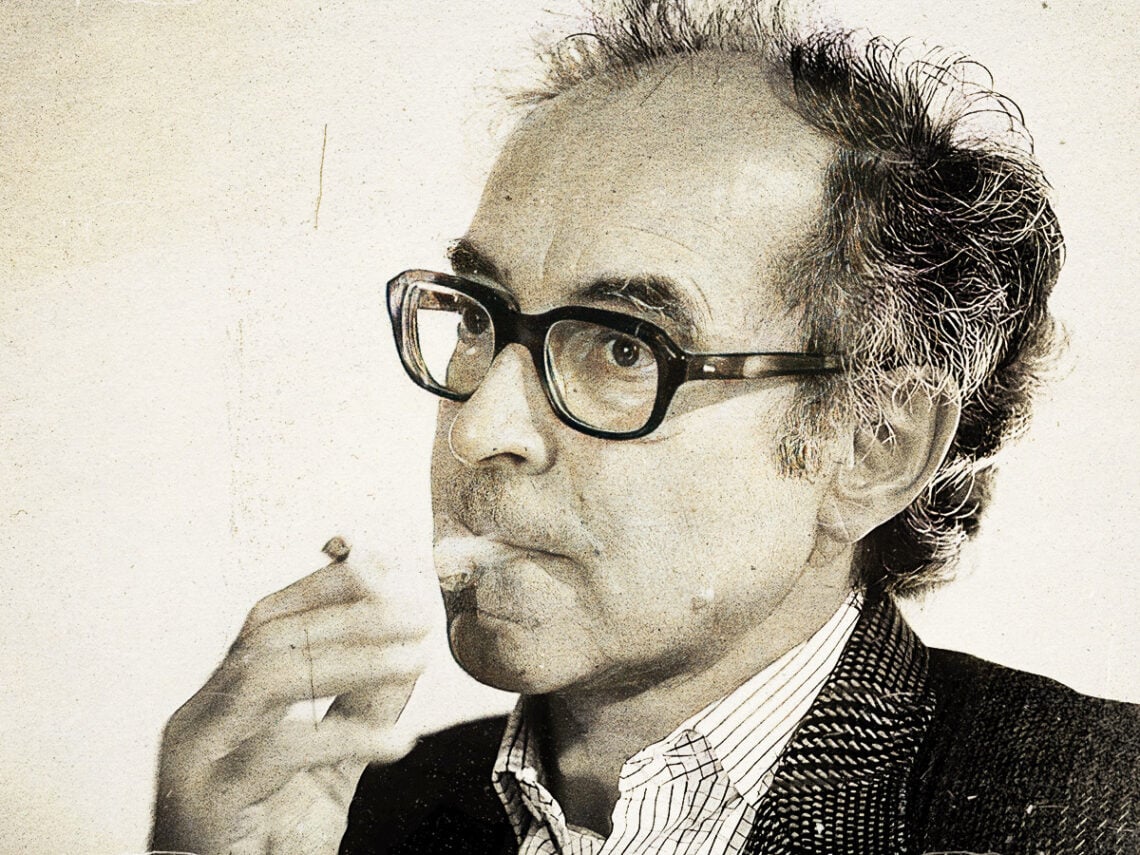
The directors Jean-Luc Godard admired most: “It was utopian”

Cinema irrevocably changed when a group of ambitious French film critics writing for Cahiers du Cinema began making their own movies. At the forefront of this movement was Jean-Luc Godard, one of the biggest figures in the French New Wave. Alongside the likes of François Truffaut, Jacques Rivette, and Eric Rohmer, these filmmakers transformed the medium with their innovative approaches.
Godard was known for his use of chopping editing, naturalistic filming, breaking of the fourth wall, bright colours, the inclusion of slogans and references to American advertising, and his championing of Marxism. He also frequently collaborated with actors like Anna Karina, Jean-Paul Belmondo, and Jean-Pierre Leaud, all of whom became closely associated with the filmmaker.
He first burst on the scene with Breathless in 1960, just a year after critics had been impressed by Truffaut’s French New Wave classic, The 400 Blows. The film, starring Belmondo and Jean Seberg, was a hit, and it remains one of the most impactful movies in cinematic history. From there, he directed more acclaimed films like Une femme est une femme, Masculin Feminin, Pierrot Le Fou, Alphaville, and La Chinoise before entering a more politically-charged period of filmmaking.
The aim of these new French filmmakers was to revitalise cinema, which they thought was particularly stale within their native country. Despite the fact that much of the French New Wave seemed to stand in opposition to Hollywood studio filmmaking, Godard and his contemporaries were actually quite fond of many American directors, enjoying their work more than many French filmmakers.
Talking to Film Comment, the director revealed some of his favourite directors. “We fought very often for some sort of American cinema,” he explained. “We preferred Samuel Fuller or Budd Boetticher to William Wyler or George Stevens. Our wish, at least Rivette and I, was to be able to make a musical on a big set. It’s still a hope!”
Godard was such a fan of Fuller that he even managed to get the director, known for helming films like The Naked Kiss and I Shot Jesse James, to cameo in Pierrot Le Fou. During his cameo, Belmondo’s character, Ferdinand, asks Fuller about the meaning of cinema. Fuller replies: “Film is like a battleground … Love, hate, action, violence, death. In one word, emotion!”
Godard also expressed his love for Alfred Hitchcock. Although hailed from England, he made many American movies, such as Vertigo and Psycho. “We said that Hitchcock was a great painter, a great novelist, not just a director of murder stories, so it was more democratic. But it was utopian because we were too young to see what was really going on. I’m saying it today just because I’m probably the only one to ever look like that. I’m using my eyes and ears to study history. Other people use their eyes to read words.”
He also expressed his love for some more experimental and indie American directors who inspired him. “We were also for Shirley Clarke or John Cassavetes or Ed Emshwiller”. Cassavetes’ use of improvisation and naturalistic on-set shooting certainly bore influence on Godard’s approach to filmmaking, with his landmark indie film Shadows emerging in 1959 before Godard’s first feature.
“When I read recently that an American critic wrote that Hélas pour moi [Godard’s 1993 comedy] looked like a Stan Brakhage picture, I was very pleased,” he admitted. Clearly, Godard’s love of American cinema never waned, even if many Hollywood productions initially seemed to sit in contrast to the methods of filmmaking that Godard championed.
