


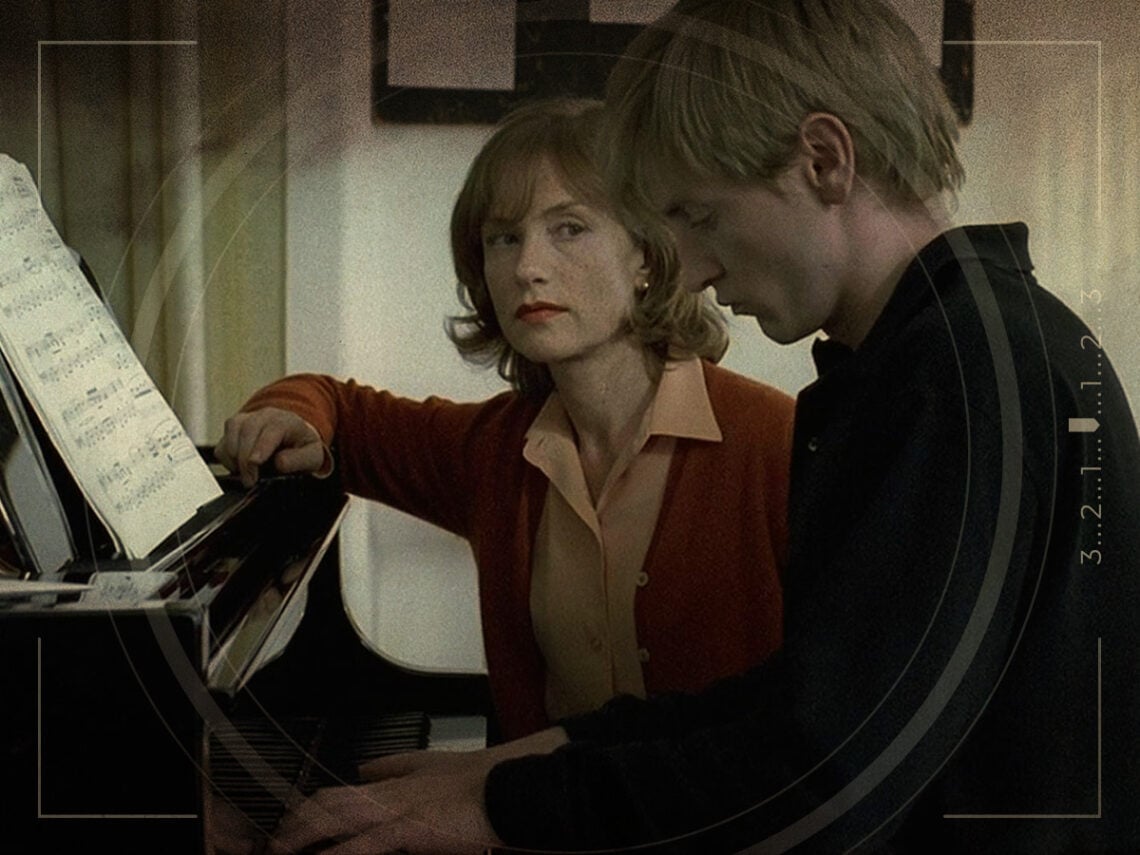
The director who understood Isabelle Huppert like no one else: “Read my thoughts so perfectly”

If there’s one person out there who knows how to pick a good role, it’s Isabelle Huppert. Since she started working in the 1970s, the actor has appeared in many incredible films, from the bleak drama Loulou to Claude Chabrol’s psychological thriller La Cérémonie, asserting her dominance as a truly versatile talent. She is well loved; John Waters once called her his “favourite actress in the world”, while memes have been made out of her unashamed declarations, like when she told The Guardian that her guilty pleasure is “imagining myself as a sadistic and manipulative murderer”.
Huppert has often opted for dark roles, the kind that your typical actor would perhaps take months to recover from. Yet, you can typically find the star doing a hop, skip, and a jump into her next transgressive or challenging part. She’s not afraid to appear messy, unhinged, cold, and sadistic, and arguably the magnum opus of her career is The Piano Teacher, in which she embodies all of these qualities perfectly.
The movie took inspiration from Elfriede Jelinek’s eponymous book, which tells the tale of Erika, a sexually repressed piano teacher who lives with her mother while engaging in bizarre erotic acts, including mutilating her own genitals. When she meets Walter, a student, she soon begins an intense and destructive relationship with him that ultimately lends itself to tragedy. The book was brought to life by none other than Michael Haneke, who is known for his unflinching gaze to present us with a brutal yet moving watch, often uncomfortable and claustrophobic.
This isn’t the kind of material that can come from a casual or unfocused approach; you can tell that both Huppert and Haneke poured themselves into the film. In fact, the reason the finished result feels so natural and tightly executed comes down to the fact that Huppert felt as though she had a deep connection with Haneke’s approach to cinema, even if much of it was unspoken.
Talking to Index Magazine, she revealed, “We had a great silent understanding of one another. Michael Haneke is not a sentimental director, and I’m not a sentimental actress. I always had a very strange feeling when I’d watch the daily footage, like, ‘How could he possibly have read my thoughts so perfectly?’ And I think the film’s treatment of music had a lot to do with our mutual understanding, and how we communicated.”
Huppert praised the director’s work, specifically his way of approaching violence, which is quite striking compared to other filmmakers. “His films are very dark. I would say that Haneke is especially interested in examining the difference between real violence and the kind of violence that is usually depicted on screen. His films are attempts to show what violence looks like in reality.”
This interest in violence, often insidious, is a common thread through his work, from the murderous teenager in Benny’s Video to the torture that occurs in Funny Games, and Huppert is strongly drawn to how Haneke takes an intellectual and nuanced approach to the way we consume such brutal imagery via the medium of film.
It appears that the pair understand each other on a creative level, with the result of this partnership resulting in one of the greatest onscreen depictions of raw female sexuality and male abuse.
