


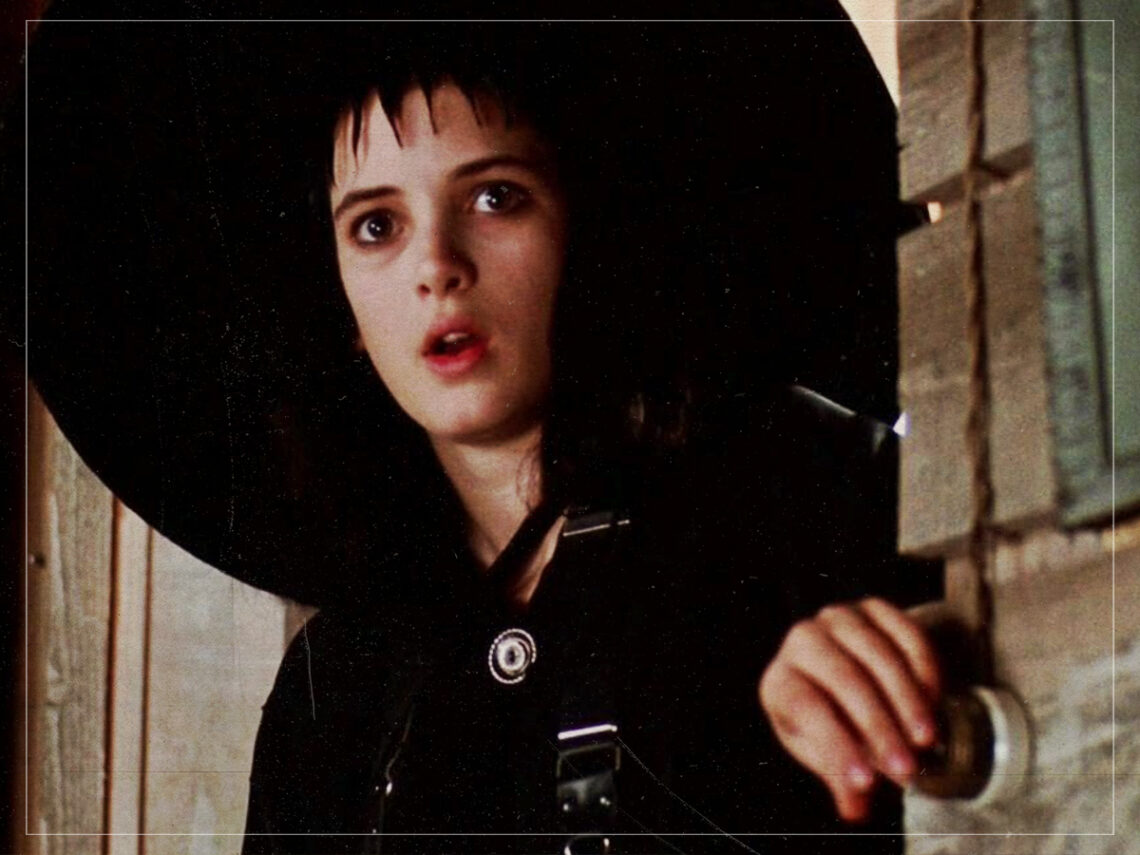
“She’s a loveable psychotic”: the director who called Winona Ryder a “true eccentric”

Winona Ryder has never exactly opted for normal, often choosing roles that deal in the depths of darkness, undercutting layers of humour and eccentricity with the innate bleakness that can come with being human.
Even when she stars in movies you think are going to have a nice wholesome quality to them, like Mermaids, which saw Cher play the family matriarch, Ryder finds a way to channel a sense of slight unease. The cosiness of Mermaids is soon contrasted with events that almost tear the family apart, and Ryder shines as the troubled teenager Charlotte, wearing on her sleeve her penchant for roles that challenge her, no matter how gothic or eccentric.
It’s something she has never been able to shake, mainly because she rose to prominence by taking on parts that were a far cry from the movies that were defining the more commercially-friendly Brat Pack phenomenon occurring at the same time. Ryder simply wanted to do films that were grittier and more daring, which led her to the doorstep of Daniel Waters’ 1989 dark comedy Heathers.
Responsible for the screenplay, Waters’ (whose brother, Mark, would go on to direct another teen classic, Mean Girls) Heathers is a painfully sharp and hilarious satire of high-school hierarchies that saw Ryder turn in an impeccable performance as a member of the croquet-playing, plaid-wearing Heathers clique, Veronica. However, a series of events leads her to soon turn against them with a vow to dismantle the popular clan, assisted by her new boyfriend, JD.
Ryder couldn’t have been more suited for the deadpan role, and she brought Waters’ hilarious lines to life with biting comedic effect, although she wielded enough softness to make her totally endearing at the same time. It only made sense, then, that the pair would reunite, and although it took them 18 years to do so, 2007’s Sex and Death 101 saw Waters turn into a director.
But it wasn’t easy for Ryder to be cast, with the filmmaker revealing to The Hollywood Interview, “God love her, but everything with Winona is a little difficult. I especially like getting her on the phone. I think of her as kind of a dark fairy, and in fairy terms, Tinkerbell doesn’t have a cell phone. You’ve just got to let the gods sort of blow her in your way. My producers weren’t as crazy as I was about casting her in the movie, so I had to wear them down a bit. But everybody couldn’t be happier about the final performance.”
In fact, Waters describes Ryder as a “lovable psychotic” and a “true eccentric”, which he thinks makes her perfectly suited for the vein of his work. “She’s got this raw and wonderful humanity,” he said, explaining that her uniqueness “definitely helps with this role”.
It’s the ones who exist outside of the box, classed as strange and idiosyncratic, who tend to prosper best, because it’s this self-assuredness in being themselves, no matter how unconventional, which makes them perfect for the silver screen. When you have no qualms about who you are and just exist in all of your strangeness, you’ll attract the right kind of minds to harness this skill to help understand the true meaning of being human, which is simply to live for yourself, and no one else.
Although she’s not exactly the easiest to get through to, Waters finds Ryder a breath mint in a landscape of replaceable stars and carbon copies, simply too busy existing in her own world.
