


“The man”: The director Tom Hanks placed on cinema’s Mount Rushmore

Not only is it a distinctly American comparison to make, but it also narrows the field significantly when anyone tries to determine which filmmakers would make it onto cinema’s Mount Rushmore. He didn’t go all-in, but Tom Hanks nonetheless suggested one candidate worthy of being forever etched in stone.
The iconic sculpture carved into the rocks in South Dakota depicts George Washington, Thomas Jefferson, Theodore Roosevelt and Abraham Lincoln, four of the most influential figures in shaping the United States. With only four spots to contend for, applying the comparison to any other field – not just cinema – is a daunting task, given the sheer volume of competition.
Although Hanks only revealed 25% of his quartet, it wouldn’t be unreasonable to suggest Steven Spielberg would make the cut, too. After all, they’ve been close friends and regular collaborators for well over 30 years at this point, and it definitely helps the latter’s case that he’s inarguably one of the greatest directors of all time, not to mention the single most commercially successful.
Among the other heavyweight auteurs Hanks has worked with over the years are Ron Howard, Robert Zemeckis, Brian De Palma, and the Coen brothers, but encountering Clint Eastwood for the first time on the set of true-life disaster drama Sully was an entirely different experience for the two-time Academy Award winner.
“It’s like, ‘Guess what, Mount Rushmore just came down from South Dakota, and you’re working with him,'” he said to Jimmy Kimmel of Eastwood’s mere presence. “He’s so obviously the man when he comes on the set. You just want to please him.” Hanks was already three decades into his career and an established superstar before the 2016 film, but that’s the aura the legendary actor and director exudes so effortlessly in a nutshell.
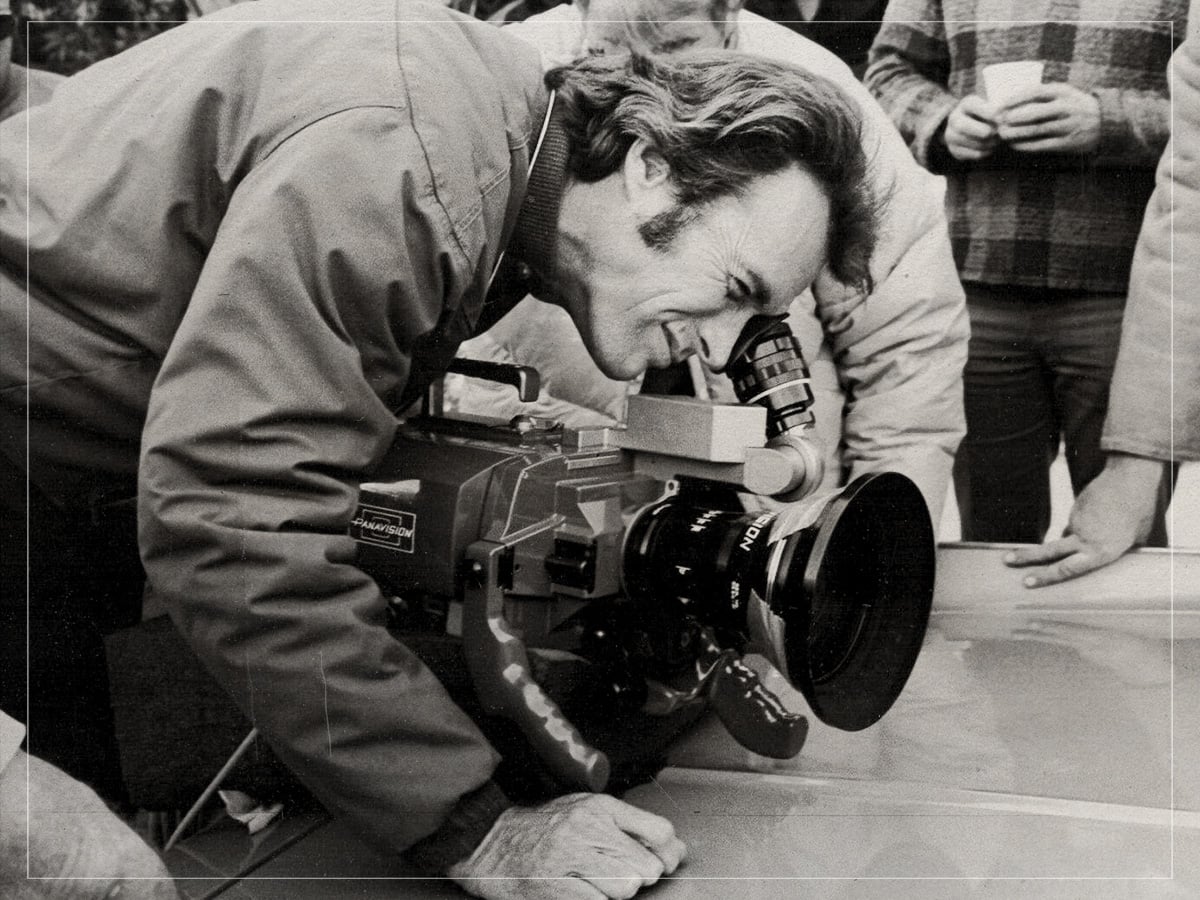
Eastwood differs from his contemporaries in one particular way, preferring a subtler approach and one that is certainly kinder on the ears of his cast and crew. Hanks explained, “Clint goes like this [spins finger around], and everybody else goes like this [spins finger around]. He says, ‘Okay, go ahead’. And then you do it. And maybe he’ll say, ‘Just take that again. Just do it one more time.’ And then you do it, and he says, ‘All right, that’s enough of that.’”
If one wonders where such a method came from for Eastwood because Hanks certainly did, then it’s understandable. Still, it actually goes right back to the beginning of Eastwood’s career when he was working on the western television show with actual horses. “He said when he was doing Rawhide, he had all these old movie directors who just loved the megaphones, and that whole build-up to ‘action’ would make the horses [freak out],” Hanks noted. “So one day he said in his inalienable way, ‘Is there any way that you could just tell us to go?’”
Eastwood certainly has a fearsome reputation within Hollywood and was known for playing rugged antiheroes with gravelly voices in his prime acting days. However, his directing style, as revealed by Hanks, shows a man with a softer side and an innate kindness to his co-workers. “What’s it like working with Clint?” Hanks signed off. “He treats us like horses.”
It takes a lot for Hanks to come across as even remotely starstruck, but his time spent alongside Eastwood was clearly comparable to the sense of awe he felt when he found himself standing directly opposite Paul Newman on Sam Mendes’ Road to Perdition, with the star admitting he was almost lost for words on the first day of shooting when he ended up face-to-face with someone he’d grown up admiring.
Not many actors have been able to replicate Eastwood’s success on one side of the camera never mind both, making him one of the very few multi-hyphenates to attain iconic status on each side of the divide. Hanks was hardly an unknown being plunged in at the deep end on Sully, but the effect the four-time Oscar winner has on people is such that even one of Hollywood’s longest-tenured A-listers felt naturally inclined to go out of his way to ensure he didn’t disappoint.

Never Miss A Tale
The Far Out Clint Eastwood Newsletter
All the latest stories about Clint Eastwood from the independent voice of culture.
Straight to your inbox.