


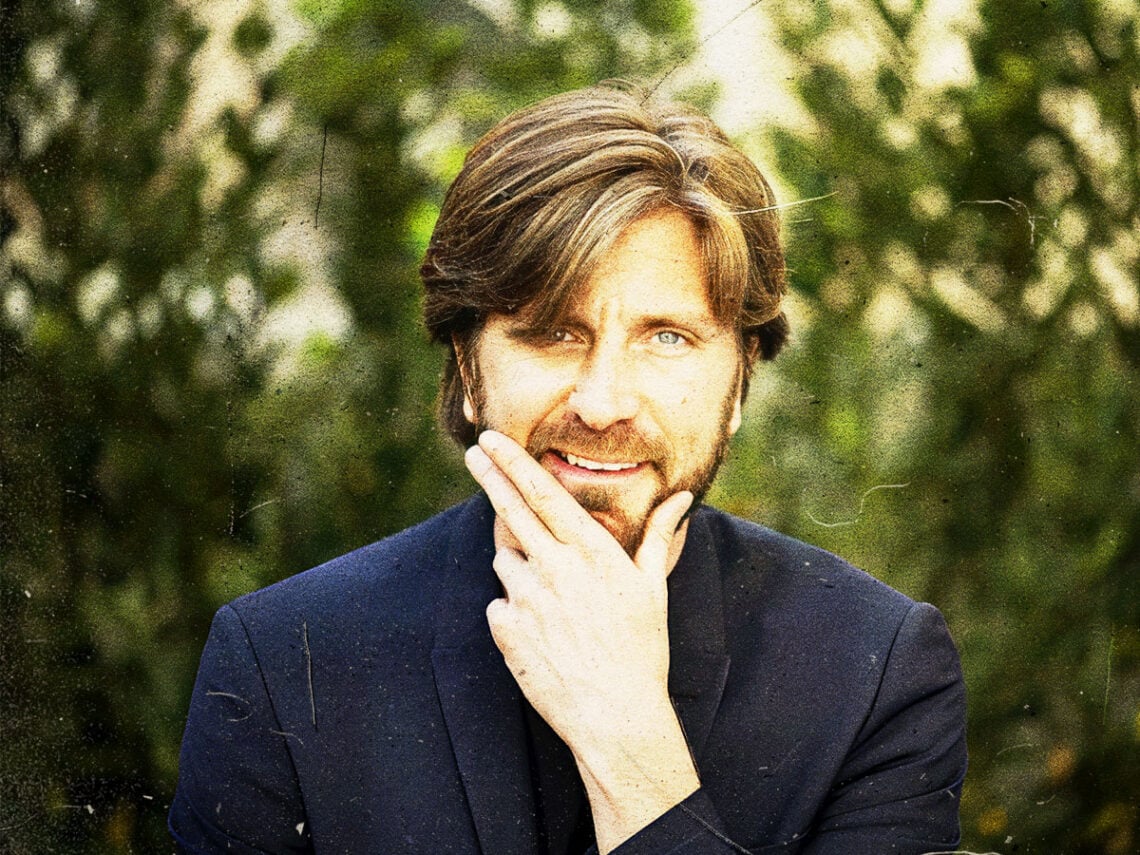
The director Ruben Östlund calls his “mentor”

Even though filmmaker and documentarian Ruben Östlund made his feature-length narrative debut with the 2004 drama The Guitar Mongoloid, it would be another decade before the Swedish director garnered widespread mainstream attention outside of Europe.
Jet-black disaster comedy Force Majeure proved so popular that it was given a Hollywood remake with Will Ferrell and Julia-Louis Dreyfus in 2020, while surrealist satire The Square landed Östlund his first Academy Award nomination in the ‘Best International Feature Film’ category.
His next effort, Triangle of Sadness, took his career to the next level, and even if it did miss out on being shortlisted for either ‘Best International Feature Film’ or ‘Best Picture’ at the Oscars, Östlund added another two nominations for ‘Best Director’ and ‘Best Original Screenplay’ to his increasing list of accolades.
During an interview with Criterion that found him naming his ten favourite films of all time, Östlund made a point of noting that one of his selections was also a massive inspiration for his premiere cinematic influence. Vittorio De Sica’s 1948 classic Bicycle Thieves was described by the director as “so touching and such a humanistic way of looking at things,” noting that it had the same impact on “my mentor Roy Andersson”.
Andersson gained prominence for his surrealistic and melancholic films shining a light on Swedish culture, and he named Bicycle Thieves as one of his own favourites in a BFI Sight & Sound poll, showcasing that he and Östlund even shared the same appreciation of the greats.
Speaking to MUBI, Östlund admitted that he “was brought up with Roy Andersson’s cinema,” explaining that he has “Roy Andersson in my backbone”. He added: “I saw all of his commercial advertising as a kid without knowing who he was. You get that kind of humour just by being brought up in Sweden in the ‘70s and ‘80s,” he said. “We were also brought up on a lot of British humour, from Monty Python to Fawlty Towers. I guess it’s a certain kind of situational comedy in which people are overly concerned with trivialities.”
Not only that, but Östlund had made the bold claim in the past that Sweden’s cinephiles had been split into two distinct camps: those who admire Andersson and those who admire Ingmar Bergman, a statement he sought to clarify somewhat to Filmmaker: “That conflict actually started with another director, Bo Widerberg, who was always trying to make a standpoint by saying things against Ingmar Bergman, saying ‘Look at things in another way.’ He loved to have conflict with Bergman,” he continued.
Adding: “People really admire and work with Bergman’s films even today. They are not very happy about my work and Roy Andersson’s work, because we are on the same side of the film industry, and that’s funny.”
Outside of their shared appreciation of Bicycle Thieves, Östlund’s incisive and socially conscious stories draped in a thick atmosphere of absurdity and uncomfortable comedy make the influence of Andersson on his own approach and style abundantly clear.
