


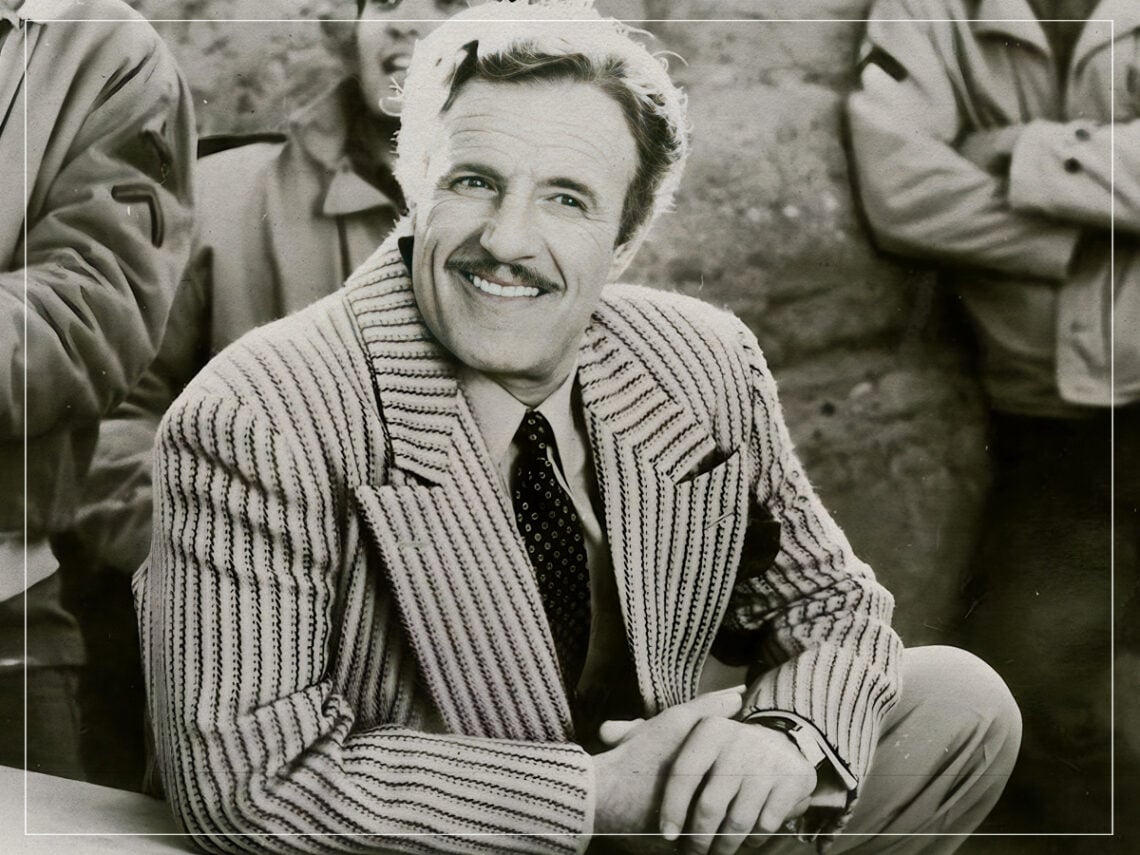
The director James Caan hated working with: “He was a pompous ass”

James Caan wasn’t exactly known for being a wallflower throughout his years as a Hollywood A-lister. He was an uncompromising man who couldn’t be forced into doing anything he didn’t want to do, and this led to him turning down a huge number of potentially career-defining roles. He was also known for being intense on-set and a drug-taking party animal off-set. With this context in mind, it becomes hard to imagine just how insane the behaviour of one particular director must have been to make Caan label him a pompous ass and a maniac. However, he’s not the only one who hated working with this particular filmmaker.
In the early 1970s, Caan signed up to star in Freebie and the Bean, a crime drama about two San Francisco detectives obsessed with bringing down local crime boss Red Meyers. When a hitman is hired to kill Meyers before they can put him away, though, they have to keep the gangster alive until he can face justice in a court of law.
When director Richard Rush came on board the project, he re-wrote the script with Robert Kaufmann. To him, the real selling point of the picture was the relationship between the two cops. He told Money into Light that he loved how they were always “quarrelling with each other like an old married couple. You were never sure which one was the wife and which one was the husband. They became interchangeable.”
Rush’s pick to partner Caan on-screen was Alan Arkin, who had been nominated for two Academy Awards in the late ’60s. Once Rush had Caan and Arkin on set together, though, something unusual began to happen. For starters, Rush believed that Arkin’s style of acting involved being argumentative with his director, from which he then gained creative energy. In 2017, he told We Are Cult, “Arkin just had this thing about him as an actor where he needed confrontation, and it got malicious at points.”
Unfortunately for Rush, he claimed that Caan “was a follower” who would “do whatever he saw Arkin doing.” This left him with two difficult actors fighting back against him as much as their characters fought on-screen. He claimed, “I just became their common enemy.” Fascinatingly, though, he admitted that this friction was good for the movie, saying, “They had such terrific chemistry on-screen that the off-screen antics, while frustrating, were worth it in the end in terms of the final product.”
Perhaps unsurprisingly, though, Caan and Arkin had a different take on their experience working with Rush. When Caan spoke to the Bright Lights Film Journal in 2008, he said, in unequivocal terms, that Rush “was a pompous ass.” Alarmingly, he then added, “You know he was on speed all the time? He was a maniac.”
For his part, Arkin hasn’t claimed that the director was on drugs for the majority of the shoot, but he did indicate that he was a confusing man to work with. In a Los Angeles Times article from the buildup to the film’s release, he claimed, “I never actually knew what Rush wanted. He is so uncertain it’s hard to handle.”
In truth, Arkin’s comment has a whiff of truth to it, especially when you consider Rush pushed for the film to become more comedic in rehearsals. Rush told the LA Times, “At my suggestion, they turned what had originally been serious drama into bizarre comedy. Slowly, their relationship took on the pains and pleasures of a friendship neither could live with or without.” In response, Arkin deadpanned, “I hadn’t thought about it. I didn’t see it in the script.”
In later years, Freebie and the Bean came to be viewed as a precursor to the buddy-cop format that would prove so successful in films like Lethal Weapon and 48 Hrs. If nothing else, this troubled shoot proves that sometimes people can stumble across cinematic magic completely by accident.
In the end, though, perhaps that’s simply what you get when you pair Caan and Arkin with a “maniac” behind the camera.
