


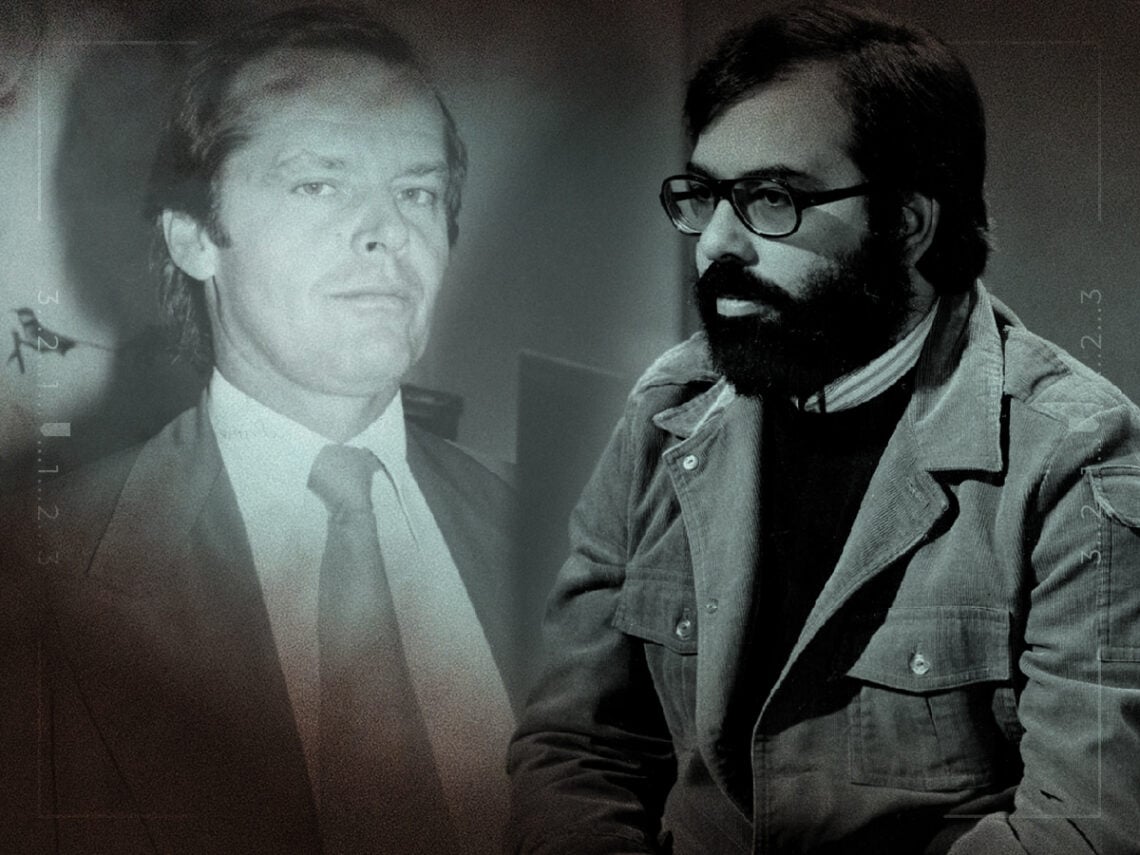
The director Jack Nicholson and Francis Ford Coppola agree is the greatest: “A singular movie-maker”

One of the biggest head-scratchers to emerge from the ‘New Hollywood’ era was that Francis Ford Coppola never directed a movie that starred Jack Nicholson, something that seemed nailed-on, given their respective origins.
The five-time Academy Award-winning filmmaker and the three-time Oscar-winning actor were a pair of the transformative movement’s true heavyweights, and as two names who comfortably ranked among the best in their chosen profession, it seemed odd that they always remained at arm’s length on the big screen.
Both of them served their apprenticeship under Roger Corman, and they even did it at around the same time in the early 1960s, but the closest they came to collaborating in a conventional sense was when Coppola went uncredited for directing additional footage on The Terror, which saw Nicholson acting opposite Boris Karloff in a typical cheap-and-cheerful Corman flick.
They may have never crossed paths on either side of the camera, which, again, was unusual when there are so many direct connections between them beyond cutting their teeth under the B-movie producer responsible for launching more legendary careers than most, but they could agree on which auteur was the most unsung of their shared glory years.
After helming the first two Godfather films, The Conversation, and Apocalypse Now, the 1970s belonged to Coppola. Similarly, while there were plenty of pretenders to the throne nipping at his heels, the same can be said of Nicholson, who led Five Easy Pieces, The Last Detail, Chinatown, and One Flew Over the Cuckoo’s Nest.
The notorious hell-raiser did find a directorial muse, though, and it was Bob Rafelson. The pair worked together on the psychedelic Head, Five Easy Pieces, The Postman Always Rings Twice, Man Trouble, The King of Marvin Gardens, and Blood and Wine, and as fractious as their relationship could be, Nicholson always held him in the highest regard.
“I really like working with him,” Nicholson told Film Comment. “The guy is very caring, committed, driven, and ultimately very, very smart. He’s a singular movie-maker, and to me, that’s the best thing anybody can be. I like being part of that. We seem to make interesting stuff together. Among other things, we both care a lot about whimsy.”
Nicholson also cared an alarming amount about dildos when Rafelson was around, not that it’s got anything to do with how highly he regarded him as a director. Or at least, you’d hope not. Coppola, meanwhile, was similarly effusive in his praise, calling him “one of the most important cinematic artists of his era.”
He liked to take risks, and it almost ruined him more than once, so it’s only natural that another one of the reasons why Coppola held Rafelson so dearly was that, like himself, he “seems to approach a film with absolutely no compromise and no sense of personal danger.” He may not be the first name that comes to mind when thinking of the definitive ‘New Hollywood’ auteurs, but if it’s good enough for Nicholson and Coppola, endorsements don’t ring much louder.
