


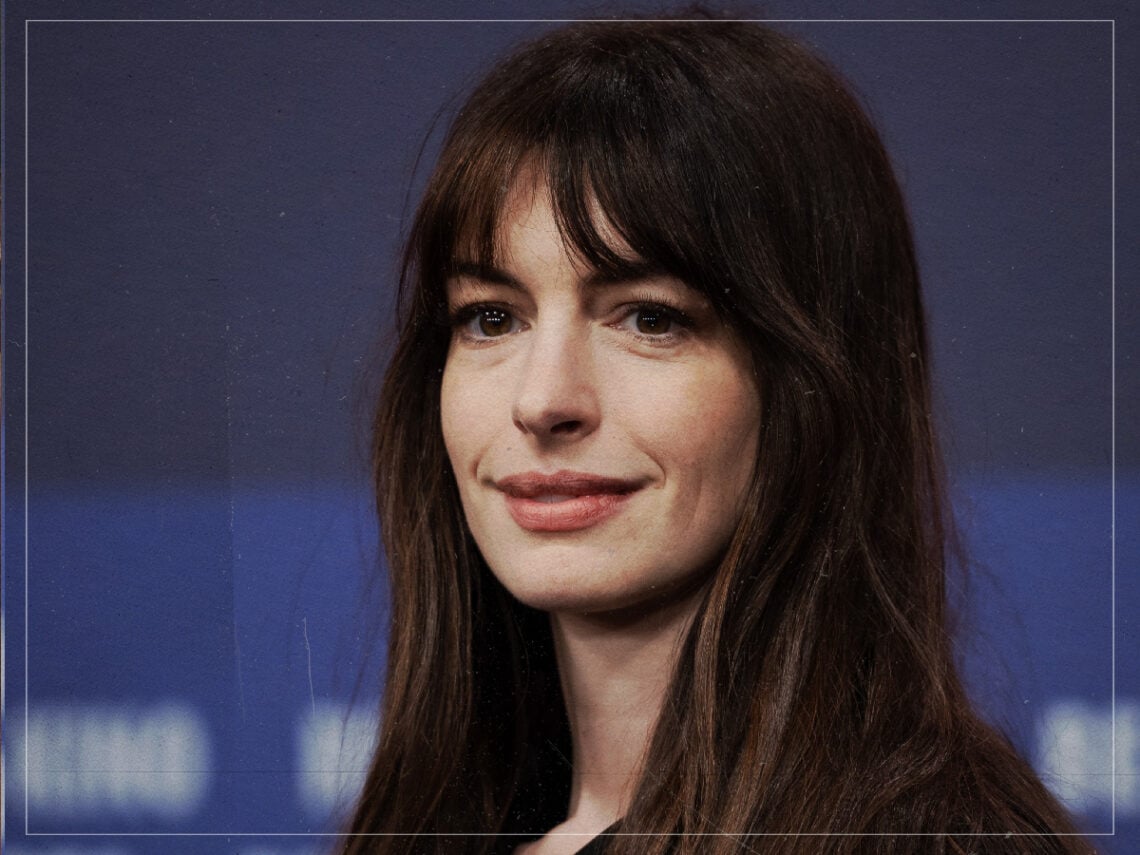
“It feels like a confession”: the director Anne Hathaway admitted she was wrong to mistrust

It’s refreshing when actors open up, revealing the doubts and worries that have informed their performances and their choices of roles.
They don’t owe us anything, really, but to reveal parts of themselves that others would be too scared to admit to only brings us closer to them, which helps to break down that divide we can often feel when watching Hollywood stars in action, and Anne Hathaway has always been pretty candid, having been in the industry long enough now to know the full inner workings of it.
Emerging on the small screen in 1999 as a main character on the comedy-drama series Get Real, she then made her film debut with one of her most iconic roles, playing Mia Thermopolis in The Princess Diaries, and 25 years on, it remains an undisputed classic of the teen movie genre, and for a few years, that’s where the actor predominantly found herself. Roles in the likes of Ella Enchanted, Hoodwinked!, and another instalment in The Princess Diaries series came fast, but she soon graduated to some more mature roles.
Whether that be moving dramas like the legendary queer landmark Brokeback Mountain or the much more lighthearted The Devil Wears Prada, but despite the fact that she has evidently given herself to many stereotypically ‘girly’ films, further including rom-coms like Bride Wars and Valentine’s Day, she has actually worked with few female directors. This is something she became acutely aware of when she reflected on her experience of working with a woman on the film One Day, an experience she admitted was perhaps influenced by some kind of “internalised misogyny”.
Hollywood has notoriously neglected female filmmakers, refusing to carve out a space where women can take charge behind the camera, where, for decades, women directors were few and far between, and there were often long stretches when the industry had approximately zero female filmmakers on their roster.
Yet, it was a woman, Alice Guy-Blache, who made the first ever narrative film back in 1896, while women ranging from Lois Weber to Agnès Varda have all been credited as vital pioneers in the medium, influencing Hollywood and beyond, so there is no reason why a woman would be less capable of directing a film than a man, but seeing a female filmmaker in charge often led people to take a production less seriously, and to question their efficiency and skill.
Hathaway was new to working with female filmmakers when she signed onto One Day, Lone Scherfig’s movie adaptation of David Nicholls’ book of the same name. The author might have penned the screenplay, but Scherfig, who’d previously helmed movies like Italian for Beginners and Just Like Home, the former of which was made in line with Dogme 95, was in charge of direction, which Hathaway just wasn’t used to. Looking back, though, she realised she didn’t have as much trust in Scherfig as she should’ve.
“I really regret not trusting her more easily. And I am, to this day, scared that the reason I didn’t trust her the way I trust some of the other directors I work with is because she’s a woman,” the actor told ABC News, “I’m so scared that I treated her with internalised misogyny. I’m scared that I didn’t give her everything that she needed, or I was resisting her on some level. It’s something that I’ve thought a lot about in terms of when I get scripts to be directed by women.”
It was a learning experience, and since then, Hathaway has worked with more women, like Nancy Meyers and Dee Rees. “It feels like a confession, but I think it’s something we should talk about,” the actor admitted with candour, “I had actively tried to work with female directors. And I still had this mindset buried in there somewhere.”
