


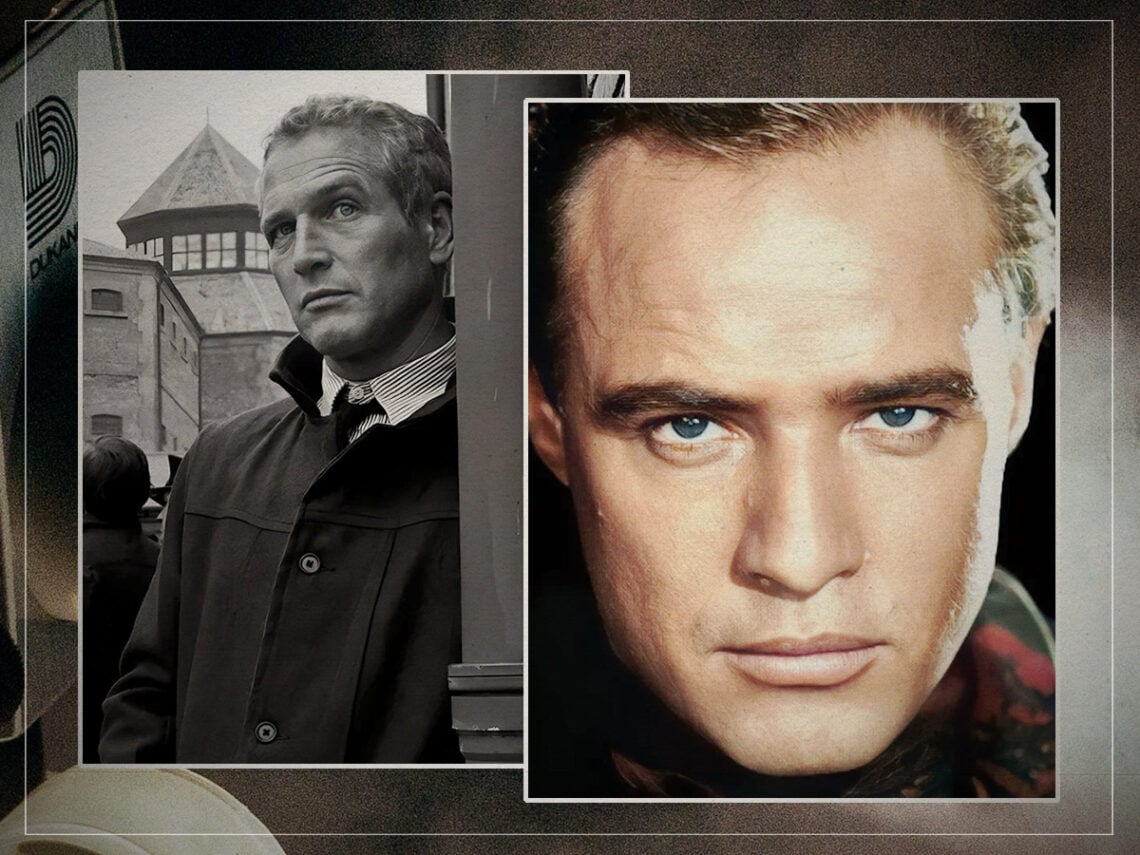
The biggest difference between Paul Newman and Marlon Brando, according to Paul Newman

Marlon Brando has been one of acting’s fondest comparison points for seven decades: if a performer showcases any qualities that even remotely resemble the iconic method man, then he’ll be invoked. Paul Newman was a completely different kind of star, though, and he fired back against the association.
Admittedly, it’s easy to see why critics and industry figures were keen to lump them into the same category. Brando and Newman were born less than a year apart; they both started out treading the boards in the late 1940s before emigrating to cinema in the middle of the following decade, where they received their first Academy Award nominations within four years of their feature debuts.
They were also method actors by trade; however, whereas Newman learned under the tutelage of Lee Strasberg at the Actors Studio, Brando despised his time honing his craft under the legendary teacher, favouring Stella Adler and the Stanislavksi system and claiming Strasberg “never taught me anything.”
The pair happened to be handsome fellas with piercing blue eyes, too, and when they were established among Hollywood’s brightest, fastest-rising, and most naturally gifted young stars at the same time, it was almost inevitable that people would mention them in the same breath and pit them against each other.
Still, that didn’t mean Newman couldn’t be pissed off about it. He once ranted that “nothing is more stupid” than being compared directly to Brando’s transformative style and signature unpredictability, and he had a point. His approach was always more measured and nuanced, whereas Brando favoured grandstanding body language and wore his heart on the sleeve for every audience member to see.
One of the biggest differences was that Newman enjoyed longevity. Brando endured his ups and downs and actively fell out of love with his profession several times, but Newman seamlessly evolved from a leading man into a character actor and then a gravitas-laden veteran without sacrificing his star power.
In the immediate aftermath of Brando’s first comeback in The Godfather, Newman still couldn’t escape him. In a 1973 interview with Rolling Stone, he confessed that he “had fun with that comparison thing between Brando and me” when “everybody was referring to me as the ‘road company Brando’ and things like that.”
“I liked to nail those guys, and it’s very simple to do,” he elaborated. “You ask them, ‘What is Marlon’s basic quality? What does he carry within himself?’ Well, they’re absolutely stumped, and they flop around a lot, and I ask, ‘Well, what do you think my basic quality is?’ And they wouldn’t know that, either. They didn’t have the vaguest idea of what Marlon’s focus is.”
From Newman’s perspective, it all boiled down to one word: “Eruptability. Eruptability is always in the potential of the masses-type hero. And the quality that I carry is Ivy League, Shaker Heights and like that.” Essentially, he saw Brando as the ideal embodiment of the volatile everyman, and he was a more sophisticated and aspirational type of actor. It’s not inaccurate, and it’s not like Newman didn’t have two decades of constant comparisons to come up with his answer.
