


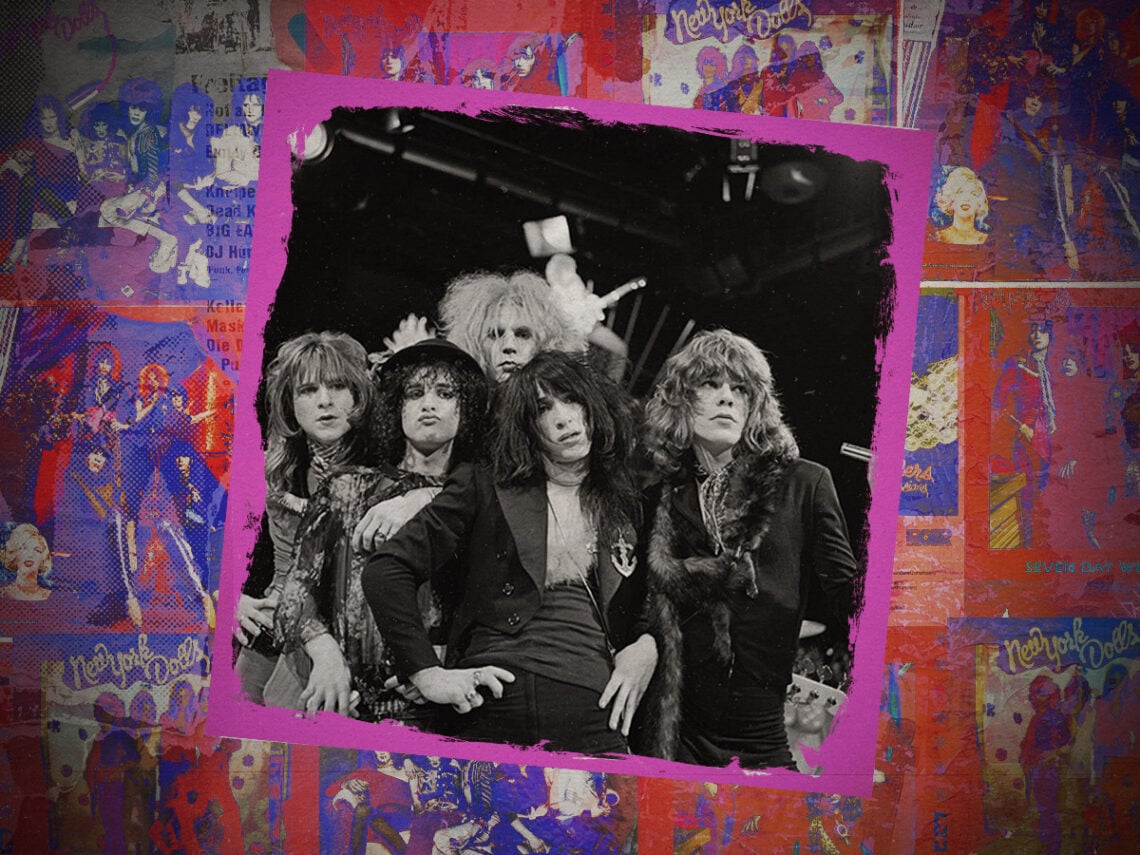
Did the New York Dolls really invent punk?

“We’re a lot faster than the Stones,” a 23-year-old David Johansen declared in 1973, differentiating his band, the New York Dolls, from one of their clear influences, while bassist Arthur Kane chimed in, “And younger”.
Even half a century ago, The Rolling Stones were already being ridiculed for being too old. The solution for a new generation of rock fans in the early ‘70s was the New York Dolls, who carried over the danger and gender-bending sex appeal of their predecessors, but set aside the blues-rock guitar noodling in favour of a straightforward, hard-charging sound designed to simplify rock and roll back to its core, base ingredients.
That’s not to say the Dolls were all speed and noise without artistry. Even in the band’s earliest days, Johansen proudly proclaimed his admiration for the songwriters of the Brill Building, and did his best to pick his lyrics carefully, weaving in a memorable, witty phrase and a catchy hook within that driving rhythm: “As I was lyin’ in a hospital bed,” goes the opening verse of ‘Pills’, “A rock ‘n’ roll nurse went into my head / She says, hold ya arm, stick out ya tongue / I gots some pills, I’m gonna give you somes!”
There had been a precedent for this type of fast, suggestive, flamboyant, and snotty subset of rock, and the Dolls were uncoincidentally compared to groups like the MC5 and the Stooges. Nobody had quite agreed on a name for this new genre, though. Some just called it a loud form of minimalism, a response to the increasingly complex and experimental direction of prog rock. In that 1973 declaration to Newsday, the article gave the New York Dolls a slightly more fun description: “Just a good old-fashioned punk rock and roll band”.
It’s slightly jarring to see the ‘P’ word in use, in print, in a mainstream newspaper, so early in the 1970s. If you were born in the 1980s or later, you were likely informed at some point in your life that punk rock started in 1976, either with the Ramones or the Sex Pistols, depending on your biases and preferred side of the Atlantic. Of course, no style of music is born out of the ether, and it was always well understood that bands like The Stooges, the Dolls, and even The Velvet Underground contributed elements to what became the more familiar punk ethos. But could any of them take credit for being punk’s true patient zero, the ‘inventors’ of the whole mess?
The word punk, of course, had been around for ages, and had most recently been making the rounds in the public lexicon of the 1950s and ‘60s as a term for any generically antisocial young people. A snappier insult than juvenile delinquent, the word was used in promotional materials to describe Elvis Presley’s character in 1957’s Jailhouse Rock, and was thrown around aplenty in the dialogue of one of the biggest Broadway musicals of the same era, West Side Story.
In the late 1960s, former Fugs frontman Ed Sanders was among the first to start using the word as a musical descriptor, eventually referring to his own 1970 debut solo album directly as “punk rock”, a catch-all which suggested a form of rock and roll that didn’t believe so much in the flower power dream, and instead openly remarked on the dark side of drugs, sex, and language itself, all heavily inspired by the boldness of the Beats (in Sanders’ case, Allen Ginsberg’s ‘Howl’ was the awakening moment).
The soon-to-be-legendary music critic Lester Bangs adopted the term, as well, using it in the pages of Creem magazine primarily to describe the key bands of the Detroit sound, the MC5 and The Stooges, arguably giving the ‘Motor City’ a legit argument as the birthplace of punk.
Within a couple more years, though, by 1972, critics were running willy-nilly with the concept, using punk rock to describe everything from T Rex to Black Sabbath. That same year, future Patti Smith Group guitarist Lenny Kaye famously chose it as the umbrella term for the rag-tag garage bands he’d cobbled together for the compilation album Nuggets. There was growing confusion and haziness around what warranted a ‘P’ tag for a band: was it a general, non-traditional shabbiness and noisiness, or was a certain rebellious attitude and anti-establishment manifesto required?
The best argument in favour of the New York Dolls as the ‘first punk band’ might be that, right around the time of the release of their self-titled debut album in 1973, the various narratives around what punk meant began to sharpen and align. The Dolls’ manager, Marty Thau, played no small role in that process himself. Speaking to the LA Times in 1974, Thau explained what drew him to the band when he first saw them play at New York’s Mercer Arts Centre a couple of years earlier.
“More than anything else,” Thau said, “they entertained me. Their brand of rock ‘n’ roll was entertaining: their humour, their whole attitude, the complete disdain for any and all things. It didn’t seem to be just a typical rock ‘n’ roll group. I knew there was something new there. I didn’t know what it was all about at first, but I knew it was unlike anything I had seen.”
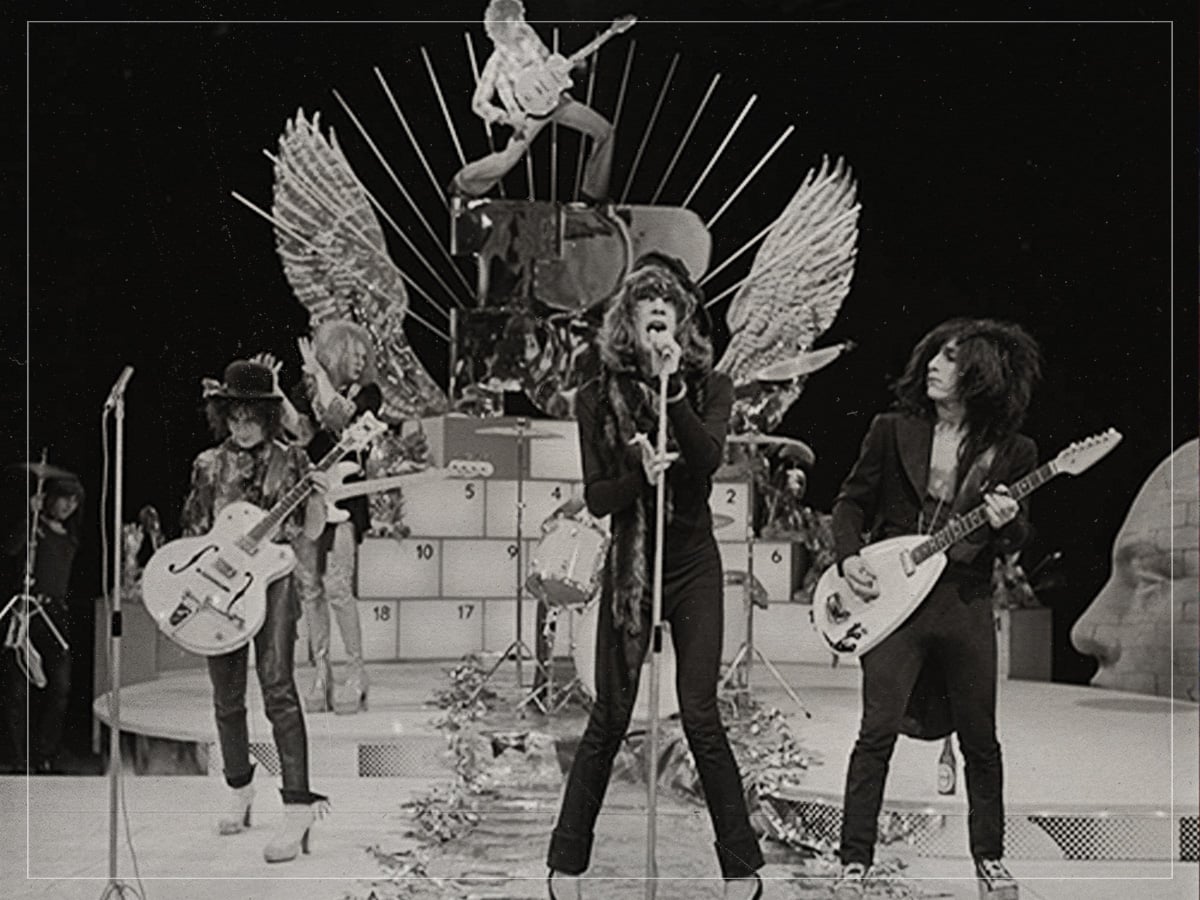
Thau believed the Dolls were “leading the way for a new generation of audiences. They’re TV babies. They’re all interested in the visual aspect of entertainment”.
This, perhaps more than anything, was essential to the pivot point between the ‘establishment’ of rock music and the ‘new wave’ of punk. The original generation of rock fans were the elder Baby Boomers, kids born in the late 1940s or early 1950s who grew up with Elvis and The Beatles, then spent their college years enjoying rock as the pervasive, mainstream music of FM radio.
The younger Boomers, and the even younger kids of the brand new Generation X, had missed out on rock’s original ‘danger’ years, and as such, they were hungry for a fresh rebellion all their own, something that their parents and older siblings couldn’t happily bop their heads to. This is what the New York Dolls offered them, and it’s the same template that ultimately defined the appeal of punk rock over its foundational mid-1970s years.
A 14-year-old Steven Patrick Morrissey, growing up a million miles away from New York City in a rough area of Manchester, was among this new generation of kids who devoured the music of the Dolls, eventually becoming president of the band’s UK fan club.
“For me, [New York Dolls] were the official end of the ’60s,” Morrissey told Rolling Stone, while literally wearing a faded Dolls t-shirt backstage at a Smiths concert in the mid 1980s, “They were the first sign that there was change, that someone was going to kick through and get rid of all the nonsense. It gave people hope.”
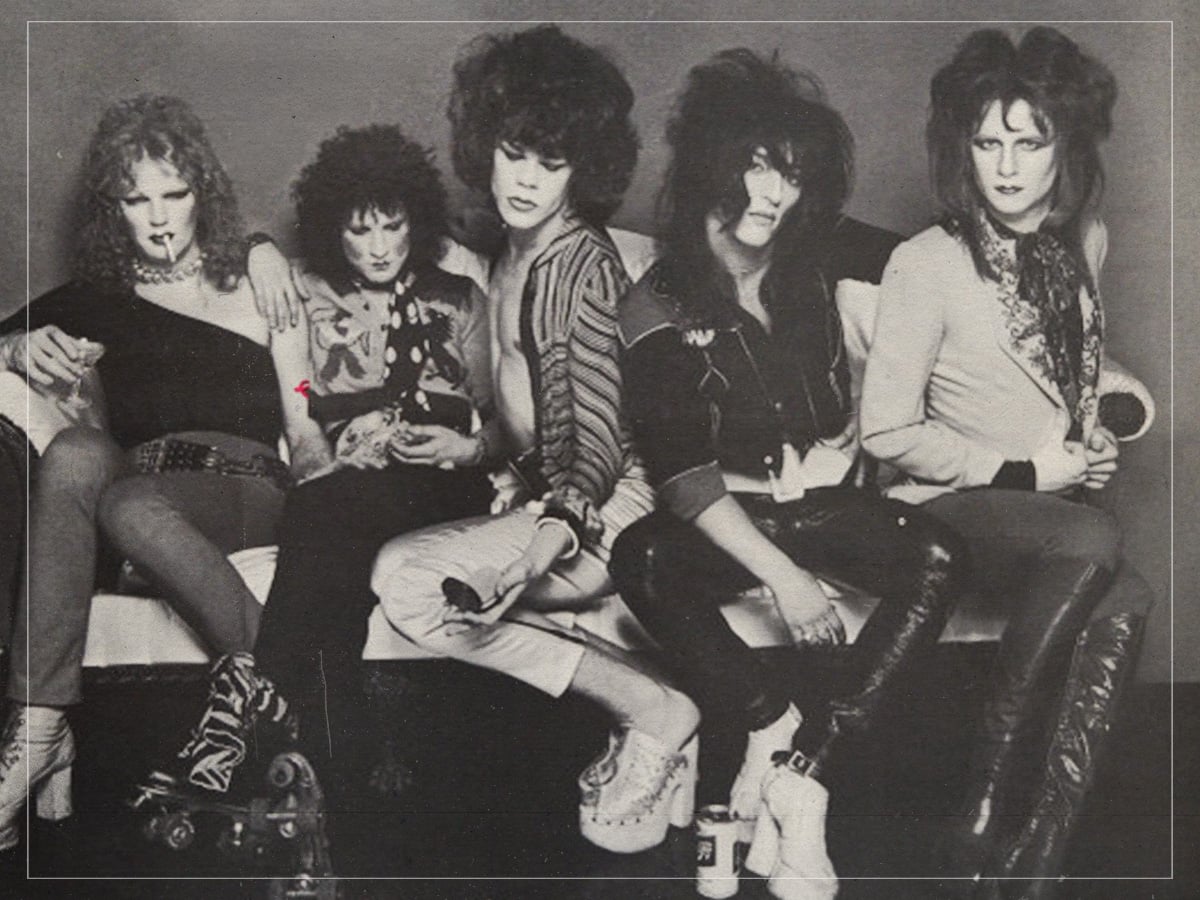
Several years before the Sex Pistols were making headlines for their confrontational, often violent shows, the Dolls (and to be fair, certainly The Stooges, as well) established a firm reputation for pushing the envelope on stage. Unlike the Ramones or the Pistols, they were also happy to immediately alienate half of their potential audience by dressing in women’s clothes and projecting a sort of proud, androgynous, theatrical queerness, angering the aggro-macho rockers in each city they visited, but making a whole lot of outsider kids feel welcomed and understood.
The energy from those crowds was something wholly unique from the screaming teenage girls at a Beatles gig or the headbangers at a Zeppelin show.
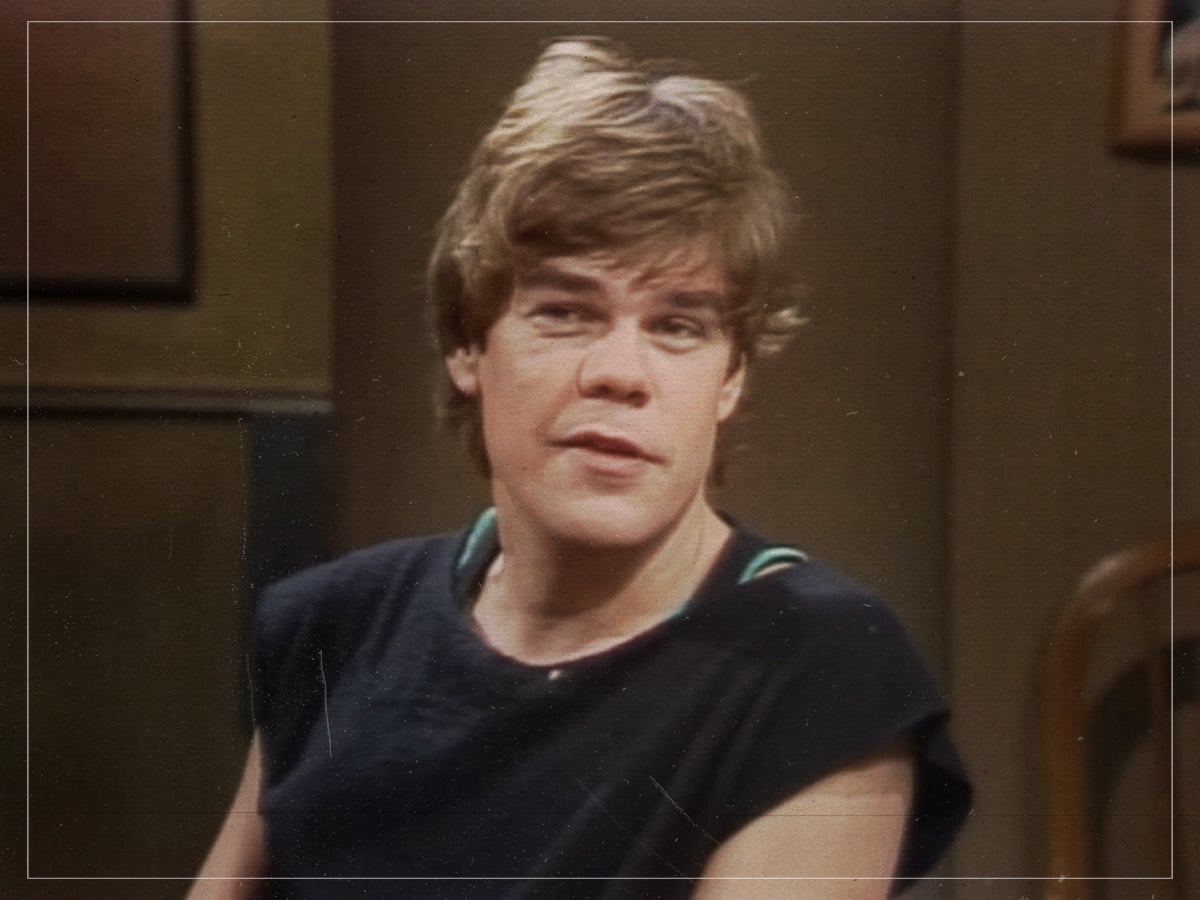
“When we first started playing,” David Johansen told the LA Times in 1974, “we were in wild places. So, we had to be more wild than the kids in the audience, which was good because they were really crazy…the whole dance floor was covered with these amazing maniacs. We were their band.”
It’s very easy to draw a direct through-line from those Dolls’ gigs to the New York punk scene that formed shortly thereafter. Despite never playing at CBGB themselves during their original run, the Dolls’ audience helped form the enthusiastic core of that club, enabling the emergence of the Ramones, Blondie, Patti Smith, Talking Heads, Television, and the ilk.
If there’s a reason that we don’t tend to acknowledge the New York Dolls as the ‘inventors’ of punk, it might be that their circle of influence actually became too large, in the long run, to be tied to one scene or movement. For as often as they’re credited with jumpstarting punk, they’re equally recognised as an early glam rock band and arguably the single biggest influence, for better or worse, on the aesthetics of 1980s hair metal, which finally saw a straight, macho, male audience come around to the idea of a heavy rock band doused in lipstick and hairspray.
For David Johansen himself, the biggest thing the Dolls brought to the table was a rejection of rock’s increasingly bloated sense of self-worship in the late ‘60s and early ‘70s. The New York Dolls were, above all else, a bunch of working-class kids who felt like rock should be right there at ground level again, the way it all began.
“At the time, we thought rock stars were idiots,” Johansen, who died in 2025, told the Daily News in 2004, “We thought, you don’t have to be this person in a gilded cage. You could be from the streets”.
In other words, you could be punks.

Never Miss A Beat
The Far Out Punk Newsletter
All the latest Punk content from the independent voice of culture.
Straight to your inbox.