


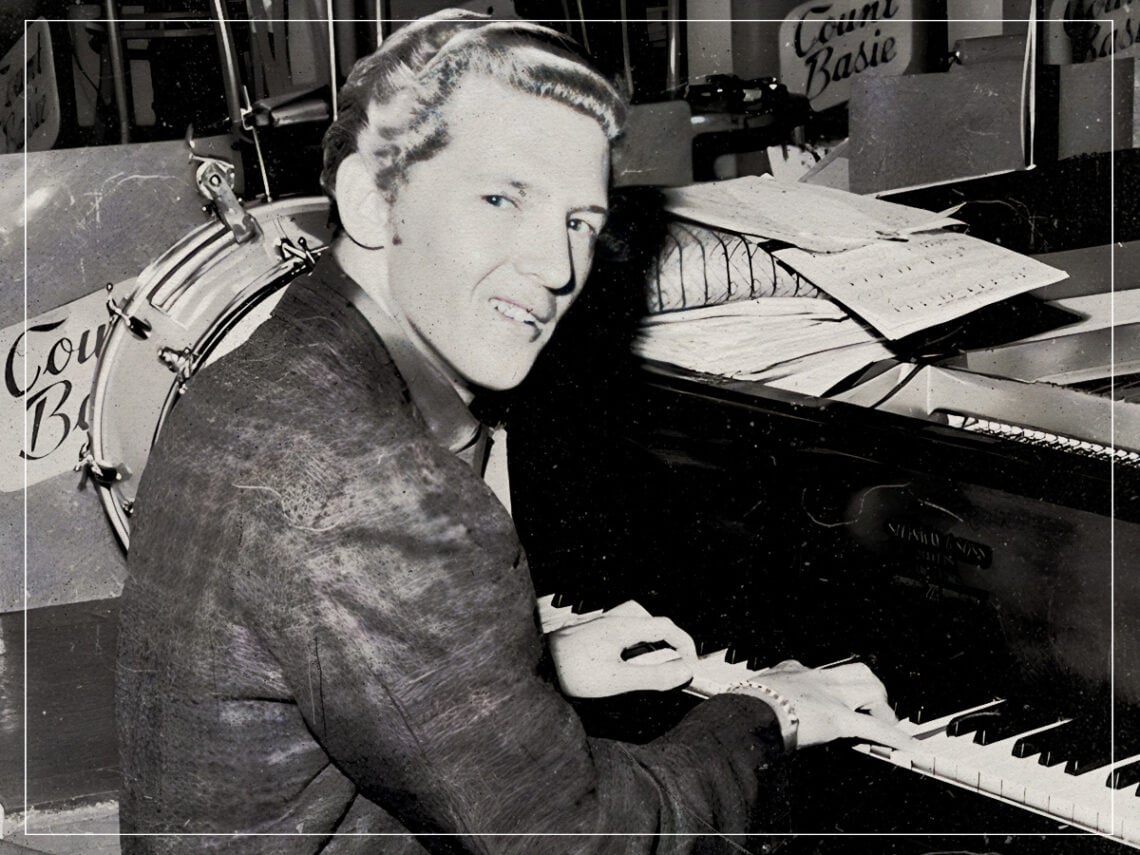
Did Jerry Lee Lewis really set his piano on fire?

When it comes to rock ‘n’ roll’s white imitators, nobody topped ‘The Killer’ Jerry Lee Lewis. Shoving Elvis Presley, Bill Haley, and even Gene Vincent out of the way of the Black art form’s most authentic translator, hits such as ‘Whole Lotta Shakin’ Goin’ On’ and ‘Great Balls of Fire’, coupled with his frenzied piano heeling and elbowing showboat playing theatrics, Lewis thrust himself as one of the 1950s’ most powerhouse performers. It saw the God-fearing Louisiana boy rub shoulders with Little Richard and Chuck Berry as the era’s most intense forces of nature.
To new audiences encountering the ‘Killer’ mythos, Lewis remains gloriously frozen in time, a dangerous rock ‘n roll flash bang that avoided the decades of sub-par material and lapses into nostalgia parody that befell many of his peers. However, the swift bookend to his career was down to a deeply dubious revelation regarding his personal life, greater than any Eddie Cochran-style car crashes. Lewis’ reputation was irreparably damaged after marrying his 13-year-old first cousin once removed, Myra Gale Brown, and a shocking admission of child abuse that left an ugly shadow over his legacy.
Lewis’ visceral, urgent performance style may well have been fuelled by spiritual turmoil. Raised in a Pentecostal family, his natural musical gifts saw his mother send the young piano player to Texas’ Southwest Bible Institute to channel his energy into evangelical numbers. Opting to twist the ‘My God Is Real’ hymn into a boogie-woogie number, Lewis found himself booted out of the school that night. An internal tussle between the Lord and the Devil’s music would cause friction throughout his career. According to Sun Records’ Million Dollar Quartet co-member Johnny Cash, it even saw him arguing with ‘Great Balls of Fire’ producer Sam Phillips over its blasphemous lyrics: “How can the devil save souls? What are you talkin’ about!?”
A keen weaver of his own lore, Lewis was more than happy to indulge in grand fables surrounding his lightning-bolt impact on the world of rock ‘n’ roll, offering contradictory statements on some of the most pored-over anecdotes of his life, right up until his death in 2022. The greatest slice of his mythology is the supposed burning of his piano at the height of his fame, immortalising his pop legend as the era’s wildest entertainer.
So, did Jerry Lee Lewis really set his piano on fire?
There are two variations of this supposed act of arson. 1993’s Killer! states that back in 1958, Lewis was irked by his penultimate billing before the ‘Johnny B Goode’ bottle rocket Chuck Berry. Wanting to ensure an act the headliner could never top, Lewis lit the piano on fire and bellowed his biggest hit to the delirium of the crowd. Swaggering past with the flames behind him, Lewis quipped, “OK, Chuck, it’s your turn”. This version paints the encounter as a good-natured competition with Berry reportedly laughing along with the task ahead of him. 1982’s Hellfire ends the story on a darker note, painting Lewis as sick with toxic jealousy and aggressively spitting, “Follow that, n*****”.
“Yeah, that happened,” Lewis told journalist Chris Heath in 2009. “Coke bottle, gasoline in it”. Yet three years earlier, he had scoffed at the idea to Blender: “I never did—that’s a bunch of baloney”. ‘The Killer’, ever an unreliable source, his bass player at the time, JW Brown—the father of Myra Gale—shot down any such rumours of piano pyromania: “He ain’t never set no piano on fire. He tore a lot of them up”.
Without any documentation, the flaming piano tale can ultimately never be verified, but as with so much in rock ‘n’ roll and popular music in general, any good story deserves a sprinkle of embellishment. The tapestry of 20th-century American pop culture is richer for its tales of selling one’s soul to the devil, snorting ants like cocaine, or tinkling the ivories of a flaming baby grand piano.
