


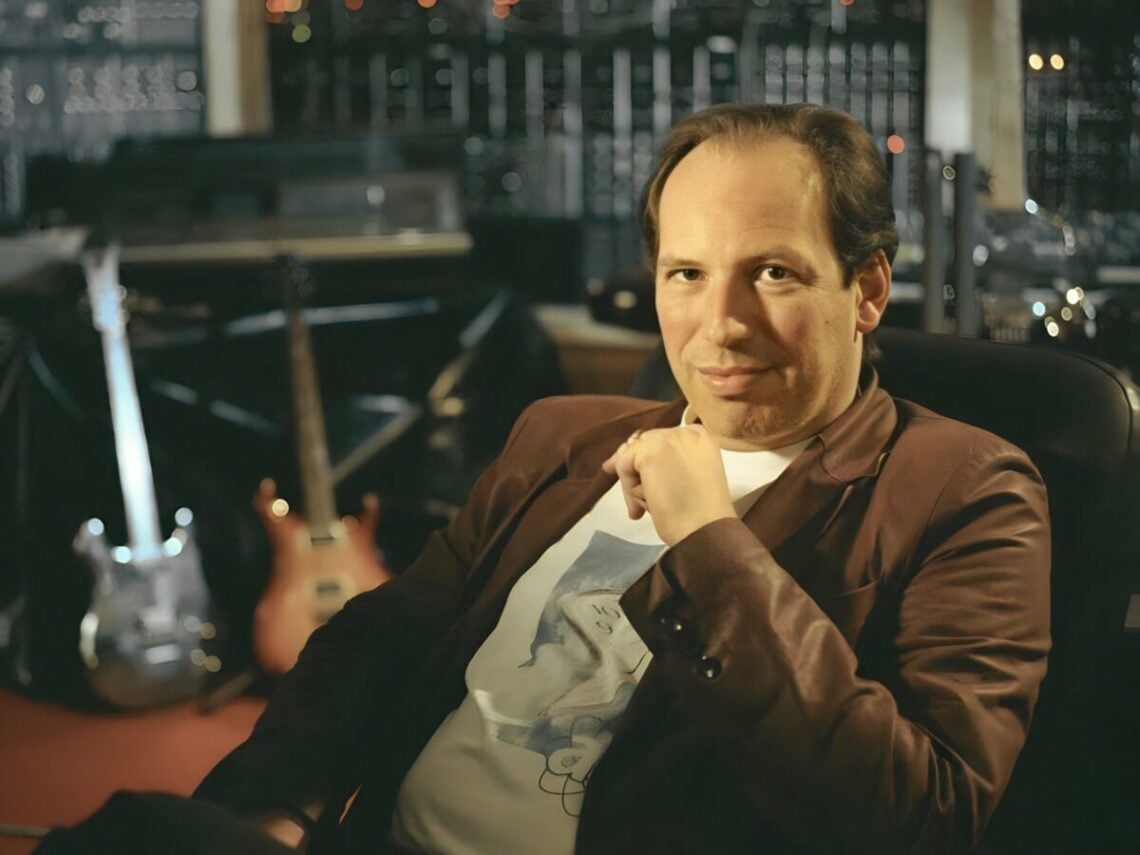
Did Hans Zimmer really play with a punk band?

Obviously, it shouldn’t be any surprise that the likes of Hans Zimmer may have come from respectable rock stock before scoring some of Hollywood’s biggest pictures.
It’s a natural progression. Danny Elfman fronted Oingo Boingo’s jerky new wave bounce, Clint Mansell was spitting Black Country rap in grebo legends Pop Will Eat Itself, and Cliff Martinez was behind the drum kit for both Captain Beefheart and Red Hot Chili Peppers’ early records. More notable names in rock and pop would go on to win successful second careers in cinema, Johnny Greenwood, Trent Reznor, and Mark Mothersbaugh’s scoring work nearly rivalling their band day jobs.
Zimmer’s probably the most famous living movie composer after John Williams. Scoring pictures since the early 1980s, his rousing brass engulf and building harmonic motif has seen its stirring power soundtrack a whole swathe of disparate genres, be it the Rain Man drama, Kung Fu Panda critter caper, or Gladiator’s ancient epic. While his musical template has been criticised for drifting into formulaic retreads, Zimmer, without doubt, established a Hollywood trend many future blockbusters would ape, most notably Steve Jablonsky’s brassy pummel on the Transformers series.
Pop afforded Zimmer his route to Hollywood, however. After a spell playing synths in the Brighton hard rock band Krakatoa, the German born musician jumped around the pop fringes in the UK around the late 1970s, lending his keys to Maurizio Arcieri and Christina Moser’s Krisma in their more electronic direction on 1980’s Cathode Mamma, and performing with The Buggles including featuring on the video for ‘Video Killed the Radio Star’.
It was during this time that Zimmer entered the studio to collaborate with one of punk’s biggest names.
So did Zimmer really play with a punk band?
Beating the Sex Pistols by a month for the UK’s first punk single with 1976’s ‘New Rose’, The Damned always cut a unique mark in the British cohort of punk’s insurrectionary flashbang.
Packed with humour that borrowed from the US’ more comic edge in the punk wave, The Damned would stand as Britain’s ‘Big Four’ along with the Pistols, The Clash, and Buzzcocks, starting strong with Damned, Damned, Damned, hitting a wobble with the Nick Mason produced Music for Pleasure, then scoring their finest record with 1979’s Machine Gun Etiquette.
For 1980’s two disc The Black Album, the band began to explore further the sounds already beginning to trickle into The Damned’s punk songcraft. Psychedelia, garage stomp, and gothic camp all swirled around their fourth LP, even dipping their toe in prog with ‘Curtain Call’s entire occupation of side three.
Such ambitions pulled in a young Zimmer. Co-producing The Black Album’s lead single, Zimmer and The Damned headed to Wales’ famous Rockfield Studios to cut ‘History of the World, Part 1’, a spiky and sprawling new wave excursion that also features the future composer’s shimmering keys and synth work across its proggy pop weirdness, plus adding keys to the hugely underrated ‘Lively Arts’.
It’s hard to know if The Damned appreciated his flair or not. Reportedly, credits included a wry “Over-Produced by Hans Zimmer” on The Black Album’s liner notes.
